Skip to content












Many older Auburn homes weren’t built with ductwork. Homes from the mid-century era often rely on baseboard heaters, wall furnaces, or radiators. Newer additions, finished garages, and converted basements usually sit outside the main HVAC system too. If you’ve ever tried to heat or cool one of these spaces evenly, you already know the problem.
The traditional fix is to install ducts. But retrofitting ductwork into a finished home is invasive, expensive, and disruptive. Walls and ceilings get cut open, closet space disappears, and the project can drag on for weeks. Most homeowners look for a better option, and that’s where mini splits come in.
This guide answers whether a mini-split is actually a good fit for your ductless home, how much you’ll spend, and when a different approach might serve you better. For more on this system type, our overview of the benefits of mini splits for older homes covers the basics in depth.
Is a Mini Split Good for Homes Without Ducts?
Yes, a mini-split is usually an excellent choice for homes without ducts. Mini-splits skip ductwork entirely, deliver 25 to 30 percent more efficiency than ducted systems, allow zone-by-zone temperature control, and cost far less than retrofitting ducts. For most Auburn homeowners without existing ductwork, a mini-split is the most practical and cost-effective option for year-round heating and cooling.
Why Mini-Splits Fit Ductless Homes So Well
A mini-split’s whole design assumes no ducts. Refrigerant lines carry energy directly from the outdoor unit to each indoor head, which delivers conditioned air straight into the room. According to the Department of Energy, ductwork can waste more than 30 percent of the energy used to heat or cool a home. Mini-splits skip that loss completely.

How Mini-Splits Work Without Ductwork
Understanding the system helps you weigh whether it fits your home.
Outdoor Condenser and Indoor Air Handlers Explained
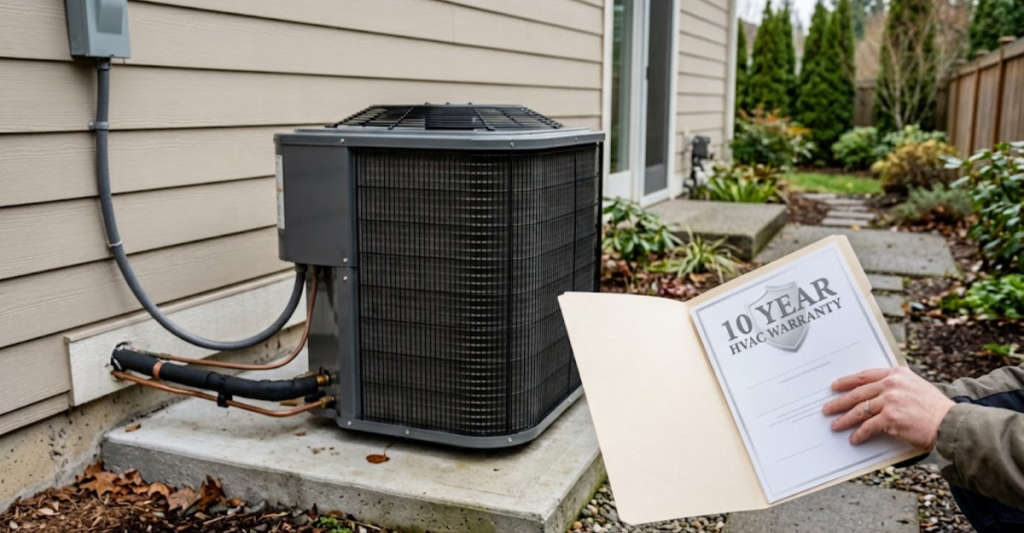
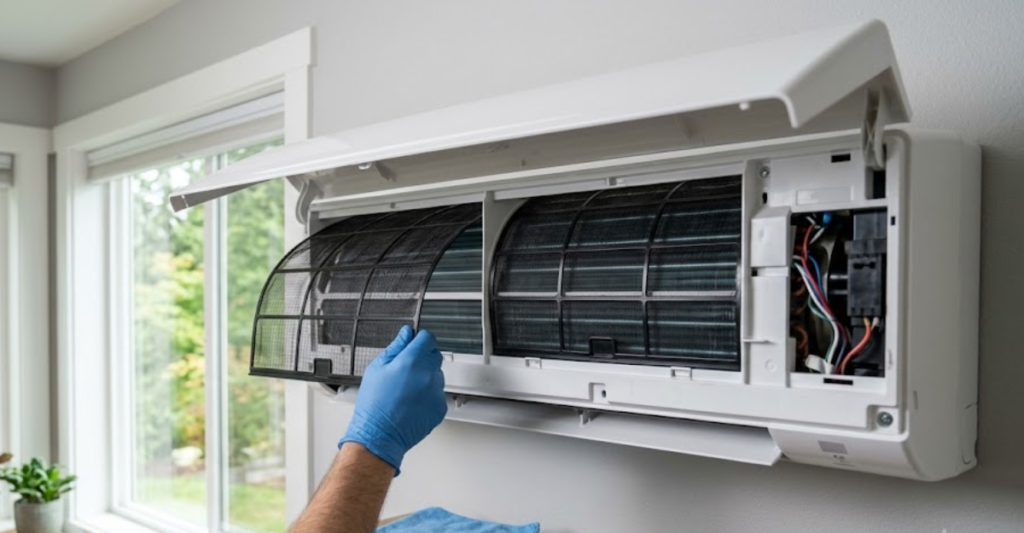
A mini-split has two main parts: an outdoor compressor that sits against an exterior wall, and one or more indoor air handlers mounted inside the rooms you want to condition. They connect through a thin bundle of refrigerant lines and wiring that runs through a small hole in the exterior wall, usually about three inches across. Our guide on how ductless mini split systems work explains the full process.
Single-Zone vs Multi-Zone Setups
A single-zone system has one outdoor unit paired with one indoor head, ideal for a garage conversion, sunroom, or home addition. A multi-zone system connects one outdoor unit to up to five or six indoor heads, each controlled independently. Most ductless whole-home setups use multi-zone configurations.
Refrigerant Lines Replace Ducts
Instead of bulky sheet-metal ducts running through walls, ceilings, or attics, mini-splits use small insulated copper lines. These lines take up minimal space, cause no leakage losses, and install quickly with minimal disruption.
Need a hand with this at home? Air Pro Solutions provides ductless mini-split installation for homeowners across Auburn and South King County.
6 Reasons Mini-Splits Work Well in Ductless Homes
Here’s why this system type keeps winning over ductless homeowners in 2026.
1. No Costly Duct Installation Needed
Installing new ductwork in a finished home is painful. Industry cost data shows retrofitting ducts in a finished older home often runs $5,000 to $10,000 or more depending on layout. Mini-splits skip that expense entirely.
2. Zone-by-Zone Temperature Control
Each indoor head has its own thermostat. Cool the bedroom at night without blasting the whole house. Heat the home office during the day while leaving unused rooms untouched. This targeted control cuts energy bills and improves comfort at the same time.
3. Higher Energy Efficiency
Modern mini-splits often start at 18 SEER2 for cooling and reach 33 SEER2 on premium models. Most central AC systems top out around 21 SEER2. The efficiency gap plus the absence of duct losses means mini-splits often run substantially cheaper month-to-month.
4. Quiet Indoor Operation
Indoor heads run between 19 and 30 decibels, quieter than a whisper. You won’t hear them kick on from across the room. Compared to baseboard clanking or a central system roaring to life, mini-splits feel almost invisible.
5. Improved Indoor Air Quality
No ducts means no accumulated dust, pet dander, or mold growing in hidden places. Most mini-splits also include built-in filtration that captures particles at the room level. Air quality often improves noticeably after switching from baseboard heat or window units.
6. Heating and Cooling From One System
A mini-split is a heat pump. It heats in winter, cools in summer, and runs on electricity rather than gas. For homes that currently rely on electric baseboards, wall furnaces, or window ACs, one mini-split system replaces two or three separate units. Our pros and cons of mini split systems guide gives a fuller comparison.
When Mini-Splits Are Not the Right Choice
Mini-splits fit most ductless homes, but not all. Here’s when to consider alternatives.
Very Large Homes With Many Rooms
If your home has 10 or more rooms that all need independent conditioning, the number of indoor heads adds up fast. At some point, a central ducted system becomes more cost-effective despite the install hassle.
Homeowners Who Dislike the Visible Indoor Units
Wall-mounted heads are the most common install style. Some homeowners dislike seeing them in every room. Ceiling cassettes and concealed duct units solve this but add cost. If aesthetics matter strongly, look at those options during planning.
Upfront Budget Concerns
Mini-splits cost more per unit than a basic window AC and often more per BTU than central air. The savings come over time through efficiency and reduced duct losses. Short-term budgets focused purely on upfront cost may lean toward cheaper alternatives.

Mini-Split Cost vs Adding Ductwork in WA
The real question for most ductless homes is what you’d spend either way. Here’s the comparison.
Average Mini-Split Install Cost 2026
Single-zone mini-splits in 2026 typically cost $2,000 to $6,000 installed. Multi-zone systems run $2,000 to $7,000 per zone, so a whole-home setup with three to four zones usually lands between $8,000 and $20,000 depending on unit quality and complexity.
Average Cost to Retrofit Ductwork
Adding new ductwork to a home without it typically runs $5,000 to $15,000 or more, depending on home size, layout, and how many floors you’re working with. That’s before you add the cost of the central HVAC unit itself. Our ductless vs central AC comparison walks through the trade-offs in more depth.
WA Rebates That Offset Mini-Split Costs
Washington homeowners qualify for significant incentives in 2026. The state-run HEEHRA program provides up to $8,000 for low-income households and up to $4,000 for moderate-income households, applied as point-of-sale rebates. Puget Sound Energy layers on ductless-specific utility rebates, often ranging from $500 to $1,500 depending on the system’s efficiency rating.
How to Choose the Right Mini-Split for Your Auburn Home
A good system starts with good planning. Here’s what matters most.
Single-Zone vs Multi-Zone Decision
Start by listing which spaces actually need heating and cooling year-round. A single-zone unit works for one room, addition, or garage. Multi-zone makes sense for whole-home ductless coverage. Don’t over-buy, extra zones add cost without adding value if they’re not used.
Cold-Climate Ratings for WA Winters
Washington winters don’t hit deep cold often, but you still want a cold-climate-rated mini-split for reliable performance in the 20s and 30s. Look for HSPF2 ratings of 9 or higher. Our guide on why a heat pump in Auburn for the local climate covers the cold-climate performance details.
Professional Load Calculation and Placement
A Manual J load calculation sizes each zone correctly based on room size, insulation, window area, and orientation. Placement matters too, indoor heads should face open space, not furniture, and outdoor units need clearance for airflow. Our guide to the HVAC tune-up in Auburn also covers what to expect for ongoing care after install.
Conclusion
Yes, a mini-split is almost always a good choice for homes without ducts. They skip the expense and disruption of retrofitting ductwork, run more efficiently by avoiding duct losses, and give you zone-by-zone control that central systems can’t match. Washington’s 2026 rebate landscape makes the upfront cost more manageable than ever.
The best fit depends on home size, budget, and personal preferences around visible indoor units. If your home currently relies on baseboards, wall furnaces, or window ACs, a mini-split often delivers dramatic improvements in comfort and efficiency from day one.
If you’re weighing options for your Auburn home, reach out to Air Pro Solutions for a free consultation. We’ll assess your space, size the right system, and walk through which rebates you qualify for in 2026.
Need ductless mini-split installation?
Air Pro Solutions handles ductless mini-split installation for homes across Auburn, Federal Way, Kent and the surrounding area. Our licensed technicians give honest recommendations and clear pricing before any work starts.
Call 253-397-7220 or request service online.
Air Pro Solutions, 1245 Auburn Way N #296, Auburn, WA 98092