Skip to content








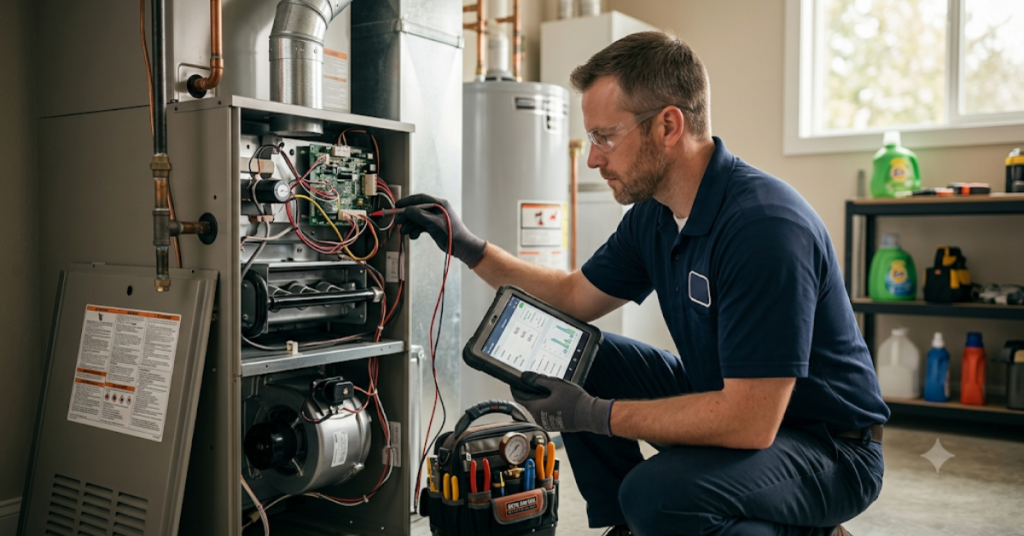
Your furnace quits at 11 PM on a Saturday. The AC dies during Sunday dinner. Nobody schedules breakdowns for business hours, and waiting until Monday isn’t always safe. So yes, you can absolutely get HVAC help at night or on weekends in Auburn, WA, and knowing when to call (and when to wait) saves you money and keeps your family comfortable.
This guide walks you through what qualifies as an after-hours emergency, what to expect when you call, how to keep your home safe while you wait, and how to avoid the 3 AM scramble in the first place. Nobody wants to deal with a broken heater during a February cold snap or a dead AC during an August heat wave, and you don’t have to face it alone.
What Counts as an HVAC Emergency After Hours?
Not every hiccup needs a midnight service call. A true emergency is any situation where your heating or cooling system fails in a way that puts your safety, comfort, or home at risk. That’s different from a noisy blower or uneven room temperatures, which can usually wait for morning.
Complete Loss of Heating or Cooling in Extreme Weather
Most HVAC pros use a simple temperature test to decide. A loss of heat becomes an emergency when outdoor temperatures drop below roughly 40 degrees, and a loss of cooling becomes urgent when it climbs above 90. In the Pacific Northwest, winter cold snaps and summer heat waves both cross those lines, especially with small children, seniors, or anyone with health conditions at home.
If your furnace fails when it’s freezing outside or your AC dies during a heat advisory, that’s a call worth making right away. Waiting can turn uncomfortable into unsafe within a few hours.
Gas Smells, Burning Odors, or Carbon Monoxide Concerns
Any smell of gas, anything burning, or a carbon monoxide detector going off is a stop-everything emergency. Carbon monoxide is colorless and odorless, and high concentrations are fatal. If your detector alarms, leave the house and call 911 first, then your HVAC company. Our guide on how to tell if carbon monoxide is leaking from your furnace covers the warning signs in detail.
A yellow flame on a gas furnace (instead of blue) also signals carbon monoxide production. Shut the system off and call for help.

Sparks, Smoke, or Electrical Issues
If you see sparks, smell something electrical burning, or the breaker keeps tripping, turn the system off at the thermostat and the breaker panel. Electrical faults can escalate into fires fast, and they’re not safe to diagnose yourself.
When Can HVAC Issues Wait Until Morning?
Part of a good HVAC partner’s job is telling you when you don’t need emergency service. After-hours calls cost more, and plenty of issues are safe to park overnight. Here’s what typically qualifies as “handle it tomorrow.”
Minor Noises and Performance Drops
A slightly louder blower, a new rattle, or rooms that feel a few degrees off are worth investigating, but they’re rarely dangerous. If the system is still running and keeping your home in a safe range, schedule service for the next business day.
Thermostat Glitches
Before you pick up the phone, check the thermostat. Dead batteries, bumped settings, or a flipped switch cause a surprising number of “emergency” calls. Swap the batteries, confirm it’s set to heat or cool, and see what happens.
Clogged Filters and Airflow Issues
A badly clogged filter can choke airflow and even cause the system to overheat and shut down. If your system stopped and the filter looks packed with dust, swap it and wait 30 minutes before restarting. Our walkthrough on how a dirty air filter affects your home explains why this matters so much.
What to Do Before the Technician Arrives
A few calm minutes of prep can shorten the repair, protect your home, and keep everyone safe while you wait.

Shut the System Down Safely
If your system is leaking, smoking, making grinding noises, or behaving strangely, turn it off at the thermostat first. Then find the breaker labeled furnace, AC, HVAC, or heat pump and flip it to off. This stops the unit from cycling and making things worse.
Gather System Details
When you call, the technician will ask what type of system you have (furnace, heat pump, central AC, ductless), what brand, and roughly how old it is. There’s a metal tag on the unit with the model and serial number. Snap a photo if you can.
Also note what happened right before the failure. Was there a smell? A noise? An error code on the thermostat? Small details often point directly to the failed part, which means the tech arrives with the right replacement in the truck.
Keep the Home Livable While You Wait
If heat is out in winter, close interior doors to concentrate warmth in the main living area, layer up, and use safe portable heaters (never the oven or stovetop) away from flammables. If cooling is out in summer, close blinds on sun-facing windows, run ceiling fans, and stay hydrated. For a fuller troubleshooting walkthrough, our article on common HVAC problems and how to troubleshoot them covers what you can safely check yourself.
Does After-Hours HVAC Service Cost More?
It depends on the company. Some charge premium rates for nights, weekends, and holidays, often 1.5 to 2x standard rates. Others bill everything at the same rate regardless of when you call. Before any work starts, ask for an upfront quote so you know exactly what you’re paying for.
Typical Emergency Repair Price Ranges
Emergency HVAC service calls generally run higher than standard appointments because of after-hours labor and immediate dispatch. A diagnostic call plus a minor repair (a bad capacitor, a tripped float switch, a thermostat swap) lands in a moderate range. Major repairs like compressor replacements or heat exchanger work cost more, though most of that cost is the part itself, not the after-hours premium.
How to Avoid Surprise Fees
Ask three questions before the tech is dispatched. What’s the trip charge? What’s the diagnostic fee? Is there an after-hours premium, and what does it add? A trustworthy HVAC contractor will answer all three without flinching.

How Do I Prevent Weekend HVAC Breakdowns?
The best emergency call is the one you never have to make. Most after-hours failures trace back to skipped maintenance and small issues that grew in the dark.
Schedule Seasonal Tune-Ups
Twice-a-year tune-ups (once before heating season, once before cooling season) catch worn capacitors, dirty coils, low refrigerant, and failing ignitors before they strand you at 2 AM. Our page on what’s included in an HVAC tune-up in Auburn breaks down exactly what a thorough seasonal visit covers.
According to the U.S. Department of Energy, regular HVAC maintenance can reduce energy use by up to 15 percent and significantly extend equipment lifespan. Systems that get annual service fail less often, and when they do, the failures tend to be smaller and cheaper.
Replace Filters on Schedule
Dirty filters are the single most common cause of avoidable breakdowns. Check them monthly and replace them every 1 to 3 months depending on filter type, pets, and allergies. If you’re not sure how often yours needs changing, our guide on how often to change your furnace filter in Washington state has a schedule you can actually follow.
Watch for Early Warning Signs
Furnaces and AC units almost always warn you before they fail completely. Rising energy bills, short cycling, strange noises, weak airflow, or uneven temperatures across rooms are the system asking for help. Catching these signs during business hours costs a fraction of what an emergency call does. Check out our list of warning signs your furnace needs repair to know what to watch for.
Frequently Asked Questions About Night and Weekend HVAC Service
Is Air Pro Solutions available on weekends?
How fast can a technician get to my home?
Should I call if my system is still running but acting strange?
What if I just need advice, not a service call?
The Bottom Line on After-Hours HVAC Help
HVAC emergencies don’t wait for business hours, and neither should your repair options. The key is knowing what qualifies as a real emergency (safety risks, extreme temperatures, gas or electrical issues) versus what can safely wait until morning (minor noises, thermostat glitches, dirty filters). When in doubt, make the call. A reliable HVAC partner would rather talk you through a non-emergency than let a real one escalate.
If you’re in Auburn or the greater Puget Sound area and your heating or cooling system is acting up, reach out to Air Pro Solutions. We’ll help you figure out whether it’s a now problem or a Monday problem, and we’ll be there either way.