Skip to content








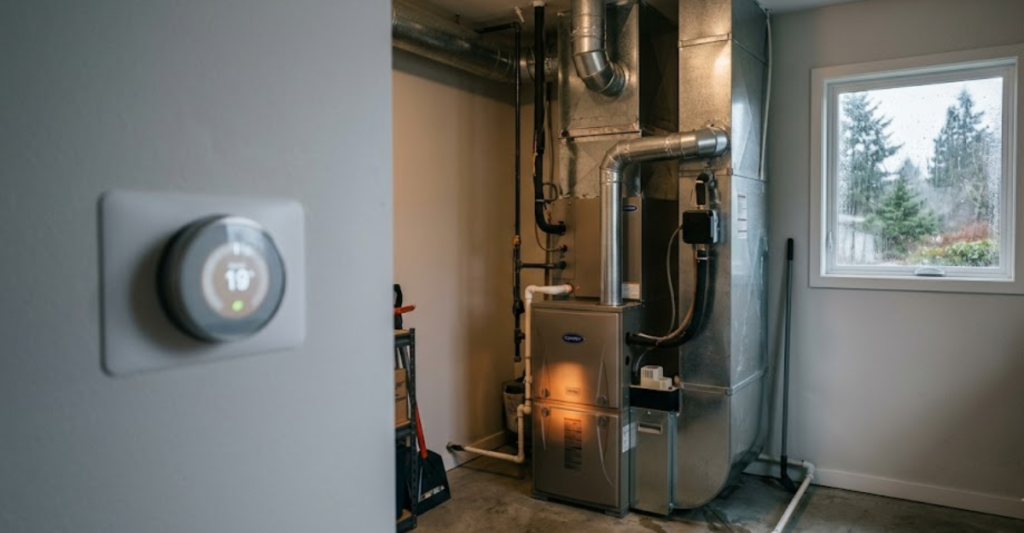
Rising heating bills during a Pacific Northwest winter can make any homeowner nervous, especially when the furnace in the basement is pushing 15 or 20 years old. You’ve probably noticed the gas bill climbing each December, and now you’re wondering if a new furnace lower heating bill numbers actually justify a $5,000 to $12,000 investment.
The short answer is yes, but the real savings depend on your current system, your fuel type, and how cold your winter runs. A new high-efficiency furnace can cut your annual heating costs by 15% to 50%, sometimes more for homes with older, failing units. This guide breaks down the actual math, the payback timeline, Washington-specific rebates, and how to know whether an upgrade makes financial sense for your Auburn home.
Will a New Furnace Lower My Heating Bill? The Short Answer
Yes, a new furnace almost always lowers your heating bill, and the older your current unit is, the bigger the savings. According to the U.S. Department of Energy, older fossil fuel furnace and boiler systems typically operate in the 56% to 70% efficiency range, while modern conventional heating systems can achieve efficiencies as high as 98.5%. For many homeowners, that difference translates to fuel bills cut roughly in half once the upgrade is installed.
The savings come from one core fact: a new furnace wastes less fuel. Every dollar spent on natural gas or propane turns into more usable heat inside your home and less exhaust heat up the flue.

How Much Can You Actually Save With a New Furnace?
The savings percentage depends almost entirely on the AFUE gap between your old and new furnace. AFUE stands for Annual Fuel Utilization Efficiency, and it tells you what percentage of your fuel becomes heat.
Savings Against a 60-70% AFUE Older Furnace
If your furnace was installed in the 1990s or early 2000s, there’s a solid chance it operates between 60% and 70% AFUE. Upgrading to a 95% AFUE model means you’re capturing roughly 25 to 35 percentage points more usable heat from the same amount of fuel. Over a full Washington heating season, that gap can translate to hundreds of dollars in savings annually.
Savings From 80% to 95%+ AFUE Upgrades
If your current unit is already running at 80% AFUE, the savings are smaller but still real. Jumping to a 95% AFUE condensing furnace means 15 more cents of every fuel dollar becomes usable heat instead of being vented outside.
Washington Home Example
The U.S. Environmental Protection Agency notes that ENERGY STAR certified gas furnaces in the northern half of the U.S., which includes Washington state, are up to 15 percent more energy efficient than baseline models and can save homeowners around $120 a year in energy costs. That number climbs higher for homes replacing furnaces well below the current federal minimum.

What Is AFUE and Why Does It Matter for Your Bill?
AFUE is the single most important number when comparing furnaces. Think of it like the miles-per-gallon rating on a car: the higher the percentage, the less fuel wasted.
AFUE Explained in Plain Terms
The Federal Trade Commission requires all new furnaces and boilers to display their AFUE rating so homeowners can compare models head-to-head. A 90% AFUE furnace means 90% of the energy in your fuel becomes heat, and 10% escapes through the chimney or vent.
AFUE Tiers You’ll See in 2026
Current federal minimums set the entry point at 80% AFUE, with the northern region moving toward a 90% minimum for non-weatherized gas furnaces. Mid-efficiency units sit in the 90% to 95% range, and high-efficiency condensing furnaces reach 96% to 98.5%. ENERGY STAR certified models in the northern U.S. must currently hit 90% AFUE or higher, and proposed updates would raise that threshold to 97% AFUE.
Why Fuel Type Matters Alongside AFUE
AFUE alone doesn’t tell the whole story. A 95% electric furnace isn’t automatically cheaper to run than an 80% gas furnace because electricity costs more per unit of heat in most Washington markets. Always compare fuel costs side-by-side with AFUE ratings when estimating real savings.

When Does a New Furnace Actually Pay for Itself?
Payback period tells you how many years of fuel savings it takes to recoup the cost difference between a standard and high-efficiency furnace.
The Simple Payback Formula
Take the extra upfront cost of a higher-efficiency model and divide it by your projected annual fuel savings. If a 96% AFUE unit costs $2,000 more than an 80% model and saves you $200 a year, the payback period is 10 years. Many modern furnaces last 20 years or longer with proper maintenance, so the back half of that lifespan is pure savings.
Factors That Shorten Payback
Cold climates like eastern Washington shorten payback because the furnace runs more hours per season. Rising natural gas prices also accelerate savings, since every efficiency gain is worth more per therm. Households that keep thermostats higher or have drafty older homes tend to see faster returns too.
When Upgrading May Not Pay Off
If you live in a mild microclimate, rarely use the heat, or have a smaller home, the premium for a 96% AFUE unit may not pay back within its lifespan. Sometimes a solid 90% AFUE furnace delivers better total value. A proper load calculation from a licensed contractor helps you choose the best heating system for your house without overspending on efficiency you won’t use.
Other Ways a New Furnace Cuts Your Heating Bill
AFUE is the headline number, but modern furnaces save money through several other features too.
Variable-Speed Blowers and Two-Stage Burners
Single-stage furnaces run at full blast or not at all, which wastes energy during mild weather. Two-stage and modulating burners match output to actual demand, and variable-speed blowers circulate air more efficiently. These features often save more than a few AFUE points alone.
Smart Thermostat Compatibility
Newer furnaces pair with programmable and smart thermostats that learn your schedule, dial down heat when you’re away, and avoid wasteful overheating. This layered efficiency can shave another 10% off annual costs.
Fewer Repairs and a Longer Lifespan
Older furnaces break down more often, and emergency repair calls add up. A new system under warranty means fewer surprise bills. Pair that with routine service through heating services in Auburn, and your total cost of ownership drops significantly.
Washington State Rebates and Incentives That Boost Your Savings
Washington homeowners have several rebate programs that reduce the upfront cost and shorten payback.
Utility-Level Rebates
Puget Sound Energy, Avista, and other regional utilities offer rebates on qualifying high-efficiency furnaces and heat pumps. Rebate amounts vary by equipment type, AFUE rating, and whether you’re switching fuel sources. Most programs require professional installation and ENERGY STAR certification.
Washington HEAR Program
The Washington State Department of Commerce administers the State Home Electrification and Appliance Rebates (HEAR) program, funded through the Climate Commitment Act. The program supports rebates for qualifying heat pumps, induction cooking, and other efficiency upgrades for eligible households.
ENERGY STAR Federal Tax Credits
According to ENERGY STAR, certified gas furnaces with an AFUE of 97% or higher are eligible for the Energy Efficient Home Improvement Tax Credit. The overall annual limit for this credit is $1,200 combined with other envelope improvements, and homeowners claim the credit using IRS Form 5695.
Signs Your Current Furnace Is Costing You More Than a New One
Sometimes the clearest signal to upgrade is what your current furnace is already telling you.
Age Over 15 Years
The U.S. Department of Energy points out that old coal burners converted to oil or gas, and natural gas furnaces with pilot lights rather than electronic ignitions, are prime candidates for replacement. If your unit is 15 or more years old, efficiency has likely degraded well below its original rating.
Rising Repair Costs
Frequent service calls, failing igniters, and replacement blower motors add up fast. When annual repair costs approach 50% of a new furnace price, replacement is usually the smarter move. Our furnace replacement vs repair guide walks through the exact break-even math.
Uneven Heating and Loud Operation
Cold spots in certain rooms, loud banging or rattling sounds, and a furnace that cycles on and off constantly are all warning signs your furnace needs repair or full replacement. These symptoms often indicate the system is working harder than it should to deliver the same heat.
Final Thoughts: Is a New Furnace Worth It for Your Washington Home?
A new furnace will almost always lower your heating bill, and the older and less efficient your current unit, the bigger the win. Homes running 60% to 70% AFUE units stand to save the most, often cutting fuel costs in half after the upgrade. Even homes with 80% AFUE furnaces see meaningful savings when moving to 95%+ efficiency, especially when Washington utility rebates and federal tax credits enter the picture.
The best next step is a professional load calculation to right-size your new system and an honest review of available rebates for your specific utility. If your furnace is over 15 years old or repair bills are climbing, consider reaching out to the Air Pro Solutions team for a no-pressure assessment. Flexible HVAC financing options are available to keep the upgrade affordable while you start saving on day one.