Skip to content








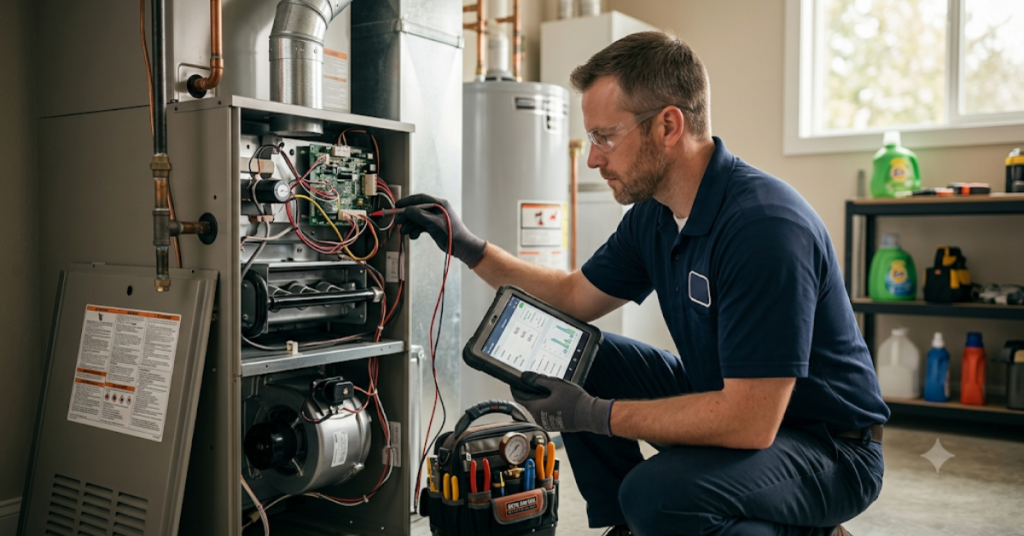
Every Auburn homeowner asks this question at some point, usually when the house feels colder than it should or the gas bill looks higher than expected. What are the signs of a failing furnace, and how do you tell a small problem from a serious one?
The short answer is your furnace almost always warns you before it quits. Strange noises, uneven heating, climbing bills, and a yellow pilot light all point to trouble brewing inside the system. Most homeowners miss these early clues and end up calling for emergency service on the coldest night of the year.
This guide breaks down the 10 clearest signs of a failing furnace, explains which ones are safety emergencies, and helps you decide whether a repair or replacement makes more sense. If you’ve spotted any of the warning signs your furnace needs repair, you’ll find practical next steps below.
What Are the Signs of a Failing Furnace?
The most common signs of a failing furnace are rising energy bills, uneven heating, strange noises, short cycling, a yellow pilot light, unusual smells, excess dust or soot, frequent repairs, age past 15 years, and poor humidity control. Any two or more of these signs together suggest your system needs professional attention.
Why Early Detection Matters
Catching problems early saves money and prevents emergencies. A scheduled repair almost always costs less than an after-hours call during a Washington cold snap. Early detection also protects your family from safety risks like gas leaks and carbon monoxide exposure that grow more likely as systems age.

10 Clear Signs Your Furnace Is Failing
Here are the 10 most reliable warning signs, in the order homeowners usually notice them.
1. Heating Bills Rising Without Extra Usage
Compare this winter’s bill to the same month last year. If costs are climbing but your thermostat habits haven’t changed, your furnace is losing efficiency. One industry analysis notes that a 15-year-old furnace can run 30 to 40 percent less efficient than a modern high-efficiency unit. That gap shows up directly on your gas statement.
2. Some Rooms Cold, Others Warm
Uneven heating almost always points to furnace trouble. A weak blower motor, clogged ductwork, or a system that’s too small for your home can all create cold spots. If one room stays chilly while another feels fine, the system can’t keep up with demand.
3. Banging, Squealing, or Rattling Noises
A healthy furnace hums quietly in the background. Banging can mean delayed ignition or ductwork expansion. Squealing often points to a worn belt or motor bearing. Rattling may signal loose panels or a cracked heat exchanger. These sounds are some of the most commonly occurring furnace problems technicians diagnose each winter.
4. Furnace Short Cycles On and Off
Short cycling is when the furnace turns on, runs for a minute or two, then shuts off only to restart a few minutes later. A healthy cycle should last 10 to 15 minutes. Short cycling usually means a dirty filter, a failing thermostat, or an overheating heat exchanger triggering a safety shutoff.
5. Yellow Pilot Light Instead of Blue
The pilot light should burn a steady, bright blue. A yellow, orange, or flickering flame means the gas isn’t burning cleanly. Industry experts warn that a flickering yellow flame combined with soot around the register often points to a cracked heat exchanger, which can leak carbon monoxide into the home.
6. Strange Smells From Vents
A faint burning smell during the first startup of the season is normal, just dust burning off the elements. Persistent odors are different. Burning plastic or electrical smells can mean overheating wires. Musty odors may signal mold in the ducts. A rotten egg or sulfur smell points to a possible gas leak and needs immediate action.
7. Too Much Dust or Soot Around the Unit
A healthy furnace shouldn’t produce heavy dust or any soot at all. Visible rust, cracks, or black soot around the base are classic signs of age and internal wear. Dust blowing heavily from registers can also mean the system is struggling to filter air properly.
8. Repairs Piling Up Each Season
One repair every few years is normal. Two or three repairs in a single winter is not. When service calls start stacking, the math usually favors replacement over another patch job.
9. Furnace Is Over 15 Years Old
Most gas furnaces last 15 to 20 years with proper care. Once your system passes the 15-year mark, parts wear faster and efficiency drops quickly. You can review the average life of a furnace to see how your unit compares to typical lifespans.
10. Humidity Feels Off Inside the House
A failing furnace can struggle to manage indoor humidity. If the air feels too dry or too damp even when the system is running, that imbalance often points to a furnace that can’t regulate airflow properly. It’s a subtle sign, but a real one.

How Do You Know If It’s a Safety Emergency?
Most furnace problems are annoying but not dangerous. A few are serious enough to leave the house immediately. Here’s how to tell.
Rotten Egg Smell (Gas Leak)
Utility companies add a rotten egg odor to natural gas so leaks are easy to detect. If you smell it, leave the house with your family and pets, call the gas company from outside, and don’t return until professionals clear the space.
Carbon Monoxide Detector Alarm
Carbon monoxide is odorless, colorless, and deadly. Safety guides are clear that if your CO alarm sounds, you should leave the house, call 911 or the gas company from outside, and wait for the all-clear. Flu-like symptoms that ease once you leave home are another red flag worth checking. Learn how to tell if carbon monoxide is leaking from your furnace to catch the problem early.
Cracked Heat Exchanger Signs
The heat exchanger separates combustion gases from the air you breathe. Cracks can leak CO into your living space. Watch for a yellow burner flame, soot around registers, unusual chemical smells, or headaches that ease when you leave the house.

Should You Repair or Replace a Failing Furnace?
This question trips up most homeowners once their furnace passes the 10-year mark. A few simple rules make the decision easier.
The 50% Rule
If a repair costs 50 percent or more of a new furnace, replacement usually wins. Another common approach is the $5,000 rule: multiply your furnace’s age by the repair cost. If the result is over $5,000, replace it. Our full decision guide between furnace replacement vs repair walks through the trade-offs in more depth.
Age Factor
Age matters more than most homeowners think. ENERGY STAR recommends planning for replacement once a unit passes 15 years, especially when repair costs keep climbing. Older units often run near 80 percent AFUE, while modern high-efficiency models reach 95 to 98 percent AFUE.
2026 Cost Comparison
Minor repairs like thermostat fixes or filter changes run under $200. Major repairs involving ignitors, blower motors, or control boards can hit $1,000 or more. Full replacement averages between $2,823 and $6,895, with most homeowners spending around $4,800. If repairs keep stacking on an aging system, replacement often pays back faster than expected through lower monthly bills.
How Can Auburn Homeowners Prevent Furnace Failure?
You can’t make a furnace last forever, but good habits stretch its life significantly. A few steps go a long way.
Annual Tune-Ups
Schedule a professional tune-up every fall before heating season begins. A technician cleans burners, tests safety switches, checks the heat exchanger, and spots wear before it becomes a breakdown. Our guide to the HVAC tune-up in Auburn covers exactly what’s included in a thorough seasonal visit.
Filter Changes Every 1 to 3 Months
A clogged filter restricts airflow, overheats the system, and triggers short cycling. Check your filter monthly and replace it every one to three months depending on filter type and household conditions like pets, dust, and allergies.
Knowing When to Call a Pro
Small fixes like replacing a filter or resetting a thermostat are fine for homeowners. Anything involving gas lines, electrical components, or the heat exchanger should go to a licensed technician. If you’ve spotted two or more warning signs from this list, it’s time for professional eyes on the system.
Conclusion
So, what are the signs of a failing furnace? Rising bills, cold spots, strange noises, short cycling, yellow pilot lights, odd smells, excess dust, repeated repairs, age past 15 years, and humidity problems all point to trouble. Catching these signs early means you fix issues on your schedule, not during a freezing morning in Auburn.
If your furnace is showing two or more of these red flags, consider scheduling an inspection soon. The team at Air Pro Solutions has helped Auburn homeowners stay warm and safe for years. Reach out today and keep small problems from turning into winter emergencies.