Skip to content










Your air conditioner is humming, but the house still feels warm. Bills are creeping up, and a few rooms never cool the way they should. Before you assume the worst, check one small part most people forget.
So, can a dirty filter cause AC problems? Yes, and more often than you might think. A clogged filter is one of the most common reasons a cooling system underperforms, and it is also one of the easiest to fix.
In this guide, you will learn how a dirty filter affects your AC, the warning signs to watch for, and the simple steps that keep your system running smoothly through a Pacific Northwest summer.
How a Dirty Filter Affects Your AC System
Your air filter is the gatekeeper for the air moving through your HVAC system. It traps dust, pollen, pet dander, and other particles before they reach the inner components.
When that filter clogs, air can no longer pass freely. The system has to strain to pull air through, and that single restriction sets off a chain of problems.
Restricted Airflow Makes the System Work Harder
A clean filter lets air flow over the coils without resistance. A clogged one starves the system of the airflow it needs to cool your home.

To keep up, the unit runs longer and pushes harder. This extra effort wears down parts faster and shortens the life of your equipment. You can read more about what happens if your air filter is clogged and why airflow matters so much.
Frozen Evaporator Coils
This one surprises many homeowners. When airflow drops too low, the evaporator coil gets too cold and condensation on it freezes solid.
A block of ice then forms over the coil, and your AC blows warm or room temperature air even though it is set to cool. If you notice ice on the unit, turn the system off and let it thaw before running it again.
Common Signs a Dirty Filter Is Causing AC Problems
Most filter issues show up as small annoyances first. Catching them early saves you from a bigger repair later. Here are the signs worth watching.
Weak Airflow and Uneven Cooling
If the air coming from your vents feels weak, a clogged filter is a likely cause. Reduced airflow means some rooms get plenty of cool air while others stay warm.
Combine a dirty filter with long duct runs, common in older Auburn and Seattle area homes, and you end up with hot and cold spots on every floor.
Higher Energy Bills
A struggling system uses more power. According to ENERGY STAR, a clogged filter can add roughly 5 to 15 percent to your cooling costs.
Stretch that over a full summer of heavy use and the waste adds up. A sudden jump in your bill, with no change in habits, is often a quiet signal that something is restricting airflow.
Short Cycling
Short cycling is when your AC turns on and off again in quick bursts instead of completing a full cooling cycle. A dirty filter is a frequent cause.
This constant stopping and starting burns extra electricity and puts heavy stress on the compressor, one of the most expensive parts to replace.
Poor Indoor Air Quality
A saturated filter stops doing its job. Instead of trapping dust, pollen, and mold spores, it lets them slip through and recirculate into your rooms.
For anyone with allergies or asthma, this can mean more sneezing, congestion, and discomfort at home. You may also notice musty odors or dust settling on furniture hours after cleaning.
Need a hand with this at home? Air Pro Solutions provides indoor air quality services for homeowners across Auburn and South King County.
Can a Dirty Filter Completely Shut Down Your AC?
Yes, in serious cases a neglected filter can stop your AC from working entirely. The system has built in safety controls that shut it off to prevent damage.
When the coil freezes or the compressor overheats from working too hard, those safeties kick in. Left unchecked, the strain can cause permanent damage that no longer responds to a simple filter swap.
When the Filter Is Not the Only Problem
Sometimes you replace the filter and the trouble continues. If that happens, the cause may be deeper in the system.
Dirty evaporator coils, leaky ductwork, low refrigerant, or a worn compressor can all mimic filter problems. At that point, a professional inspection helps pinpoint the real issue before it grows. Our AC repair team in Auburn can diagnose and fix it quickly.
How Often Should You Change Your AC Filter?
Regular filter changes are the simplest way to prevent these headaches. The right schedule depends on your filter type, your home, and how hard your system runs.
A Simple Replacement Schedule
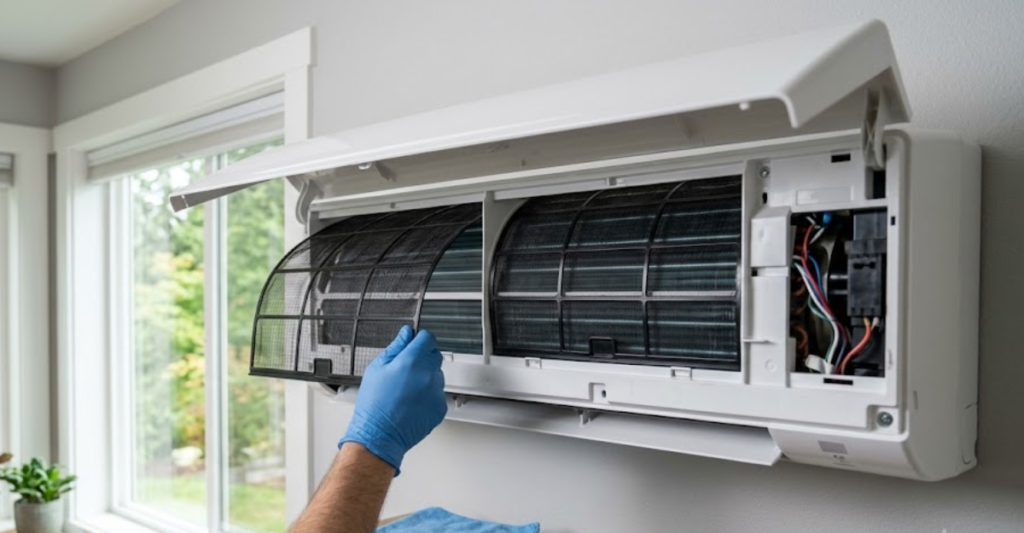
For standard pleated filters, inspect them monthly during heavy cooling months and replace them at least every 90 days. Homes with pets, allergies, or high dust may need changes more often.
Hold the filter up to the light. If light cannot pass through it, neither can air, and it is time for a fresh one. Our guide on how often to change your filter breaks down the timing for Washington homes.
Choosing the Right Filter
Filters carry a MERV rating, which measures how well they capture particles. A standard MERV 8 works for most homes, while a MERV 11 or higher suits households with allergies or pets.

Be careful not to jump too high, since an overly dense filter can also restrict airflow if your system was not built for it. When in doubt, match the size and type you already use or ask a technician.
Cleaning a Reusable Filter
If your system uses a washable filter, rinse it under warm water about once a month. Use a soft brush and mild detergent to lift sticky buildup, then let it dry fully before reinstalling.
Never run your system with a wet filter or no filter at all, since that can damage components and void most warranties. Our step by step filter cleaning guide walks you through it.
Frequently Asked Questions
Can a dirty filter cause AC problems even if the unit still turns on?
Yes. The system may run while still struggling with restricted airflow, weak cooling, and rising energy costs. These quiet symptoms often appear well before a full breakdown.
Will changing the filter fix my AC right away?
Often, yes. If the filter was the cause, you should notice stronger airflow and better cooling within a cycle or two. If the problem continues, something else likely needs attention.
How do I know if my filter is too dirty?
Pull it out and look. A gray, clogged, or warped filter that blocks light is overdue for a change. You can also explore the ways a dirty filter affects your home for more detail.
Keep Your Cooling Steady All Summer
A clean filter is one of the smallest tasks on your list, yet it protects comfort, air quality, and your wallet. A simple part can prevent a costly repair down the road.
Check your filter today, set a monthly reminder, and replace it on schedule. If your AC still struggles after a fresh filter, the issue may run deeper.
Our experienced team is ready to help with seasonal AC tune ups and reliable service across Auburn and the greater Seattle area. Reach out to Air Pro Solutions and stay cool with confidence.
Need indoor air quality services?
Air Pro Solutions handles indoor air quality services for homes across Auburn, Federal Way, Kent and the surrounding area. Our licensed technicians give honest recommendations and clear pricing before any work starts.
Call 253-397-7220 or request service online.
Air Pro Solutions, 1245 Auburn Way N #296, Auburn, WA 98092