Skip to content











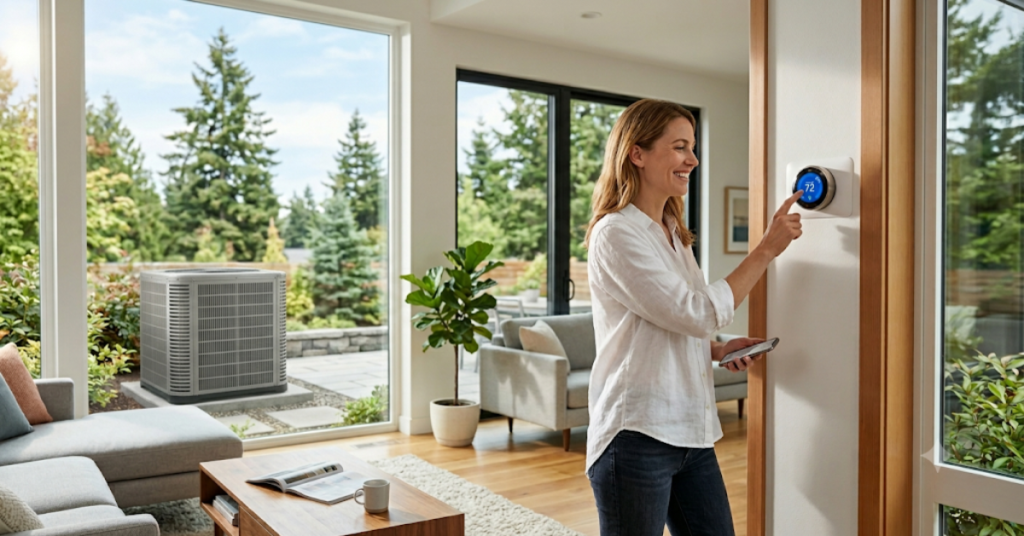
Heat pumps are one of the smartest comfort upgrades you can make to a home in Auburn, WA. They heat in winter, cool in summer, and use a fraction of the energy a furnace plus AC combo burns through. But the decision isn’t as simple as picking a model and scheduling an install.
What Should I Know Before Installing a Heat Pump?
Sizing, insulation, electrical capacity, rebates, and installer quality all change the math. Get them right and your heat pump pays for itself over the next 10 to 15 years. Get them wrong and you end up with high bills, weak performance, and early breakdowns. Here’s what every Auburn homeowner should know before signing a quote.
Why Heat Pumps Work So Well in Auburn
Heat pumps perform best in mild climates, and Auburn’s weather is almost a textbook match. Winters rarely drop below freezing for long, summers stay in the 70s and 80s, and the system spends most of the year in its sweet spot.
Air-source heat pumps run most efficiently between 30°F and 75°F, which covers roughly 9 out of every 12 months in the Puget Sound region. That’s why Washington’s building code now requires heat pumps in all new residential construction, and why more than a quarter of homes in the Pacific Northwest already use one.
Read more about why heat pumps suit Auburn’s climate if you want a deeper breakdown of the regional fit.
Sizing Matters More Than Brand
The single biggest mistake homeowners make is buying the wrong size unit. An oversized heat pump short-cycles, wears out faster, and leaves rooms feeling clammy. An undersized one runs constantly, struggles in cold snaps, and never quite catches up on the hottest days.
A proper sizing process uses a Manual J load calculation. This factors in:
- Square footage and ceiling height
- Window count, orientation, and quality
- Insulation R-values in walls and attic
- Air leakage rates
- Local climate data
If a contractor quotes you a system based only on square footage or “what the old one was,” walk away. That shortcut is one of the top reasons heat pump performance falls 20% to 30% below the manufacturer’s ratings in real-world installs.

Does Your Home Need Upgrades First?
A heat pump can only perform as well as the building around it. Before the install date, take an honest look at three things.
Insulation and Air Sealing
If your attic insulation is thin, or you can feel drafts around windows and outlets, fix those first. A leaky home forces the heat pump to work overtime, cancelling out much of the efficiency you paid for.
Electrical Panel Capacity
Heat pumps run on 240V circuits and need available breaker space. Most 200-amp panels in Auburn handle a heat pump without trouble, but a 100-amp panel often needs an upgrade, especially if you also have an EV charger or electric range. Your installer should check this during the site visit.
Existing Ductwork
If you’re going ducted, your existing ducts need to be the right size and sealed properly. Leaky or undersized ducts can lose 20% to 30% of the conditioned air before it reaches a single room. A ductless mini split skips this problem entirely.
What Type of Heat Pump Fits Your Home?
Three main options exist for Auburn homeowners, and each one fits a different home type and budget.
Ducted air-source heat pumps work best in homes that already have central ductwork in good condition. They’re the most common choice for furnace replacements.
Ductless mini splits are ideal for older homes without ducts, additions, or rooms that never feel comfortable. Each indoor unit handles one zone, so you control temperature room by room.
Geothermal heat pumps pull heat from the ground and are the most efficient option, but installation costs are much higher because of the underground loops required. They make sense for new construction or homeowners planning to stay long-term.
The right heat pump installation checklist helps you compare the three side by side based on your specific home.

What Will It Actually Cost?
In Auburn, a typical air-source heat pump install ranges from $8,000 to $18,000 depending on system size, brand, and home prep work. Ductless mini splits with multiple zones often land in a similar range. Geothermal usually starts above $25,000.
Rebates and incentives change the picture significantly. For 2026, Washington homeowners should know:
- The federal 25C tax credit expired December 31, 2025, so it’s not available for 2026 installations
- The state-managed HEEHRA rebate program offers up to $8,000 for income-qualified households (under 80% area median income) or $4,000 (80% to 150% AMI)
- Puget Sound Energy offers rebates of $500 to $1,500 for qualifying air-source heat pumps
- Additional bonuses apply for fuel-switching from gas to electric
Stacking these incentives can knock thousands off the upfront price. If the cash outlay is still steep, HVAC financing helps spread the cost into manageable monthly payments.
How Long Will a Heat Pump Last?
A properly installed and maintained heat pump lasts roughly 12 to 15 years. Some last longer with consistent care.
The two biggest factors in longevity are correct sizing at install and annual maintenance. Skipping yearly tune-ups, ignoring early warning signs, or running the system without a filter all shorten its life. Knowing common heat pump issues and how to troubleshoot them helps you catch problems early.
Hire the Right Installer
The installer matters more than the brand. A great unit installed poorly will underperform a budget unit installed correctly. When you collect quotes, look for:
- A licensed Washington HVAC contractor with current bonding and insurance
- A written Manual J load calculation included in the proposal
- Clear documentation of brand, model, warranty, and labor terms
- Help filing for rebates as part of the service
A quality contractor will also walk you through what to expect during the installation process so there are no surprises on the day of the job.
Ready to Plan Your Heat Pump Upgrade?
A heat pump is a 15-year investment in comfort and energy savings. Doing the homework upfront on sizing, home prep, rebates, and installer choice protects that investment for the long haul.
If you’re considering a heat pump in Auburn, WA, reach out to Air Pro Solutions for a no-pressure site visit. We’ll handle the load calculations, walk through your home prep needs, and help you tap every rebate you qualify for.