Skip to content









If your summer electric bill keeps creeping up every year, your old AC is likely the reason. Cooling alone can account for roughly half of a home’s annual energy use, so the unit running in your backyard has a direct line to your wallet. Many Auburn and Seattle-area homeowners are still cooling with systems built before the latest efficiency rules even existed.
The good news is that switching to a modern, energy-efficient ac can cut cooling costs by a noticeable margin. In this guide, you’ll see real numbers, what affects your savings, and how Washington rebates change the math for 2026.
What Makes an AC “Energy-Efficient”?
Energy efficiency in an air conditioner comes down to one main number: the SEER2 rating. SEER2 stands for Seasonal Energy Efficiency Ratio 2, and it tells you how much cooling you get per unit of electricity used.
The higher the SEER2, the less power your AC needs to keep your home cool. Most new units sold today start at 14.3 SEER2 (the federal minimum in the North), while premium models reach 20 or higher. If you’d like a deeper breakdown, our guide on what AC SEER rating means and why it matters walks through the details.
A few other features also boost efficiency:
- Variable-speed compressors that ramp up and down instead of running full blast
- Smart thermostats that adjust cooling to your schedule
- Properly sized ductwork with sealed joints
- Two-stage or inverter-driven outdoor units
How Much Money Are We Talking About?
Real savings depend on your old system, your new system, your local electric rate, and how many hours you run cooling each season. But the pattern is consistent across the country.
The U.S. Department of Energy estimates that a new air conditioner can lower your electric bill by 20 to 40 percent, even when replacing a unit that’s only ten years old. For most homes, that lands somewhere between $200 and $600 per year in cooling savings alone.
Here’s what the jump looks like in practice when comparing SEER ratings side by side:
- 10 SEER (old standard) to 14 SEER: about $550 saved per year
- 13 SEER to 16 SEER: roughly $35 to $40 saved per month during cooling season
- 10 SEER to 18 SEER: up to 44 percent off your cooling costs annually
Over a 15-year lifespan, those yearly savings stack up to anywhere from $3,000 to $19,000 depending on your starting point. Older systems built before 2006 (when 10 SEER was the standard) deliver the biggest gains when replaced.

Need a hand with this at home? Air Pro Solutions provides AC repair in Auburn for homeowners across Auburn and South King County.
Why Washington Homeowners See Different Numbers
Savings figures from Texas or Florida don’t translate cleanly to the Pacific Northwest. Auburn, Seattle, and the surrounding areas have a shorter cooling season than the South, but heat waves are getting longer and hotter every year.
That means two things for your savings math. First, your absolute dollar savings might be lower than what you see in national averages because you run cooling for fewer hours. Second, a heat pump may make more sense than a standard AC since it handles both heating and cooling. Our article on why a heat pump is ideal for Auburn’s climate explains the regional fit in detail.
Washington’s electricity rates also matter. They’re moderate compared to California or the Northeast, so payback periods can be a bit longer here. Still, with rising rates and longer summers, the case for a new system gets stronger each year.
Rebates and Incentives That Change the Math in 2026
This is where Washington homeowners have a real advantage. The state’s Home Electrification and Appliance Rebates (HEAR) program offers some of the most generous incentives in the country for income-qualified households.
Available rebates in 2026 include:
- Up to $8,000 for heat pump space heating and cooling (households under 80% of area median income)
- Up to $4,000 for moderate-income households (80% to 150% of AMI)
- Up to $1,750 for heat pump water heaters
- Up to $4,000 for electrical panel upgrades tied to a heat pump install
Puget Sound Energy customers in the Seattle area can also stack utility rebates from $500 to $1,500 on qualifying air-source heat pumps, depending on the model’s HSPF2 rating. Note that the federal 25C tax credit expired at the end of 2025, so state and utility programs are now your main path to upfront savings.

How Do I Actually Maximize Savings?
A high-SEER2 unit alone won’t deliver promised savings if the rest of your system works against it. Pay attention to these factors:
- Proper sizing (an oversized unit short-cycles and wastes energy)
- Sealed and insulated ductwork
- Regular maintenance through a seasonal HVAC tune-up
- A programmable or smart thermostat
- Zoning for multi-story homes (see our guide on how a zoned HVAC system saves energy)
Skipping any of these can shave 10 to 20 percent off the savings you’d otherwise see, so treat the upgrade as a system, not just a box swap.
How Long Before the New AC Pays for Itself?
Most homeowners see payback in seven to twelve years on a standard replacement. With Washington’s HEAR rebates and a utility incentive on top, payback can shrink to four or five years for qualifying households.
Cooling savings plus the heating side of a heat pump compress the timeline further. If your current AC is over ten years old and your furnace is also aging, replacing both with one heat pump is often the fastest route to lower bills.
Ready to Run the Numbers for Your Home?
An energy-efficient AC isn’t just about a smaller monthly bill. It’s quieter operation, better humidity control, cleaner indoor air, and a more predictable summer for your family. For most Washington homeowners, the combination of yearly savings plus available rebates makes the upgrade pay off well within the system’s lifespan.
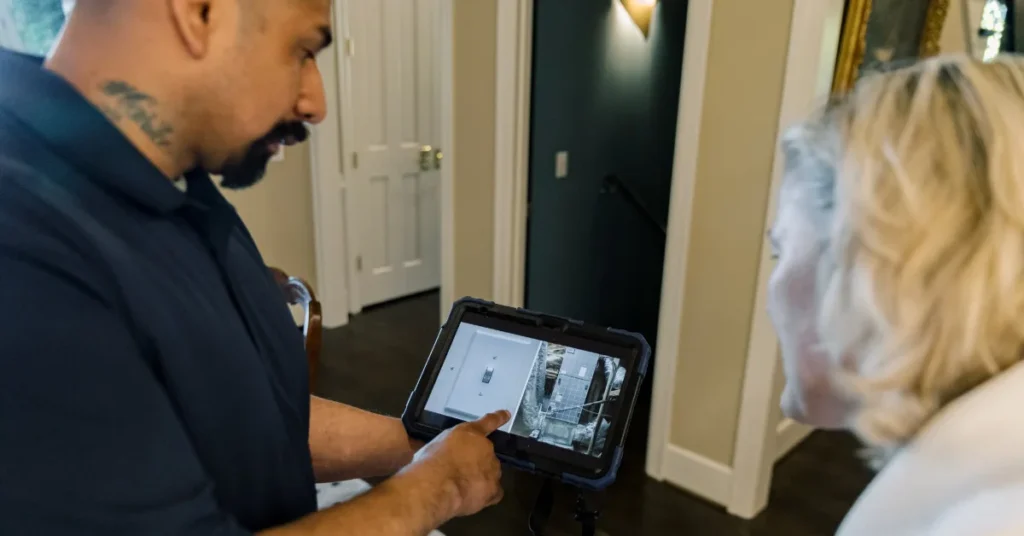
If you’d like a clear picture of what an upgrade would save in your specific home, our team can run the numbers based on your current setup, square footage, and goals. Reach out to schedule a free in-home assessment through our cooling services page, and we’ll walk you through SEER2 options, rebate eligibility, and a realistic payback timeline.
Need AC repair in Auburn?
Air Pro Solutions handles AC repair in Auburn for homes across Auburn, Federal Way, Kent and the surrounding area. Our licensed technicians give honest recommendations and clear pricing before any work starts.
Call 253-397-7220 or request service online.
Air Pro Solutions, 1245 Auburn Way N #296, Auburn, WA 98092