Skip to content













Why is my AC freezing up? In most homes, an AC freezes up when its indoor coil gets too cold, usually because too little warm air flows across it or the system is low on refrigerant. A dirty filter is the most common cause. Turn the cooling off, run the fan to thaw it, then fix the cause. If ice comes back, our Auburn AC repair team can find out why.
Key Takeaways
- Turn off cooling first. Running a frozen AC can damage the compressor, the most costly part of the system.
- Airflow is the top cause. Dirty filters, closed vents and a weak blower starve the coil of warm air.
- Low refrigerant means a leak. Refrigerant does not get “used up,” so a low charge needs a leak repair, not just a top-off.
- Thawing takes time. Plan on a few hours, sometimes longer, before the coil is fully clear.
- Repeat freezing needs a technician. If ice returns after a filter change, something else is wrong.

Why Is My AC Freezing Up? How It Happens
Your AC has a coil inside, near the furnace or air handler, called the evaporator coil. Cold refrigerant runs through it. Warm air from your home blows across it. The coil pulls heat and moisture out of that air.
Normally, the coil runs a bit above freezing. The warm air keeps it there. If that warm air slows down, or if the refrigerant pressure drops, the coil gets colder than 32 degrees. Moisture from the air then freezes on the coil instead of dripping into the drain pan. Ice builds on ice. Soon, even less air gets through, and the problem feeds itself.
Frozen AC vs a heat pump frosting in winter
These are different problems. A heat pump’s outdoor unit can frost over in cold, damp weather. That is often normal, and the unit runs a defrost cycle to clear it. Our guide on heat pump winter freezing covers that case. This article is about an AC or heat pump freezing while cooling, usually in spring and summer.
The Most Common Causes of a Frozen AC
Most freeze-ups come from one of these problems. The first few are often things you can fix. The rest need a technician.
| Cause | What happens | Can you fix it? |
|---|---|---|
| Dirty air filter | Blocks airflow over the coil | Yes, replace it |
| Closed or blocked vents | Less warm air returns to the coil | Yes, open and clear them |
| Dirty evaporator coil | Dust layer blocks heat transfer | No, needs a technician |
| Weak or failing blower | Fan moves too little air | No, needs testing |
| Low refrigerant from a leak | Coil pressure and temperature drop too low | No, needs leak repair |
| Clogged condensate drain | Water backs up and can freeze or shut the system off | Sometimes, but a pro is safer |
| Thermostat set very low on a cool night | Long run times with little heat to remove | Yes, raise the setting |
1. Dirty air filter
This is the cause we find most often. A clogged filter chokes airflow before it ever reaches the coil. The ENERGY STAR efficiency guide says a dirty filter slows airflow and makes the system work harder. It recommends checking your filter every month and changing it at least every 3 months. We cover this in our post on dirty filter AC problems.
2. Dirty evaporator coil
Even with good filters, dust slips past over time. A dusty coil cannot absorb heat well. The ENERGY STAR maintenance checklist notes that dirty coils reduce cooling and make the system run longer. Coil cleaning is part of a proper tune-up.
3. Low refrigerant
Your AC is a sealed system. If the refrigerant is low, there is a leak. Low charge drops the pressure in the coil, which drops its temperature below freezing. Adding refrigerant without finding the leak only buys time. It also costs more each year as older refrigerants get more expensive.
4. Blower problems
If the indoor fan runs slowly, or the blower wheel is caked with dirt, the coil will not see enough air. A failing motor or capacitor can also cause this. You may notice weak airflow at every vent, not just one room.
5. Clogged condensate drain
Your AC pulls water out of the air. That water drains away through a small line. If the line clogs, water can back up. Some systems have a float switch that shuts the AC off to prevent a flood. Others leak water onto the floor around the unit.
Signs Your AC Is Frozen
- Ice or frost on the copper line at the outdoor unit or near the indoor coil
- Warm or room-temperature air coming from the vents
- Weak airflow even with the fan running
- Water around the furnace or air handler as ice melts
- A hissing or bubbling sound, which can point to a refrigerant leak
- The AC runs nonstop but the house never cools

What to Do Right Now: How to Thaw a Frozen AC
Follow these steps in order. They protect the compressor and give the coil a chance to recover.
- Turn the cooling off at the thermostat. This stops the compressor from running with ice on the coil.
- Set the fan to On. Running just the fan blows room air over the coil and speeds up thawing.
- Replace the air filter. Put in a clean filter of the correct size.
- Open every supply vent and clear the return grilles. Move furniture, rugs and boxes away.
- Protect the area from water. Place towels near the indoor unit. Melting ice can overflow the drain pan.
- Wait until all ice is gone. This often takes a few hours. Heavy ice can take most of a day.
- Turn cooling back on and watch it. Check the lines and airflow after an hour or two.
Never chip or scrape ice off the coil. The fins and tubing are thin and easy to puncture. Do not use a heat gun or hair dryer near the coil or wiring either.
If the ice comes back within a day or two, the filter was not the only problem. Call (253) 397-7220 and tell us how long it took to refreeze. That detail helps us bring the right parts.
When to Call a Professional
Call a licensed HVAC technician if any of these apply:
- The AC freezes again after you replaced the filter and opened all vents
- You hear hissing or see oily spots on refrigerant lines
- Airflow stays weak after the system thaws
- Water is leaking onto floors or ceilings
- The outdoor unit hums but the fan does not spin
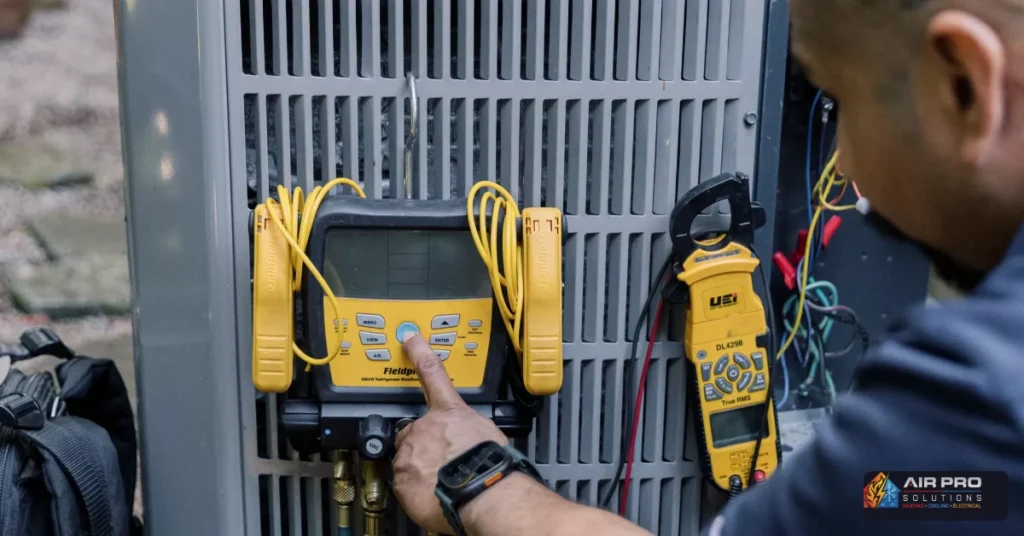
Refrigerant work needs EPA certification and special tools. A technician will check pressures, test the blower, clean the coil if needed, and look for leaks with electronic detectors or dye.
What a repair visit usually looks like
- Confirm the coil has thawed so readings are accurate
- Measure airflow and blower performance
- Check refrigerant pressures and coil temperatures
- Inspect the drain line and float switch
- Explain the fix and the price before any work starts
How to Keep Your AC From Freezing Again
- Change filters every one to three months. Check monthly during heavy use.
- Keep vents open. Closing many vents to “save energy” often backfires.
- Book a spring tune-up. A technician cleans the coil, checks refrigerant and tests the blower before summer.
- Do not set the thermostat extremely low. Very low settings on cool nights can push the coil too cold.
- Keep the outdoor unit clear. Trim plants back so the unit can breathe.
Why Is My AC Freezing Up? FAQs
What is a quick fix for an AC that’s freezing up?
Turn the cooling off at the thermostat and set the fan to On. Replace the air filter and open all vents. Let the ice melt completely, which often takes a few hours. Then restart cooling. If ice returns, the cause is likely low refrigerant, a dirty coil or a blower problem.
Can a dirty air filter cause AC to freeze?
Yes. A dirty filter is the most common cause. It blocks warm air from reaching the evaporator coil, so the coil drops below freezing and moisture turns to ice. Replacing the filter often solves the problem, as long as the coil has fully thawed first.
Will my AC freeze at 67?
A healthy AC should not freeze just because the thermostat is set to 67. Freezing at that setting usually points to an airflow or refrigerant problem. It can happen more easily on cool nights when there is little heat to remove, so a professional check is worth it if it repeats.
How to tell if an AC filter is clogged?
Pull the filter and hold it up to a light. If you cannot see light through it, or it looks gray and caked with dust, replace it. Weak airflow, dusty rooms and a system that runs longer than usual are other signs.
What is the 3 minute rule for air conditioners?
The 3 minute rule means waiting about three minutes before restarting an AC after it shuts off. This lets the system pressures balance so the compressor does not start under a heavy load. Many thermostats build this delay in automatically.
Get Your Frozen AC Fixed for Good
A frozen AC is a warning sign, not just an inconvenience. Call Air Pro Solutions Heating, Cooling & Electrical at (253) 397-7220 and ask for a frozen coil diagnosis. You will talk to Efer or Alec, the owners, not a call center. We will find the real cause, whether it is airflow, a leak or the blower, and give you a clear price before we fix it. We are open Monday to Friday, 7:30 AM to 8 PM, and serve Auburn, Kent, Renton AC repair customers and nearby King and Pierce County. You can also request service online.