Skip to content













AC not turning on? The cause is usually the thermostat, a tripped breaker, the outdoor shutoff switch, a clogged filter or a full drain pan. Those you can check in minutes. A failed capacitor or contactor needs a technician. Work through the list below. If nothing helps, our Auburn AC repair team can test the parts.
Key Takeaways
- Start at the thermostat. Wrong mode, dead batteries and a blank screen cause many no-start calls.
- Reset a breaker once only. If it trips again, there is an electrical fault that needs a technician.
- Safety switches can shut the AC off on purpose. A full drain pan or an open furnace door will stop the system.
- Humming outside often means a bad capacitor. It is a common, fairly low-cost repair.
- Give it time after a reset. Many systems wait a few minutes before the compressor restarts.

First, What Does “Not Turning On” Look Like?
Before you start, notice exactly what is happening. It points you to the right cause much faster.
| What you notice | Most likely area | Start with |
|---|---|---|
| Nothing happens anywhere. Thermostat screen is blank. | Thermostat power | Checks 1 and 2 |
| Thermostat works, but no fan inside and no sound outside | Power to the system or a safety switch | Checks 3, 4 and 6 |
| Indoor fan runs, outdoor unit is silent | Outdoor power, capacitor or contactor | Checks 3, 4 and 8 |
| Outdoor unit hums, but the fan does not spin | Capacitor or motor | Check 8, then call |
| System starts, then shuts off within minutes | Airflow, drain or overheating | Checks 5, 6 and 7 |
8 Things to Check When Your AC Won’t Turn On
Go in order. The first checks are the most common and the quickest.
1. Thermostat mode and setting
Make sure the thermostat is set to Cool, not Heat, Off or Fan. The set temperature must be lower than the room temperature. Set it three to five degrees lower than the current reading so the call is clear. Check that no schedule or “hold” is overriding your change.
2. Thermostat power
A blank screen often means dead batteries. Replace them with fresh ones. If your thermostat has no batteries, it runs on power from the HVAC system. A blank screen there can point to a tripped breaker, a blown low-voltage fuse on the control board or an open safety switch.
3. The circuit breaker
Your AC usually has its own breaker in the main panel, and the furnace or air handler has another. Look for one that sits in the middle position. Flip it fully off, then back on.
Reset it one time only. If it trips again, stop. Repeated tripping means a short, a failing compressor or a bad motor. Resetting it again can cause damage or a fire risk.
4. The outdoor disconnect switch
Near your outdoor unit, there is a small box on the wall. It holds a pull-out block or a lever that cuts power to the unit. Make sure it is fully seated or switched on. Lawn work, kids and pets sometimes knock it loose.
5. The air filter
A badly clogged filter can make the system overheat or freeze, and some safety controls will then shut it down. The ENERGY STAR efficiency guide says a dirty filter slows airflow and makes the system work harder. Check it monthly and change it at least every 3 months.
6. The condensate drain and float switch
Your AC removes water from the air. That water drains through a small pipe. Many systems have a float switch in the drain pan or line. If the line clogs and water rises, the switch cuts power to protect your home from a flood.
Look in and around the drain pan near the indoor unit. If you see standing water, the drain is likely clogged. The ENERGY STAR maintenance checklist lists checking the condensate drain as a routine task, because a plugged drain can cause water damage.
7. The furnace or air handler door
Most indoor units have a door safety switch. If the panel is loose or off, the system will not run. This often happens after someone changes the filter. Press the panel firmly into place until it seats.
8. Listen at the outdoor unit
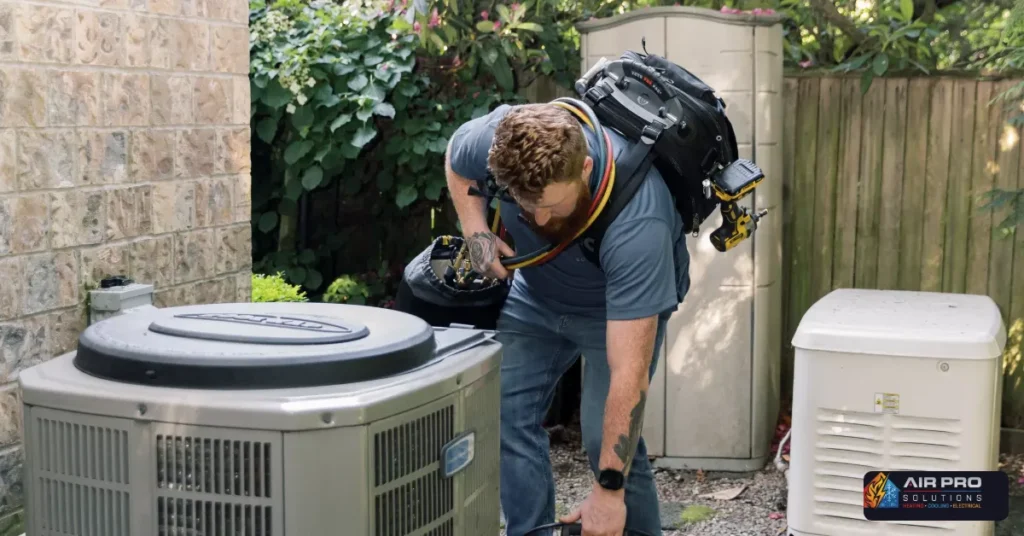
Stand near the outdoor unit while the thermostat calls for cooling. Listen, but do not touch anything inside the cabinet.
- A hum with no fan movement often points to a failed capacitor
- A click but nothing else can mean a contactor or compressor issue
- Total silence suggests no power reaching the unit, or no signal from the thermostat
Do not poke the fan blades with a stick to “start” it. Capacitors store a strong charge even with the power off, and the blades can start suddenly.
Common Parts That Stop an AC From Starting
If the eight checks do not fix it, the problem is likely one of these parts. Each one needs a licensed technician to test and replace.
- Run capacitor: gives the fan and compressor motors the boost they need to start. It is one of the most common failures. Our guide to AC capacitor replacement cost covers prices.
- Contactor: an electrical switch that turns the outdoor unit on when the thermostat calls. Its contacts can burn or stick.
- Control board or fuse: a small low-voltage fuse can blow if a thermostat wire shorts.
- Thermostat wiring: loose or damaged wires break the signal to the system.
- Compressor: the heart of the system. A failed compressor is the most costly repair and may lead to a replacement talk.
Stuck at this point? Call (253) 397-7220. Tell us which of the eight checks you already did. It saves time and often money on the visit.

Signs It Is Time to Call a Technician
- The breaker trips again after one reset
- You smell burning or see scorched wires
- The outdoor unit hums but will not start
- Water keeps filling the drain pan after you cleared it
- The AC starts, then shuts down again and again
- The system is older and you want a repair or replace opinion
If the system starts but blows warm air, see our post on AC not cooling properly. That problem has a different set of causes.
How to Avoid a No-Start Next Summer
Most no-start calls in the Puget Sound area come on the first warm week of the year. The AC has sat idle for months. Weak capacitors and clogged drains show up all at once. A few habits help:
- Test your AC in spring, before the first heat wave.
- Book a tune-up so a technician can test the capacitor and contactor.
- Flush the condensate line or have it cleared during the visit.
- Change the filter before the cooling season starts.
- Keep two feet of clear space around the outdoor unit.
AC Not Turning On FAQs
What is the 3 minute rule for AC?
The 3 minute rule means waiting about three minutes before restarting an AC after it turns off or after a breaker reset. This lets refrigerant pressures even out so the compressor does not strain on startup. Many thermostats and control boards add this delay automatically, so a short wait is normal.
How do I know if my AC capacitor is bad?
Common signs include a humming outdoor unit with a fan that will not spin, an AC that takes several tries to start, or a capacitor that looks swollen or leaks oil. A technician confirms it with a meter. Do not touch it yourself, because a capacitor can hold a dangerous charge.
Will AC still run with a bad capacitor?
Sometimes, but not well. A weak capacitor may let the AC start slowly or run with the fan stopped, which can overheat the compressor. A fully failed capacitor usually stops the outdoor unit from starting at all. Replacing it early protects the more costly parts.
Can a dirty air filter cause AC issues?
Yes. A dirty filter blocks airflow, which can freeze the coil, overheat the system and trigger safety shutoffs. It also raises energy use. Check your filter monthly in summer and replace it when it looks gray or clogged.
What does AC short cycling mean?
Short cycling means the AC turns on and off in short bursts instead of running full cycles. Causes include a dirty filter, an oversized system, low refrigerant or a thermostat in a bad spot. It wears out parts faster and wastes energy, so it is worth a service call.
Get Your AC Running Again
If the eight checks did not bring your AC back, the next step is a proper test. Call Air Pro Solutions Heating, Cooling & Electrical at (253) 397-7220 and ask for a no-start AC diagnosis. You will talk to Efer or Alec, the owners, not a call center. We will test the capacitor, contactor, wiring and safety switches, then give you a clear price before any repair. We are open Monday to Friday, 7:30 AM to 8 PM, and serve Auburn, Kent, Federal Way AC repair customers and nearby King and Pierce County. You can also request service online.