Skip to content













In the heat pump vs mini split debate, the first fact to know is that a mini split is a type of heat pump. The real choice is between a ducted heat pump, which sends air through your ductwork, and a ductless mini split, which delivers air through wall or ceiling units in each room. If you have good ducts, ducted often fits best. If not, go ductless. Our heat pump installation team helps you compare both.
Key Takeaways
- Both are heat pumps. Both heat and cool by moving heat with refrigerant and electricity.
- Ductwork is the deciding factor. Sound, well-sized ducts favor a ducted heat pump.
- Mini splits skip duct losses. Leaky ducts can waste 20 to 30 percent of the air they move.
- Mini splits zone room by room. Each indoor unit has its own temperature setting.
- Many homes use both. A ducted system for the main house and a mini split for an addition or bonus room is common.

How a Ducted Heat Pump Works
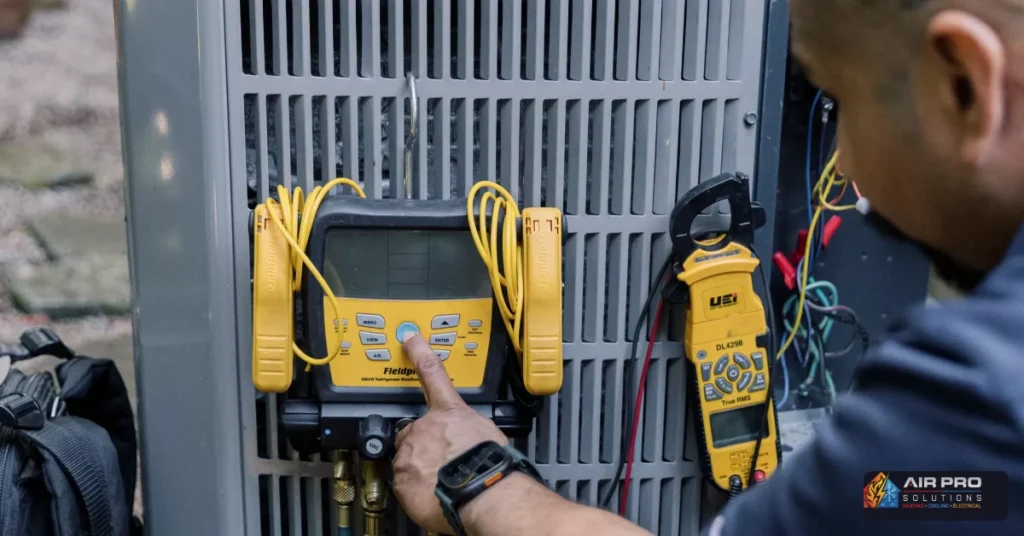
A ducted heat pump looks a lot like central air. An outdoor unit connects by refrigerant lines to an indoor air handler, often in a garage, closet, attic or crawl space. The air handler blows heated or cooled air through your ducts and out of floor or wall registers. One thermostat controls the whole system.
In winter, the heat pump pulls heat from the outdoor air and moves it inside. In summer, it runs in reverse like an air conditioner. Most ducted heat pumps in our area also have backup electric heat or pair with a gas furnace for the coldest days.
How a Ductless Mini Split Works
A mini split also has an outdoor unit. Instead of one air handler, it connects to one or more indoor “heads.” These mount high on a wall, in the ceiling or low on the floor. A small hole, about three inches across, carries the refrigerant lines, power cable and drain line through the wall.
Depending on the model, one outdoor unit can serve several indoor units, each acting as its own zone. Because there are no ducts, mini splits avoid the duct air leaks that ducted systems can have, especially when ducts run through a crawl space or attic.
Air Pro Solutions installs both types. See our mini split HVAC services page for the brands and options we offer.
Heat Pump vs Mini Split: Side-by-Side
| Factor | Ducted heat pump | Ductless mini split |
|---|---|---|
| Needs ductwork | Yes | No |
| How air is delivered | Hidden registers in each room | Visible indoor heads in each zone |
| Temperature control | One thermostat, or zoning dampers added | Separate control for each indoor unit |
| Duct energy losses | Possible, especially with leaky ducts | None |
| Filtration | Can use thick media filters at the air handler | Washable screens in each head |
| Install disruption | Low if ducts are good; high if ducts need replacing | Low; small wall openings only |
| Best fit | Homes with sound, well-sized ducts | Homes without ducts, additions, problem rooms |
The duct question decides most jobs
The ENERGY STAR duct sealing page says that in a typical house, about 20 to 30 percent of the air moving through ducts is lost to leaks, holes and poor connections. If your ducts are in good shape, a ducted heat pump uses them well. If they are leaky, crushed or undersized, you either fix the ducts or skip them with a mini split.
Which Homes Suit Each System?
A ducted heat pump usually makes sense if
- You already have a furnace with ductwork in good condition
- You want hidden equipment with no units on the walls
- You want whole-house filtration through a thick media filter
- Your home has an open layout where air moves easily between rooms
A ductless mini split usually makes sense if
- Your home has baseboard or wall heaters and no ducts, which is common in older Puget Sound homes
- You are adding a room, finishing a garage or converting a bonus room
- One room is always too hot or too cold
- Family members want different temperatures in different rooms
The ENERGY STAR mini split page makes the same point. It says mini splits are designed for homes or sections of homes without ductwork, and that homes with existing ducts may be better served by a ducted heat pump.
The hybrid option
Many homes do best with both. A ducted heat pump covers the main floors. A single-zone mini split handles a room the ducts never reached well, like a bonus room over the garage. This avoids tearing open walls to add ducts.
Not sure which way your home leans? Call (253) 397-7220. We will look at your ducts, your layout and your rooms, then quote the options side by side.

How Each System Handles Puget Sound Weather
Our winters are long, damp and mild, with a few short cold snaps. Both system types handle that climate well when they are sized right.
- Mild, wet days: both run efficiently. This is where heat pumps save the most compared with electric baseboard heat.
- Cold snaps: a ducted system usually has backup electric heat or a gas furnace. Many cold-climate mini splits keep heating at low outdoor temperatures without backup.
- Defrost cycles: both will pause heating briefly to melt frost on the outdoor unit. This is normal in our damp air.
- Summer heat waves: both cool your home, which a baseboard or furnace-only house cannot do.
Ask any installer for the model’s rated heating output at low outdoor temperatures, not just its efficiency rating.
What Affects the Cost of Each System?
We cannot give a fair price without seeing your home. These are the factors that move the number most:
- Number of zones: each extra mini split head adds equipment and labor.
- Duct condition: a ducted system costs far less when the ducts can be reused.
- System size: based on a load calculation, not just square footage.
- Efficiency and cold-weather rating: cold-climate models cost more but keep heating at lower outdoor temperatures.
- Electrical work: some homes need a new circuit or panel space. As an HVAC and electrical company, we handle both.
- Line set length and wall access: longer runs and finished walls add time.
For real price ranges, see our guide to the ductless mini split cost.
How to Decide: A Simple Process
- Check what you have now. Note whether you have ducts, baseboard heat, a furnace or a mix.
- List problem rooms. Write down which rooms are too hot, too cold or never comfortable.
- Have the ducts inspected. Leaks, crushed runs and missing insulation change the answer.
- Ask for a load calculation. Right-sizing matters more than brand for comfort and bills.
- Compare full quotes. Include duct repair, electrical work and any wall patching in each one.
Heat Pump vs Mini Split FAQs
What is the difference between a mini split and a ductless heat pump?
In most cases, there is no difference. “Mini split” and “ductless heat pump” usually describe the same system: an outdoor unit linked to one or more indoor heads with no ductwork. A few mini splits are cooling-only, so check that the model includes heating if you need it.
What are the disadvantages of a mini split?
Mini splits put visible units on your walls, which some owners dislike. Each head has a small filter that needs regular cleaning. Whole-home setups with many zones can cost more upfront than a ducted system in a home that already has good ducts.
How does a split heat pump work?
A split heat pump has two parts: an outdoor unit and an indoor unit. Refrigerant moves between them, carrying heat. In winter, it pulls heat from outdoor air and releases it inside. In summer, it reverses and moves indoor heat outside, just like an air conditioner.
How many mini splits do I need for a 1500 square foot house?
It depends on the layout, not just the size. An open 1,500 square foot home may need only two or three heads. A home with many closed rooms may need more. A load calculation and a walk-through of the floor plan give the right answer.
Find the Right Heat Pump for Your Home
The best system is the one that fits your house, not the one with the biggest ad budget. Call Air Pro Solutions Heating, Cooling & Electrical at (253) 397-7220 and ask for a ducted vs ductless comparison. You will talk to Efer or Alec, the owners, not a call center. We will check your ducts, measure your rooms, and quote both options so you can choose with real numbers. We are open Monday to Friday, 7:30 AM to 8 PM, and serve Auburn, Kent, Seattle heat pump installation customers and nearby King and Pierce County. Or request a quote online.