










Changing a furnace filter takes only a few minutes, yet one common mistake can cost you efficiency, air quality, and even system damage. Many homeowners install filters backward without realizing it. This leads to restricted airflow and higher energy bills over time. If you have ever wondered which way should a furnace filter go, you are not alone. The good news is that there is a simple rule that applies to every filter type and furnace configuration.
This guide explains exactly how to identify the correct filter direction, install it properly in any furnace type, and avoid the most common installation mistakes. By the end, you will feel confident handling this essential maintenance task on your own.
Why Furnace Filter Direction Matters
How Airflow Works in Your Heating System
Your furnace does not generate new air. Instead, it recirculates the air already inside your home. The blower fan pulls air in through the return ducts, passes it through the filter to remove dust and debris, heats or cools it, and then pushes it back out through the supply vents. The filter sits between the return air and the blower motor, capturing particles before they can reach sensitive components like the heat exchanger and evaporator coil.
Because air filters are designed with one side more porous than the other, they only work correctly when installed in the proper direction. The more open side captures larger particles first, while the denser side traps finer dust as air exits. This layered design allows for even dust distribution throughout the filter material rather than just on the surface.
What Happens When the Filter Is Installed Backward
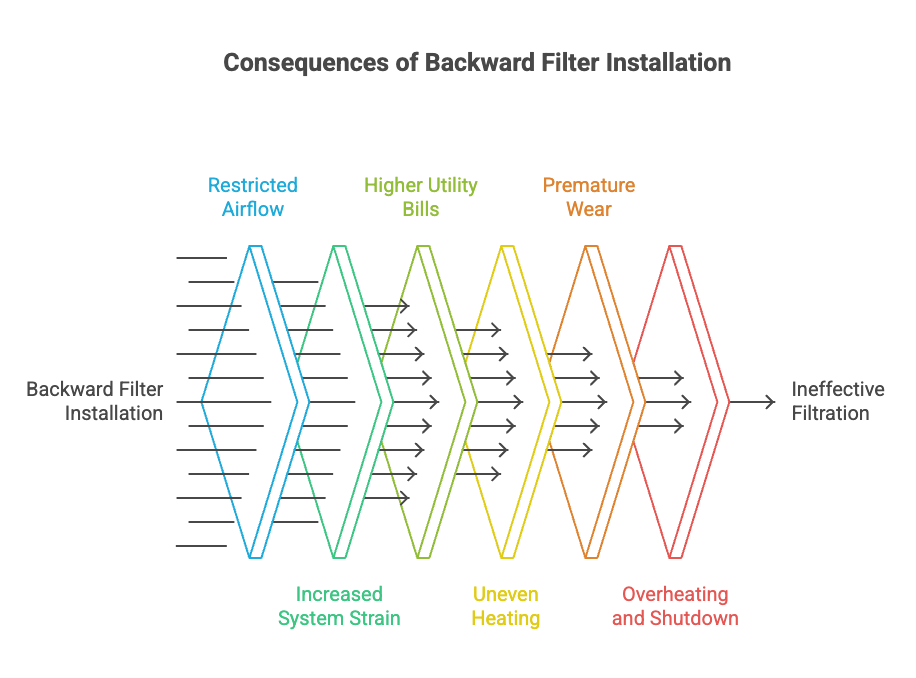
Installing a filter backward forces your furnace to draw air through the denser, less porous side first. This restricts airflow significantly, making the system work harder to maintain temperature. Over time, this extra strain can lead to higher utility bills, uneven heating, and premature wear on the blower motor. In some cases, reduced airflow can even cause the furnace to overheat and shut down, a condition known as short cycling.
A backward filter also fails to trap particles effectively. Dust, pollen, and pet dander can slip past and accumulate on internal components or recirculate into your living space. If you have noticed that a clogged filter can cause problems like reduced airflow or strange odors, imagine what happens when the filter cannot do its job at all.
How Do You Find the Airflow Arrow on Your Filter?
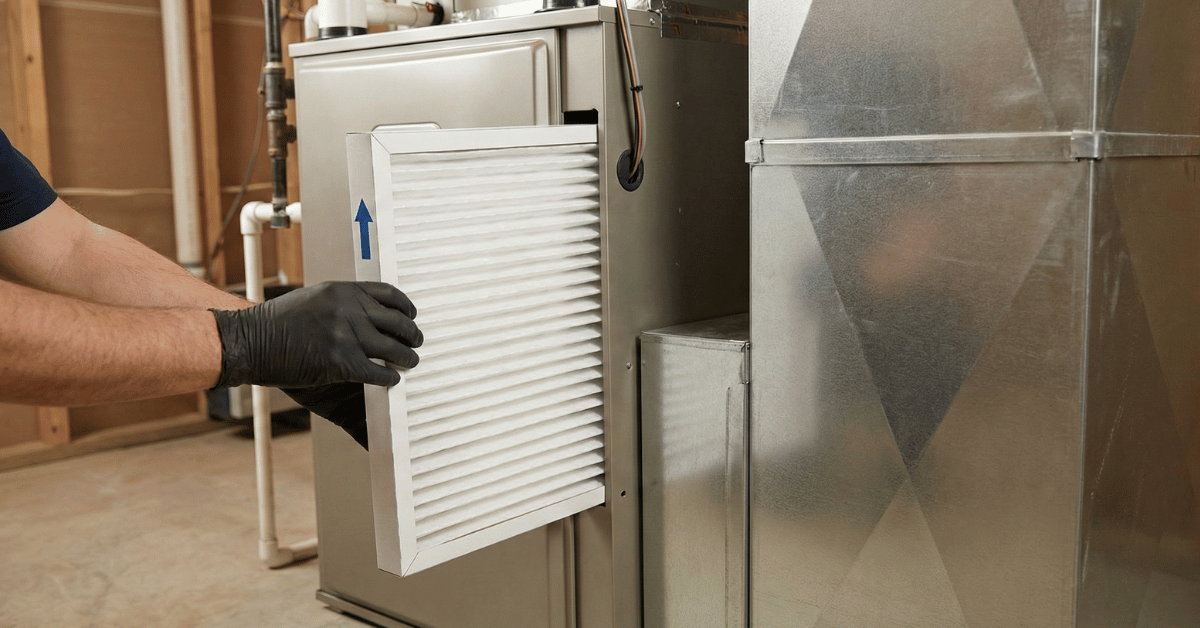
Every disposable furnace filter has an arrow printed somewhere on its cardboard frame. This arrow indicates the direction air should flow through the filter. Before removing your old filter, take a moment to note which way the arrow is pointing. This gives you a reference for installing the new one correctly.
If you cannot find the arrow, look at the filter material itself. The side with lighter, more open fibers should face the incoming air (the return duct side). The side with a wire mesh or denser backing should face the furnace. Some filters also have printed text that says “Air Flow” or “This Side Toward Furnace” to guide you.
For washable or electrostatic filters that lack direction markings, check the manufacturer instructions. Most reusable filters can be installed either way, but some have specific orientation requirements for optimal performance.
Which Way Should a Furnace Filter Go? The One Rule to Remember
The arrow on your furnace filter should always point toward the furnace and away from the return duct. Think of it this way: air flows from your home, through the return duct, through the filter, and into the furnace. The arrow follows that same path, pointing in the direction the air travels.
If your filter slot is located inside the furnace itself, the arrow points inward toward the blower motor. If the filter sits inside a wall or ceiling return vent, the arrow points toward the ductwork that leads to the furnace. A helpful tip from HVAC professionals is to use a permanent marker to draw an airflow direction arrow on your furnace or ductwork near the filter slot. This visual reminder makes future filter changes foolproof.
Filter Direction for Different Furnace Types
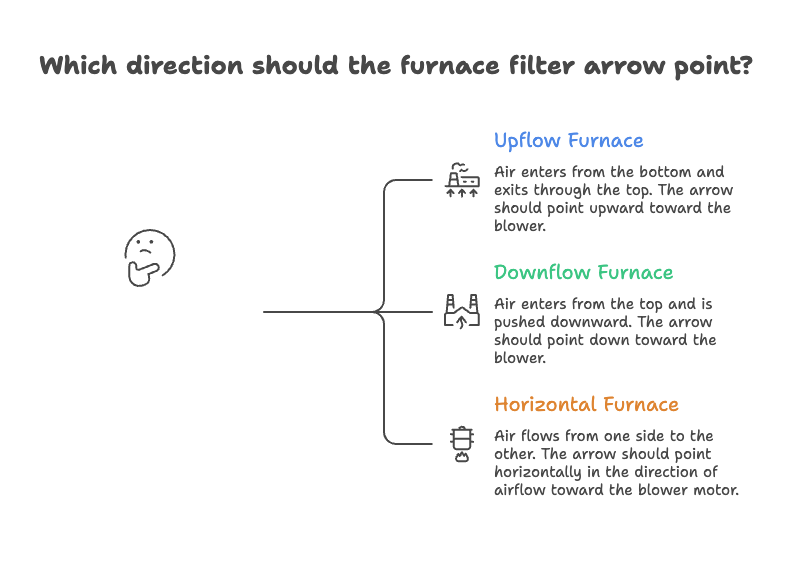
Not all furnaces are configured the same way. The direction your filter arrow points depends on whether your system has upflow, downflow, or horizontal airflow.
- Upflow furnaces are common in basements where air enters from the bottom and exits through the top. The filter is located near the bottom of the unit, and the arrow should point upward toward the blower.
- Downflow furnaces are often installed in attics where air enters from the top and is pushed downward. The filter sits at the top of the unit, and the arrow should point down toward the blower.
- Horizontal furnaces lie on their side in crawl spaces or utility closets. Air flows from one side to the other, so the arrow points horizontally in the direction of airflow toward the blower motor.
If you are unsure which type you have, turn on the blower fan and feel which direction air is moving near the filter slot. The arrow should always point the same direction the air is traveling.
Common Furnace Filter Installation Mistakes
Even experienced homeowners occasionally make mistakes when changing filters. Awareness of these common errors can help you avoid them and keep your system running smoothly.
- Installing the filter backward is the most frequent error. Always check the arrow before sliding the filter into place. If it points toward the return duct instead of the furnace, flip it around.
- Using the wrong size filter allows unfiltered air to slip around the edges. Check the dimensions printed on your current filter and match them exactly when purchasing replacements.
- Forgetting to check filter condition can leave a dirty filter in place too long. If the filter looks gray or you cannot see light through it, replace it regardless of how recently you installed it.
These simple oversights can contribute to common furnace problems like uneven heating, strange noises, or unexpected shutdowns. Taking an extra moment to verify your installation can prevent headaches down the road.
How Often Should You Change Your Furnace Filter?
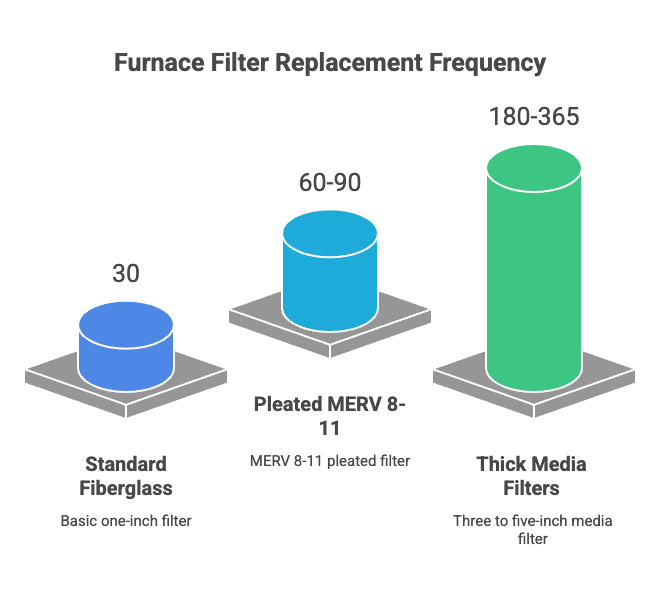
Replacement frequency depends on the type and thickness of your filter. Standard one-inch fiberglass filters should be replaced every 30 days. Pleated one-inch filters with a MERV rating of 8 to 11 typically last 60 to 90 days. Thicker media filters in the three to five inch range can go six to twelve months between changes. For a detailed breakdown, see our guide on how often to change your furnace filter.
Households with pets, allergies, or high dust levels may need to change filters more frequently. Check your filter monthly by holding it up to the light. If it appears gray or clogged, swap it out early. Keeping a few spare filters on hand makes this task easier to stay on top of. If you have reusable filters, learn how to clean your reusable filter to maintain peak performance.
Keep Your Furnace Running Smoothly
Installing your furnace filter correctly is one of the simplest ways to protect your HVAC system and maintain good indoor air quality. Remember the one rule: the arrow always points toward the furnace and away from the return duct. Check your filter monthly, replace it on schedule, and mark the airflow direction near your filter slot so you never have to guess.
If you are unsure about your filter direction or want a professional to inspect your system, the team at Air Pro Solutions is here to help. Contact us to schedule a furnace tune-up and ensure everything is running efficiently. A little maintenance now can save you from bigger problems later.