Skip to content








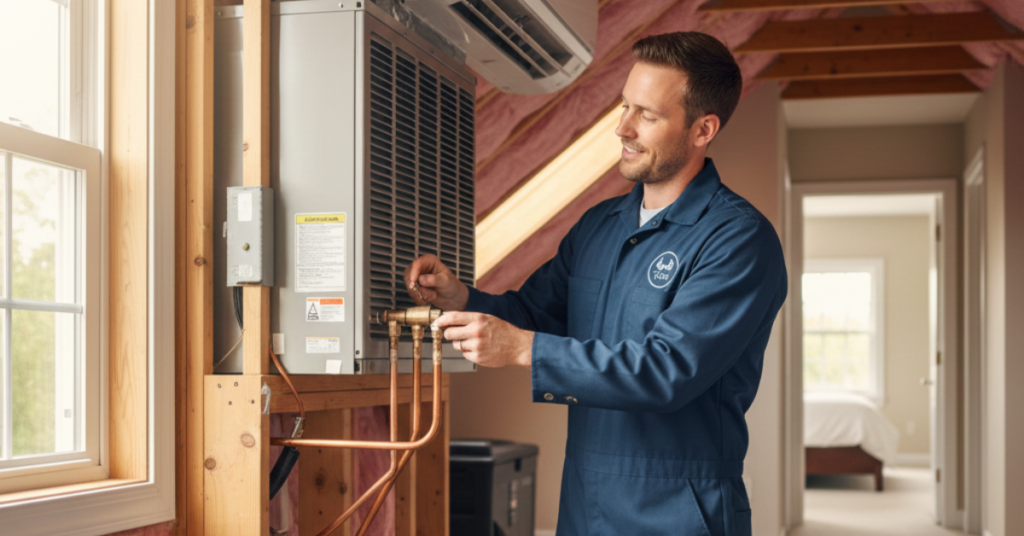
If your furnace stops working during winter, shut off the system, check the thermostat and circuit breaker, and call a licensed HVAC technician immediately.
Why Does a Furnace Breaks in Cold Weather?
While waiting for repairs, prevent frozen pipes by keeping faucets dripping, open cabinet doors under sinks, and use portable space heaters safely in well-ventilated areas. Most emergency furnace repairs in the Auburn, WA area can be completed within the same day, with technicians typically arriving within 2 hours.
Key Takeaways
- Check the thermostat, filter, and circuit breaker first before calling for service because many furnace “failures” have simple causes
- If you smell gas or suspect a carbon monoxide leak, evacuate your home immediately and call your gas utility from outside
- Protect your pipes from freezing by opening cabinet doors, letting faucets drip, and keeping the home temperature above 55 degrees if possible
- Use portable space heaters with caution: keep them 3 feet from anything flammable and never leave them unattended
- Emergency furnace repair costs $400 to $1,500 on average, with after-hours surcharges of $50 to $150
- Homeowners with maintenance plans receive priority scheduling and faster response times during winter emergencies
- Regular maintenance reduces furnace breakdown risk by 50% and catches problems before they become emergencies

Step 1: Check for Safety Concerns First
Before troubleshooting anything, make sure there are no immediate safety hazards.
Gas Smell or Carbon Monoxide Alarm
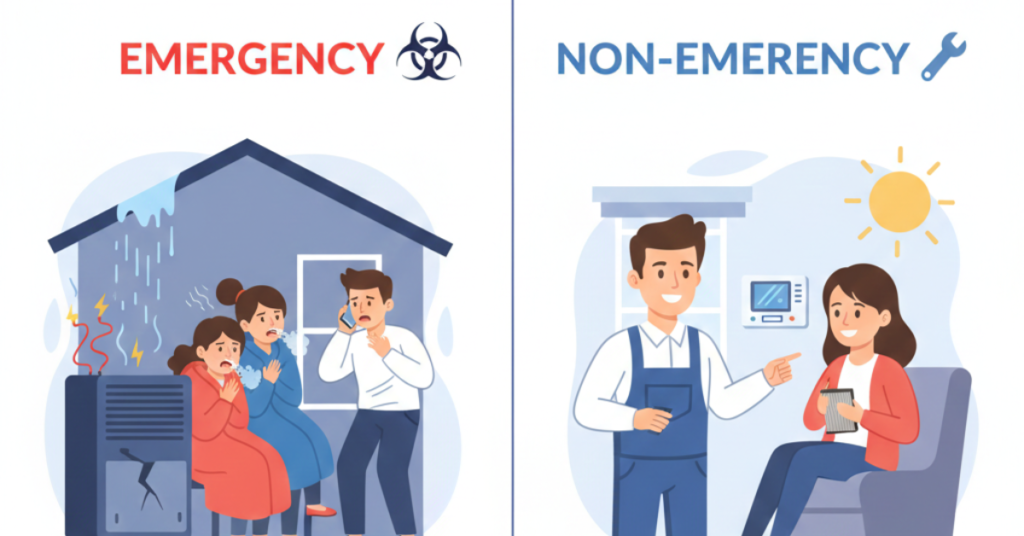
If you detect a rotten egg or sulfur smell, your gas supply may be leaking. If a carbon monoxide detector is sounding, the situation is even more urgent. In either case, do not flip any electrical switches, do not use open flames, and evacuate everyone from the home. Call your gas utility company from outside.
Carbon monoxide is colorless and odorless, but warning signs beyond detector alarms include soot buildup around the furnace, a yellow burner flame (healthy flames are blue), and family members experiencing headaches, dizziness, or nausea. Learn more about the signs of carbon monoxide leaking from your furnace and what to do about it.
Burning Smell or Visible Smoke
A burning smell when the furnace first starts after months of inactivity is often just dust burning off the heat exchanger. This usually clears within 15 to 20 minutes. However, if the smell persists, intensifies, or you see smoke, shut off the system at the thermostat and the breaker. Contact an HVAC professional immediately.

Step 2: Basic Troubleshooting Before Calling for Service
Many furnace “breakdowns” have simple causes that you can check yourself. Running through these steps first may save you an emergency service call.
Check the Thermostat
Verify that the thermostat is set to “heat” mode and the temperature is set above the current room temperature. Replace the batteries if it has them. A dead battery is one of the most common and easiest-to-fix reasons a furnace appears to stop working.
Check the Circuit Breaker
A tripped breaker will shut your furnace off completely. Locate your electrical panel and look for any breakers in the “off” or middle position. Reset the breaker by flipping it fully off and then back on. If it trips again immediately, there may be an electrical issue that requires professional attention.
Check the Air Filter
A severely clogged filter can restrict airflow to the point where the furnace overheats and shuts itself down as a safety precaution. Remove the filter and inspect it. If it’s visibly dirty or clogged, replace it with a clean one. Learn more about what happens when your air filter is clogged.
Check the Pilot Light or Igniter
If you have an older furnace with a standing pilot light, check whether the flame is lit. Follow the manufacturer’s instructions to relight it if needed. Newer furnaces use electronic ignition systems. If the igniter is glowing but the burners aren’t firing, the issue likely requires professional diagnosis.
Check the Condensate Drain
High-efficiency furnaces produce condensate that drains through a small tube. If this drain is clogged, the furnace may shut down to prevent water damage. Check for visible blockages and clear them if possible.
If none of these steps resolve the issue, it’s time to call a professional.

Step 3: Protect Your Home While Waiting for Repairs
A home without heat in winter faces real risks beyond discomfort. Taking a few immediate steps can prevent costly secondary damage.
Prevent Frozen Pipes
When indoor temperatures drop below 55 degrees Fahrenheit, your plumbing becomes vulnerable to freezing. Frozen pipes can burst, causing thousands of dollars in water damage.
- Open cabinet doors under kitchen and bathroom sinks to let warm air circulate around the pipes
- Let faucets drip slowly to keep water moving through the pipes
- Disconnect garden hoses and close interior shut-off valves to outdoor faucets if you haven’t already
- If you have a basement, check exposed pipes and consider wrapping them with towels as temporary insulation
Use Space Heaters Safely
Portable electric space heaters can provide temporary warmth while you wait for furnace repair. Follow these safety rules.
- Keep heaters at least 3 feet away from curtains, furniture, bedding, and other flammable materials
- Never leave a space heater unattended or running while you sleep
- Plug heaters directly into wall outlets, never into extension cords or power strips
- Choose heaters with automatic shut-off features that activate if the unit tips over
Seal Drafts
Close doors to unused rooms to concentrate warmth in your living areas. Hang heavy blankets over drafty windows and place rolled towels at the base of exterior doors. These simple steps help retain whatever heat remains in your home.
Step 4: Call a Licensed HVAC Professional
Once you’ve ruled out simple fixes, contact a licensed HVAC contractor who offers emergency service. When you call, be prepared to share the following information.
- What happened. Describe the symptoms: did the furnace stop suddenly, make unusual sounds, or produce strange smells?
- What you’ve already checked. Let the technician know you’ve verified the thermostat, breaker, and filter.
- Your furnace’s age and brand. This helps the technician prepare the right tools and parts.
- Your warranty status. If the furnace is under warranty, having documentation ready can reduce your repair cost.
Most emergency furnace repairs cost between $400 and $1,500, depending on the problem. Common winter repairs include igniter replacement ($150 to $350), blower motor repair ($400 to $900), and flame sensor cleaning ($75 to $200).
Homeowners with active maintenance plans typically receive priority scheduling, which means faster response times during the peak winter season when demand is highest.
Step 5: Decide Between Repair and Replacement
If your furnace is older or the repair cost is substantial, you may need to decide whether to repair or replace the system. Consider these factors.
- Age of the furnace. The average furnace lasts 15 to 20 years. If yours is approaching or past that range, replacement may be more cost-effective than repeated repairs.
- Cost of repair vs. replacement. A common guideline is the “50% rule”: if the repair costs more than 50% of a new system, replacement is usually the better investment.
- Frequency of breakdowns. If you’ve needed multiple repairs in the past 2 years, the system may be nearing the end of its reliable service life.
- Energy efficiency. Older furnaces operate at 60% to 80% efficiency, while modern systems achieve 95% to 98%. Upgrading can significantly lower your monthly heating bills.
Our guide on furnace replacement vs. repair walks you through the decision in detail.
How to Prevent Winter Furnace Breakdowns
The best strategy is avoiding the emergency in the first place. According to industry data, homeowners who schedule regular maintenance are 50% less likely to experience unexpected furnace failures.
Preventive steps that reduce winter breakdown risk include scheduling a fall tune-up before heating season begins, replacing the air filter every 1 to 3 months, keeping vents and registers clear of furniture and rugs, and addressing unusual sounds or smells promptly rather than waiting.
Regular maintenance extends your HVAC system’s lifespan and gives you peace of mind when temperatures drop.
Stay Warm and Stay Safe
A furnace breakdown in winter is stressful, but knowing what to do makes it manageable. Check for safety hazards first, troubleshoot simple issues, protect your pipes, stay warm safely, and call a licensed professional for expert repair. With the right response plan, you can minimize discomfort and prevent costly secondary damage.
If your furnace has stopped working, contact Air Pro Solutions for responsive, professional service in Auburn, WA and surrounding communities. We’re here to get your heat back on quickly and safely.