Skip to content












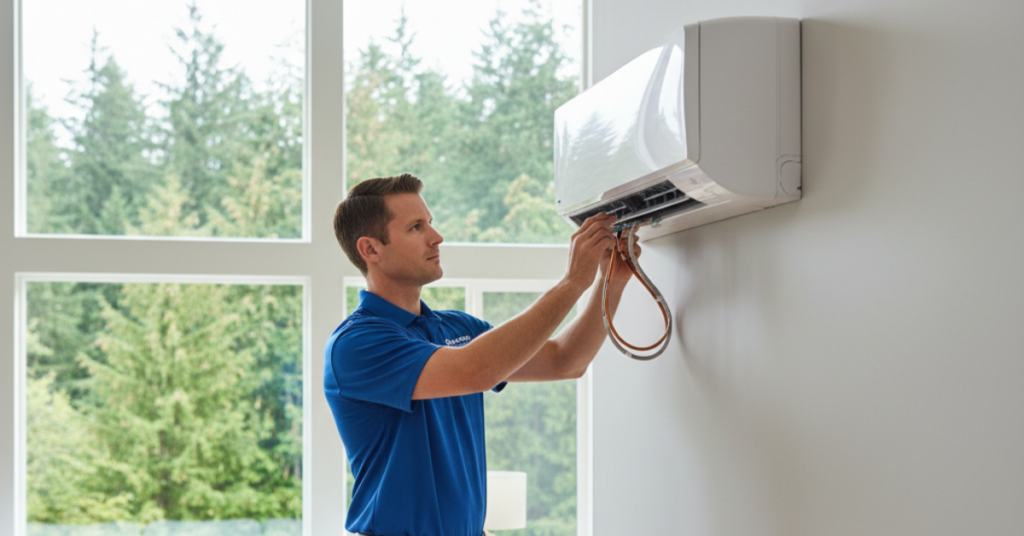
The best location for a ductless mini split indoor unit is high on an exterior wall, 6 to 7 feet above the floor, centered in the room, and away from heat sources or obstructions.
Want to Install a Ductless Unit for Max Comfort?
This placement allows conditioned air to distribute evenly across the entire space. Mounting on a perimeter wall also simplifies the connection to the outdoor compressor, reduces installation costs, and ensures proper condensate drainage.
Key Takeaways
- Mount the indoor unit 6 to 7 feet above the floor with 4 to 6 inches of clearance between the unit and the ceiling
- Choose an exterior or perimeter wall for easier refrigerant line routing and lower installation costs
- Keep the unit away from heat sources like stoves, fireplaces, and direct sunlight, which can confuse temperature sensors
- Leave at least 1 foot of clearance in front of and around the unit for unobstructed airflow
- Place the outdoor compressor on a level surface with adequate clearance, away from shrubbery and debris
- Avoid mounting the indoor unit above doors, windows, or directly over beds and seating areas
Why Does Ductless Mini Split Placement Matter?
Where you install a ductless mini split directly affects how well it heats, cools, and circulates air throughout the room. A poorly placed indoor unit can create hot or cold spots, cause the system to short-cycle, and force it to work harder than necessary. This wastes energy and shortens the equipment’s lifespan.
According to Carrier, proper mini split placement maximizes both performance and efficiency. Professional installation ensures the system is correctly sized and positioned for your home’s layout. Since ductless systems deliver air directly without ductwork, placement becomes even more critical than it is with central HVAC systems.
If you’re considering a ductless system, understanding the basics of how ductless mini split systems work will help you make smarter decisions about where each unit should go.

Where Should You Install the Indoor Unit?
The indoor air handler is the component you’ll see and interact with daily. Getting its placement right is essential for comfort, efficiency, and quiet operation.
High on an Exterior Wall
The most effective position is high on a perimeter (exterior) wall, centered in the room. According to HVACDirect.com, most ductless systems should be installed about 6 to 7 feet from the floor, with 4 to 6 inches of space between the top of the unit and the ceiling. This height allows conditioned air to circulate downward and distribute evenly throughout the space.
Mounting on an exterior wall also provides a direct path for refrigerant lines to connect to the outdoor compressor. Interior wall installations add complexity, require longer line sets, and may need a condensate pump, all of which increase costs.
Centered for Even Distribution
A centrally placed unit reduces the system’s workload by distributing air more uniformly. When the indoor unit is tucked into a corner or recessed area, it has to push harder to reach the far side of the room, leading to uneven temperatures and wasted energy.
According to Gulf Shore Cooling, central placement helps maintain consistent room temperatures and improves energy efficiency by preventing the unit from overworking in one direction.
Away From Heat Sources and Electronics
Avoid placing your ductless unit near stoves, ovens, fireplaces, or large electronics like TVs and computers. These items generate heat that can confuse the unit’s built-in temperature sensor, causing it to read the room as warmer than it actually is. The result is inconsistent cooling or heating cycles that waste energy.
Direct sunlight is another concern. A unit installed on a sun-drenched wall has to work significantly harder to maintain your desired temperature.
Room-by-Room Placement Tips
Every room in your home has unique characteristics that affect ideal ductless unit placement. Here are guidelines for the most common spaces.
Bedrooms
Quiet operation and indirect airflow are priorities in bedrooms. Mount the unit on a side wall rather than directly above the bed. This directs air across the room rather than straight down on sleepers, preventing uncomfortable drafts and temperature swings during the night.
Living Rooms and Open Floor Plans
For larger spaces, choose a wall that allows the unit to cover the widest area without furniture blocking the airflow. Keep the unit away from curtains, bookshelves, and tall furniture that can obstruct circulation.
Home Offices
Offices often contain computers and monitors that generate heat. Position the unit centrally and high, but not aimed directly at your desk or monitors. This prevents cold spots during long work sessions while keeping the room comfortable.
Garages and Workshops
These spaces benefit from wall-mounted units placed on the longest wall for maximum coverage. Consider that garages may have more dust and debris, so ensure the unit has adequate clearance for regular filter cleaning and maintenance.

Where Should You Place the Outdoor Compressor?
The outdoor unit is just as important to get right. Poor placement can restrict airflow, reduce efficiency, and increase noise.
Level Surface With Clearance
Place the outdoor compressor on a solid, level base such as a concrete pad or composite mounting pad. According to Carrier, the unit needs clearance on all sides for proper airflow into and out of the system. Never place it directly against a wall.
Protected From Obstructions
Keep the area around the outdoor unit clear of shrubbery, garden equipment, and debris. Plants should be trimmed back at least 2 feet. Blocked airflow forces the compressor to work harder, reducing efficiency and increasing energy costs.
Close to the Indoor Unit
While outdoor units can be placed up to 100 feet from the indoor unit, shorter distances are better for efficiency. The longer the refrigerant line run, the more potential there is for energy loss. Keeping the units relatively close also simplifies installation and reduces material costs.
Shaded and Sheltered
A shaded location on the north or east side of your home can help the outdoor unit operate more efficiently, especially during summer months. Avoid placing it under roof eaves where ice or snow can fall directly onto the unit in winter.
Common Placement Mistakes to Avoid
Even experienced homeowners can make placement errors that reduce system performance. Here are the most common ones.
- Above doors or windows. Opening and closing doors disrupts airflow and allows conditioned air to escape. Refrigerant line routing is also more complicated.
- In tight corners or recessed areas. Limited clearance causes short-cycling and uneven coverage.
- Near competing airflow sources. Placing a mini split near a ceiling fan or existing HVAC vent creates conflicting air patterns that confuse the system’s sensors.
- Directly above seating or sleeping areas. Constant direct airflow causes discomfort, especially during long periods of rest or work.
- On interior walls without a condensate pump. Condensate drainage is gravity-fed. Interior walls require additional equipment to handle drainage properly.
Let a Professional Assess Your Space
While these guidelines cover the fundamentals, every home has unique characteristics that affect ideal placement. Ceiling height, room shape, insulation levels, and furniture layout all play a role.
A licensed HVAC contractor will evaluate your specific layout and recommend the best position for both indoor and outdoor units. This ensures you get maximum airflow, efficiency, and comfort from your investment.
If you’re in the Auburn, Washington area, the team at Air Pro Solutions can assess your home, recommend the right system size, and handle professional installation from start to finish. We serve homeowners across the greater Puget Sound region.
Get the Most From Your Ductless Mini Split
Proper placement is the foundation of a high-performing ductless mini split system. Mount the indoor unit high on a centered exterior wall, keep it clear of obstructions and heat sources, and position the outdoor compressor on a level, well-ventilated surface. Avoid common mistakes like installing above doors or in tight corners.
When placement is done right, your system runs quieter, lasts longer, and delivers consistent comfort in every room. Ready to find the perfect setup for your home? Contact Air Pro Solutions to schedule a consultation and get expert guidance on ductless mini split installation.