Skip to content











What size air conditioner do I need? Most charts tell you to multiply your square footage by 20 BTU. That rule was built for hot climates and it routinely oversizes equipment in western Washington. A proper load calculation usually lands a home here a half ton to a full ton smaller, which is the first thing we check before any AC installation in Auburn.
Key Takeaways
- Square footage alone is not enough. Insulation, windows, shade and air leakage change the answer more than floor area does.
- Oversized is worse than slightly undersized. A big unit short cycles, leaves the house clammy and wears out sooner.
- Mild climates need less capacity per square foot, not the same as Phoenix or Dallas.
- Manual J is the actual standard. Anything else is a guess wearing a chart.
- You can read your current size off the model number on the outdoor unit in about two minutes.
What Size Air Conditioner Do I Need by Square Footage?
What size air conditioner do I need for my home? Here is the chart nearly every website gives you. It is a starting point and nothing more.
| Home size | Rule of thumb BTU | Tonnage |
|---|---|---|
| 1,000 sq ft | 20,000 to 24,000 | 1.5 to 2 tons |
| 1,200 sq ft | 24,000 | 2 tons |
| 1,500 sq ft | 30,000 | 2.5 tons |
| 1,800 sq ft | 36,000 | 3 tons |
| 2,000 sq ft | 40,000 to 48,000 | 3.5 to 4 tons |
| 2,500 sq ft | 48,000 to 60,000 | 4 to 5 tons |
A ton of cooling equals 12,000 BTU per hour, and a British thermal unit explained is simply a measure of heat energy. That is all tonnage means. It has nothing to do with the weight of the unit.

The problem is the assumption baked into it. That 20 BTU per square foot figure assumes a hot summer design temperature, average insulation and average sun exposure. Change any of those and the number moves.
Why Washington Homes Usually Need Less
Summer design conditions in western Washington are far milder than in most of the country. Your air conditioner does not have to fight the same temperature difference that a home in Texas does, so it does not need the same capacity to hold the same indoor temperature.
Sizing charts published for a national audience do not account for that. Neither does a contractor who quotes off square footage in the driveway. The result is the single most common problem we find on existing systems around Auburn, Kent and Renton: a four ton condenser sitting outside a home that loads out at two and a half.
The other local factor is heating. Most new and replacement systems here are heat pumps, and a heat pump has to serve both seasons. Size it purely on the cooling load and you will often end up with the wrong machine for the nine months that actually matter. That is why ductless mini split systems and variable capacity equipment have become the default recommendation in this region.
Why Bigger Is Worse, Not Safer
An oversized air conditioner cools the air fast, satisfies the thermostat, and shuts off. That sounds efficient. It is not. Removing humidity takes run time, and a unit that runs in short bursts never gets to it, so the house ends up cold and clammy at the same time. Department of Energy DOE research on sizing links oversizing directly to higher indoor humidity and reduced efficiency.
Short cycling also means more starts. Starts are where compressors wear. An oversized unit will usually be noisier, less comfortable and shorter lived than the correctly sized one next door.
What Actually Decides the Right Size
Insulation and air leakage
A 1960s home with original insulation and single pane windows has a completely different load from a 2015 build of the same footprint. Air sealing often matters more than insulation depth.
Windows, orientation and shade
West facing glass in late afternoon is the biggest single heat gain in many homes. Mature trees on the south and west side cut the load noticeably.
Ceiling height and layout
Load is about volume, not floor area. Vaulted ceilings and open plans change the number. So do closed off rooms that the ductwork never served properly in the first place.
Occupancy and appliances
People and equipment add heat. A home office with two monitors and a kitchen in use every evening is a real load, not a rounding error.

How to Find Out What Size You Have Now
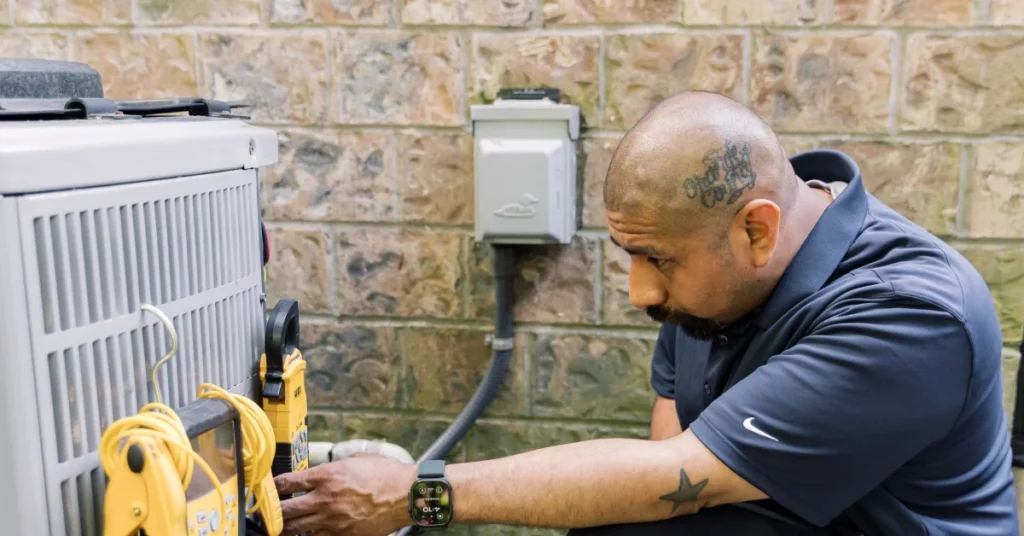
Before you settle what size air conditioner do I need, it helps to know your current capacity. Go to the outdoor unit and find the model number on the data plate.
- Look for a two digit even number inside the model number, somewhere between 18 and 60.
- That number is the nominal capacity in thousands of BTU. So 36 means 36,000 BTU.
- Divide by 12,000 to get tons. 36,000 BTU is a three ton unit.
- Write it down along with the manufacture date, usually in the serial number or on the plate.
- Compare it against your square footage using the chart above. If your existing unit looks a size or more larger than the chart suggests, it is very likely oversized.
| Number on the plate | BTU | Tons |
|---|---|---|
| 18 | 18,000 | 1.5 |
| 24 | 24,000 | 2 |
| 30 | 30,000 | 2.5 |
| 36 | 36,000 | 3 |
| 42 | 42,000 | 3.5 |
| 48 | 48,000 | 4 |
| 60 | 60,000 | 5 |
Not sure what you are looking at? Send us a photo of the data plate and we will read it for you. Call (253) 397-7220 or use our system diagnostics service if the system is also not performing.
What a Real Load Calculation Involves
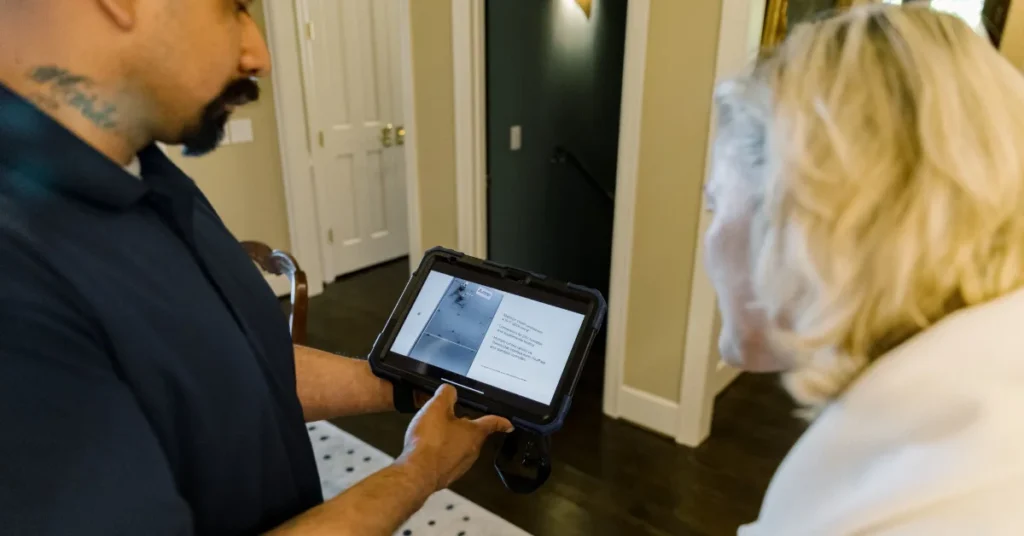
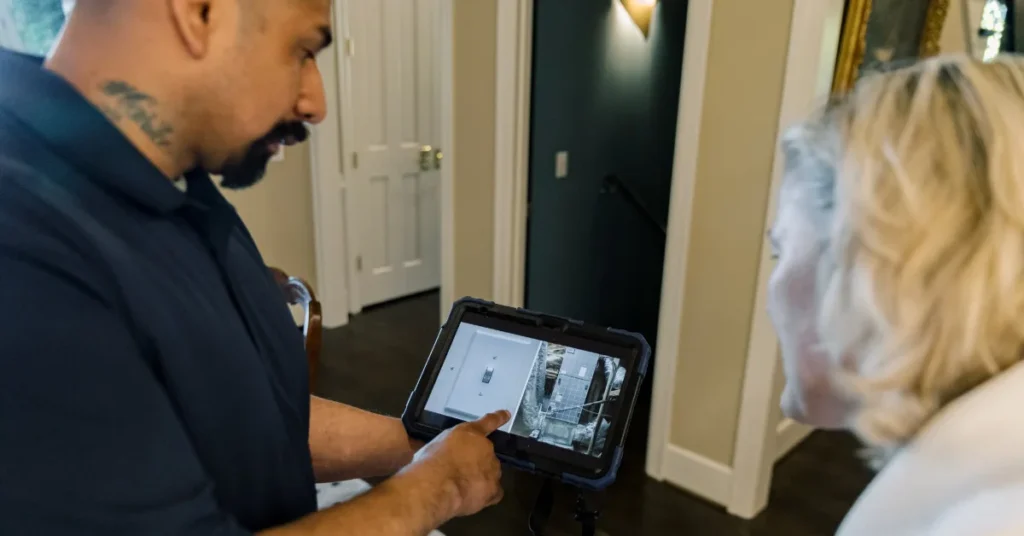
The industry standard is the ACCA Manual J standard. It is a room by room calculation, not a multiplication. A technician measures the home, records window type and orientation, notes insulation levels, accounts for air leakage, and produces a heating and cooling load in BTU.
It takes a couple of hours and it is the difference between a system that fits your house and a system that fits a chart. If a contractor quotes a replacement without doing one, or without at least asking the questions that feed one, that is worth noticing. The same calculation determines whether your existing central air conditioning systems were ever sized correctly to begin with.
Air Conditioner Sizing Questions We Get Asked
Is a 3 ton AC too big for a 1200 sq ft house?
Usually yes. A 1,200 square foot home typically loads out around two tons, and in a mild climate often less. A three ton unit on that house will short cycle, leave humidity behind and wear faster. A load calculation is the only way to confirm it, but the odds are it is oversized.
What size air conditioner do I need for a 2000 sq ft house?
Rule of thumb charts say 3.5 to 4 tons. In western Washington, a reasonably insulated 2,000 square foot home often calculates closer to 2.5 or 3 tons. The gap between those two answers is exactly why the calculation matters more than the chart.
How many BTU do I need for a 20×20 room?
A 400 square foot room needs roughly 8,000 to 10,000 BTU as a starting point. Add capacity for heavy sun exposure, a vaulted ceiling or a kitchen. Subtract for a shaded north facing room. For a single room, a ductless head is usually a better fit than resizing the whole system.
Is it better to oversize or undersize an AC unit?
Slightly undersized is the lesser evil. An undersized unit runs longer on the hottest days and may not quite keep up during a heat wave. An oversized unit causes humidity and comfort problems every single day it runs, plus faster wear. Correctly sized is the goal, and modern variable capacity equipment gives useful margin on both sides.
What size room can a 12000 BTU air conditioner cool?
Around 450 to 550 square feet in typical conditions. In a mild climate with decent insulation and shade, it can comfortably handle the upper end of that. In a sun exposed room with poor insulation, treat the lower end as the limit.
Getting the Size Right Before You Buy
What size air conditioner do I need is the cheapest question in HVAC to get wrong. It cannot be fixed with settings, it cannot be fixed with a better thermostat, and it follows you for fifteen years.
Call Air Pro Solutions Heating, Cooling & Electrical at (253) 397-7220 and ask for a load calculation before you compare replacement quotes. You will get a number based on your actual house, not a chart. You can also request a load calculation online.