Skip to content











It’s the question almost every Auburn homeowner asks at some point. The system is running, the bills aren’t crazy, and skipping a service call for one year feels harmless. But the short answer is yes, you need HVAC service every year, and probably twice a year if you want the system to last.
Annual service isn’t about selling tune-ups. It’s about protecting a piece of equipment that costs $8,000 to $15,000 to replace and quietly loses efficiency every season it goes untouched. Here’s what skipping it actually costs, what a proper service visit includes, and why your warranty paperwork probably requires it.
The Short Answer: Yes, Once a Year Minimum
Every major HVAC manufacturer recommends annual professional maintenance. If your system handles both heating and cooling, like most heat pumps in Auburn, the standard guidance is twice a year. One visit in spring before cooling season, one in fall before heating season.
This isn’t a contractor upsell. Most manufacturer warranties require documented annual maintenance to stay valid. Skip it and a $2,000 compressor failure in year seven might come out of your pocket instead of theirs.
Why Annual HVAC Service Matters
Five real reasons drive the once-a-year rule, and none of them are about busy work.
Lower Energy Bills
Dirty coils, clogged filters, and weak refrigerant charges force your system to run longer to hit the same temperature. That extra runtime shows up directly on your PSE bill. A clean, tuned system can use 5% to 15% less energy than a neglected one running the same hours.

Manufacturer Warranty Protection
Most major HVAC brands tie warranty coverage to proof of yearly service by a licensed contractor. If a major part fails and you can’t show service records, the claim often gets denied. Some warranties require maintenance by approved companies and may cancel coverage entirely for missed appointments.
Longer Equipment Lifespan
The average furnace lasts 15 to 20 years. The average AC or heat pump lasts 12 to 15. Those numbers assume regular service. Skip it and you often see failures at year 8 to 10 instead. Read more on how maintenance extends HVAC system lifespan for the full picture.
Safety Checks
Furnaces produce combustion gases. A cracked heat exchanger or blocked flue can let carbon monoxide into the home, which is colorless, odorless, and dangerous. Annual service includes a safety inspection that catches these issues before they reach your living space.
Better Indoor Air Quality
Months of dust, pollen, and pet dander build up inside the system. Annual cleaning of the blower, coils, and ducts cuts down on the allergens circulating through your home.
How Often Should You Schedule Service?
For most Auburn homes, the right schedule depends on the equipment.
Heat pumps and dual-system homes: Twice a year. Spring for the cooling side, fall for the heating side. The system runs year-round, so it needs attention on both functions.
Furnace plus separate AC: Twice a year still works best. Furnace before winter, AC before summer.
Furnace only or AC only: Once a year minimum, scheduled before the season of heaviest use.
Spring (late February through April) and early fall (September to October) are the easiest months to book. You skip the peak-season rush and get faster appointments at better prices.
What Happens If You Skip a Year?
Nothing dramatic happens on day one. The damage builds slowly, and you usually don’t notice until the system fails or the bills climb. Common consequences of skipping annual service include:
- Refrigerant levels drop without anyone catching it, hurting cooling output
- Capacitors weaken and eventually fail mid-summer
- Condensate drains clog and cause water damage near the indoor unit
- Filters stay in long past their lifespan, choking airflow
- Small electrical issues turn into major component failures
- Manufacturer warranty becomes harder or impossible to claim
The breakdown then happens on the hottest week of July or the coldest night of January, when service rates are highest and appointment slots are weeks out. Watch for warning signs your furnace needs repair and signs your AC needs repair between visits so you catch problems early.

What Does Annual HVAC Service Actually Cover?
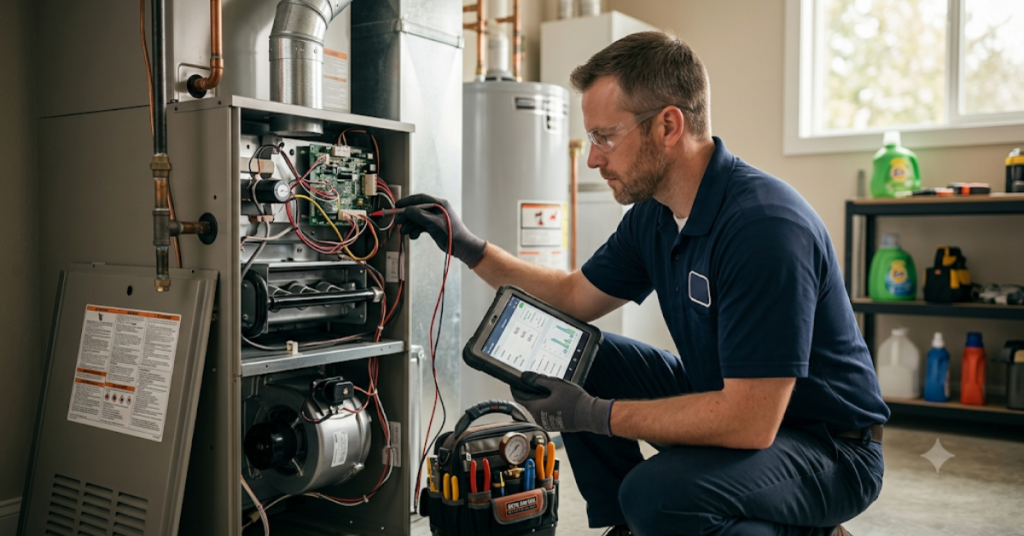
A real tune-up is much more than a filter swap. A professional visit typically includes:
- Cleaning condenser and evaporator coils
- Checking and topping off refrigerant levels
- Testing capacitors, contactors, and electrical connections
- Inspecting the blower motor and belt
- Clearing the condensate drain line
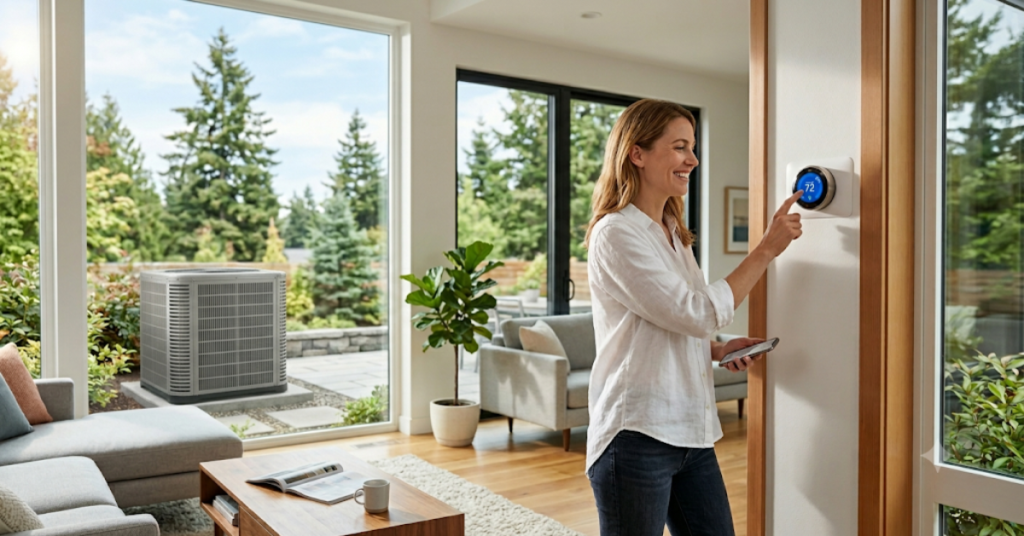
- Calibrating the thermostat
- Inspecting heat exchanger for cracks (furnaces)
- Checking gas pressure and combustion (gas systems)
- Lubricating moving parts
- Replacing or cleaning the air filter
For a deeper breakdown, here’s what’s included in an Auburn HVAC tune-up.
Is the Cost Actually Worth It?
This is where the math gets clear. A typical HVAC service visit in Auburn runs $100 to $200 for a single system. A maintenance plan with two visits a year usually lands between $150 and $300 annually.
Compare that to common repair costs:
- Capacitor replacement: $200 to $400
- Refrigerant leak repair and recharge: $300 to $1,500
- Blower motor replacement: $400 to $1,000
- Compressor failure: $1,500 to $3,500
- Full system replacement: $8,000 to $18,000
A $150 yearly visit that catches a $40 capacitor before it fries the compressor easily pays for itself many times over. That’s why the average lifespan of furnaces and air conditioners hits the higher end when service stays consistent.
Make Maintenance Easy, Not an Afterthought
Yes, you need HVAC service every year. Twice a year is even better. The savings on energy bills, repair costs, and equipment replacement are real, and the warranty protection alone covers the price of the visit several times over.
If your last service was over 12 months ago, now is the time to book the next one. Reach out to Air Pro Solutions to schedule a tune-up or set up a maintenance plan that handles the calendar for you, so your HVAC stays in shape without ever sitting on your to-do list.