






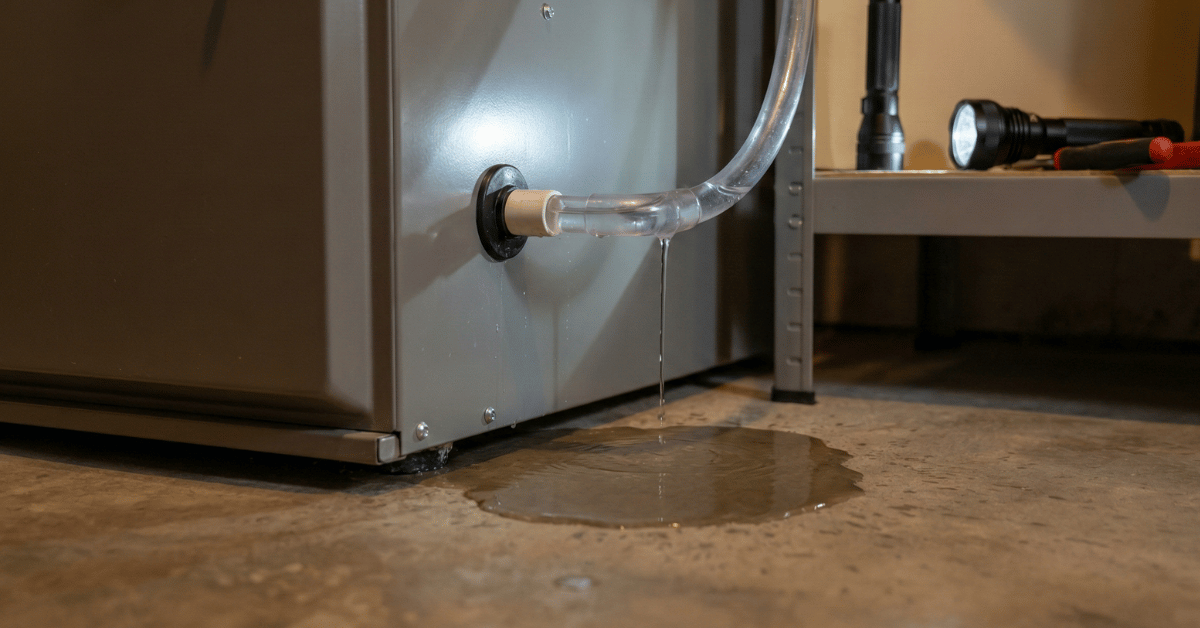
Discovering a puddle of water near your furnace during a cold Seattle winter can be alarming. Water and heating equipment don’t seem like they should go together. The good news is that a furnace leaking water is often a manageable issue with a straightforward fix.
If you’re wondering why your furnace is leaking water when the heat is on, you’re not alone. This is one of the most common concerns homeowners bring to HVAC professionals during the heating season. In this guide, we’ll explain the common causes, help you understand what’s normal versus what needs attention, and show you when to call a professional.
Is It Normal for a Furnace to Produce Water?
The answer depends on what type of furnace you have. If you own a high-efficiency condensing furnace, producing water is completely normal. These units are designed to create condensation as part of the heating process.
How High-Efficiency Furnaces Create Condensation
High-efficiency furnaces use two heat exchangers instead of one. The first heat exchanger captures heat from burning gas, just like a standard furnace. The second heat exchanger extracts additional heat from the exhaust gases before they leave your home.
As those gases cool in the secondary heat exchanger, water vapor condenses into liquid. This is why high-efficiency models are also called condensing furnaces. According to industry sources, a 90% AFUE or higher furnace can produce five to six gallons of condensate per day during regular operation.
Standard vs. High-Efficiency Furnaces: The Key Difference
Not sure which type you have? Here’s how to tell:
- High-efficiency (condensing) furnace: Features a white PVC exhaust pipe and has an AFUE rating of 90% or higher. Produces condensation normally.
- Standard efficiency furnace: Has a metal exhaust flue and an AFUE around 80%. Does not produce condensation during normal operation.
If you have a standard furnace and notice water pooling nearby, the source is likely not the furnace itself. It could be your AC drain line, water heater, or whole-house humidifier.
What Causes a Furnace to Leak Water When the Heat Is On?
When a high-efficiency furnace is leaking water, the problem usually traces back to the drainage system. The condensate must travel through a series of components to exit your home safely. A failure at any point can cause leaks.
Clogged Condensate Drain Line
This is the most common culprit. The drain line carries condensation away from your furnace to a floor drain or exterior exit point. Over time, dirt, debris, and even algae can build up inside the line. When water can’t pass through, it backs up and spills onto the floor.
HVAC professionals recommend flushing the line with a mixture of equal parts white vinegar and hot water to clear minor clogs. For stubborn blockages, a technician can clean or replace the line entirely.
Faulty or Failed Condensate Pump
Some furnace installations require a condensate pump to move water from the unit to a drain. If the pump fails, water accumulates inside the furnace and eventually leaks out. Condensate pumps typically last three to five years. If yours is older, it may not be working efficiently.
Cracked or Disconnected Drain Line
Physical damage to the drain line can also cause furnace leaking condensation issues. Cracks, loose fittings, or disconnected sections allow water to escape before reaching the drain. A visual inspection can sometimes reveal obvious damage.

Whole-House Humidifier Issues
If your HVAC system includes a whole-house humidifier, it could be the source of the leak. A clogged humidifier pad, cracked drain line, or loose water connection can cause water to drip near the furnace. This is especially common in homes where the humidifier hasn’t been serviced recently.
Frozen Condensate Line
Auburn and Seattle homeowners dealing with furnace problems during Washington winters may encounter frozen condensate lines. When temperatures drop below freezing, water inside the exterior portion of the drain line can freeze and block the exit. This causes condensation to back up into the furnace and leak onto the floor.
Preventive measures include insulating the pipe, shortening the exterior section, or ensuring proper slope for faster drainage.
Could a Clogged Air Filter Cause My Furnace to Leak?
Yes, a dirty air filter can contribute to water leaks. When the filter becomes clogged, it restricts airflow through the system. This forces your furnace to work harder and can lead to excess condensation.
In some cases, restricted airflow causes the evaporator coil to freeze. When the ice melts, water drips and pools around the furnace. Experts note that a clogged filter is one of the overlooked causes of furnace leaking from the bottom.
The fix is simple. Check your filter monthly and change your furnace filter every one to three months, depending on usage and filter type.
When Is a Furnace Leaking Water a Serious Problem?
While many leaks stem from minor drainage issues, some situations require immediate attention. Ignoring water near your furnace can lead to costly damage over time.
Here are the risks of leaving a leak unaddressed:
- Rust and corrosion: Water can cause metal components to rust, including the heat exchanger. A corroded heat exchanger may develop cracks that allow harmful gases to escape.
- Electrical damage: Water leaking inside the furnace can damage the circuit control board, which transmits signals to start the heating cycle.
- Mold growth: Standing moisture creates ideal conditions for mold, which can affect indoor air quality and cause respiratory issues.
If you notice any warning signs your furnace needs repair, such as unusual noises, inconsistent heating, or visible rust, schedule an inspection promptly.
What Should You Do If Your Furnace Is Leaking Water?
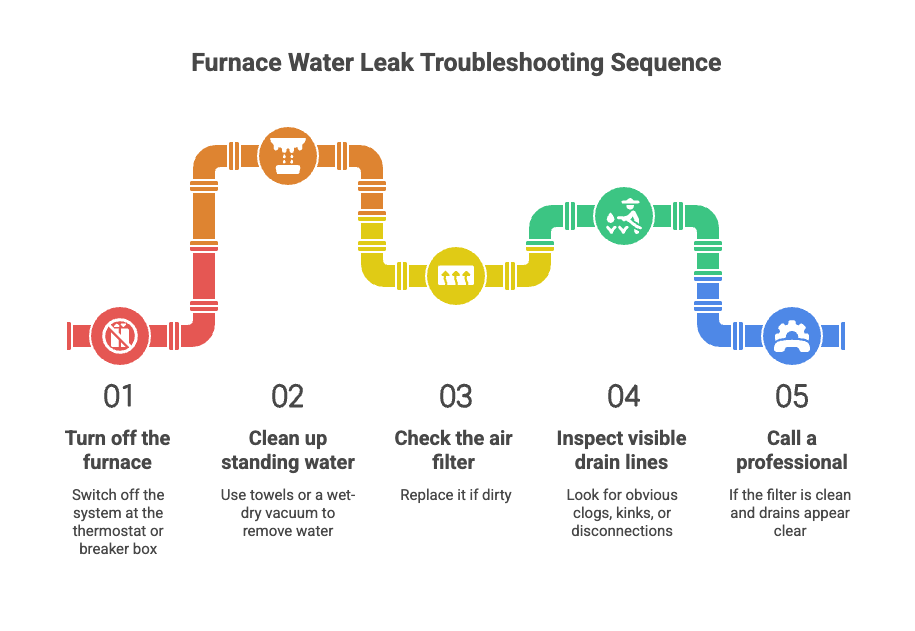
Taking quick action can prevent further damage and help your technician diagnose the issue faster. Follow these steps if you discover water near your furnace:
- Turn off the furnace. Switch off the system at the thermostat or breaker box to prevent electrical hazards.
- Clean up standing water. Use towels or a wet-dry vacuum to remove water and reduce the risk of mold.
- Check the air filter. Replace it if dirty. This simple step resolves many airflow-related problems.
- Inspect visible drain lines. Look for obvious clogs, kinks, or disconnections in the condensate line.
- Call a professional. If the filter is clean and drains appear clear, the issue may be internal. A certified technician can safely diagnose and repair the problem.
Avoid opening the furnace cabinet to inspect internal components yourself. Manufacturer guidelines recommend leaving internal repairs to trained professionals.
How Can Seattle and Auburn Homeowners Prevent Furnace Water Leaks?
Prevention is always easier than repair. With a few proactive steps, you can reduce the likelihood of encountering a furnace leaking water when heating your home this winter.
Consider these maintenance practices:
- Schedule annual furnace maintenance. A professional tune-up includes cleaning drain lines, checking the condensate pump, and inspecting the heat exchanger.
- Change filters regularly. Fresh filters maintain proper airflow and reduce strain on your system.
- Clear condensate lines. Flush the drain with vinegar and water once or twice per year to prevent buildup.
- Winterize outdoor drain lines. Insulate exposed sections and ensure proper slope to prevent freezing during cold snaps.
Staying ahead of common furnace problems helps your system run efficiently and keeps your home comfortable all season.
Keep Your Furnace Running Smoothly This Winter
A furnace leaking water when the heat is on is often caused by drainage issues rather than major mechanical failures. High-efficiency furnaces naturally produce condensation, and most leaks can be traced to clogged lines, failed pumps, or frozen drains.
The key is addressing the problem early before it leads to rust, electrical damage, or mold. If you’ve noticed water pooling near your furnace, start with a filter check and visual inspection. For anything beyond basic troubleshooting, a professional evaluation is the safest choice.
Schedule a furnace inspection with our Auburn heating technicians today. We’ll identify the source of the leak, make necessary repairs, and help you prevent future issues with a maintenance plan designed for Washington winters.