Skip to content









Copper pipes are the backbone of most residential plumbing systems, carrying clean water to every faucet, shower, and appliance in your home. But these pipes don’t magically connect themselves. Professional plumbers use a specialized technique called soldering to create permanent, leak-proof joints that last for decades.
If you’ve ever watched a plumber work on copper pipes, you’ve probably seen them use a torch to heat the metal and create these permanent connections. This process has been the go-to method for joining copper pipes for decades, but what makes it so essential?
Understanding why plumbers need to solder pipe joints helps homeowners appreciate the quality of work going into their plumbing systems and why professional installation matters for your Auburn WA home.
What Is Pipe Soldering in Plumbing?
Soldering, also called sweat soldering, is a process where plumbers use heating and a metal alloy to create permanent, watertight seals between copper pipes and fittings. The solder melts at a lower temperature than the copper itself, flowing into the gap between the pipe and fitting to form a strong bond as it cools.
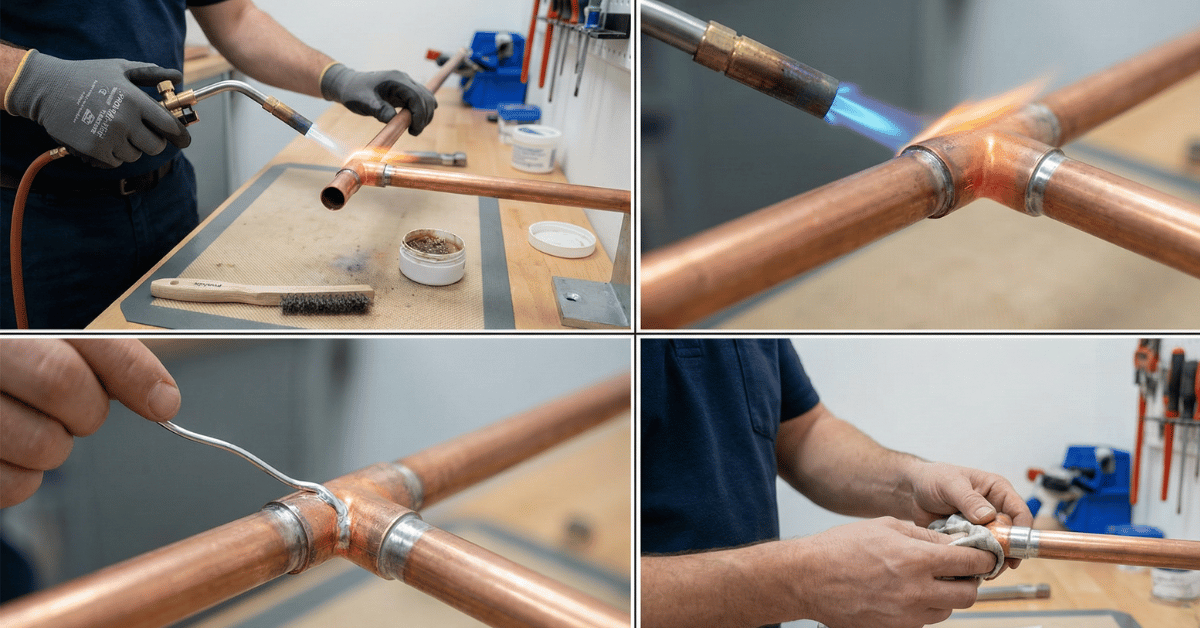
Modern plumbers use lead-free solder made from tin, copper, and silver alloy to meet safety standards for drinking water systems. The process involves cleaning the pipe surfaces, applying flux (a chemical paste preventing further oxidation), heating the joint with a torch flame, and feeding solder into the connection. When done correctly, the filler metal melts and creates a seal that’s actually stronger than the base metals themselves.
The Main Reasons Plumbers Solder Pipe Joints
Creates Watertight, Leak-Free Seals
The primary reason plumbers solder copper pipe connections is to prevent water damage from leaky joints. A properly soldered copper joint creates a permanent, hermetic seal that won’t loosen over time like push-to-connect fittings or threaded connections might. The molten solder gets sucked into the joint through capillary action, filling every gap to create a complete seal.
Water pressure in residential systems typically runs between 40 and 80 PSI, which puts constant stress on pipe connections. Strong joints handle this pressure without degrading, ensuring your water stays inside the pipes where it belongs. This reliability is crucial for water lines hidden behind walls or under floors, where leaks can cause serious structural damage before you even notice them.

Provides Superior Strength and Durability
Soldered copper fittings create connections that are incredibly durable and resistant to both physical stress and temperature fluctuations. The molecular bond formed between the solder and copper is permanent, unlike mechanical fittings that can work loose from vibration or thermal expansion. These joints also resist corrosion better than welding, which requires higher temperatures and can weaken the surrounding metal.
Key benefits of soldered joints:
- Withstand both hot and cold water applications without failing
- Handle 180-degree water from heaters and freezing cold water during winter
- Maintain integrity despite constant pressure changes
- Last for decades without repair or replacement needs
- Resist corrosion in modern plumbing systems
Meets Building Codes and Standards
Local building codes in Washington State require permanent, approved connection methods for water supply lines and water systems. Soldering remains the tried and true industry standard for copper pipe installations that passes inspection requirements.
Professional plumbers must be trained and certified to perform soldering work correctly. This ensures that every connection in your home’s plumbing system meets safety and quality standards. At Air Pro Solutions, our certified techs understand these requirements and deliver quality installation work that passes inspection every time.
When Do Plumbers Use Soldering vs. Other Methods?
Not every pipe connection requires soldering, but it remains the best choice for specific applications. Experienced plumbers choose soldering for permanent water supply lines, hot water distribution pipes connected to heaters, behind-wall installations that will be covered by drywall, and high-pressure applications that experience constant stress.
Alternative methods like compression fittings or push-to-connect fittings work well for temporary installations or accessible areas where future modifications might be needed. However, these mechanical connections don’t offer the same long-term reliability as solder joints. They can loosen over time and are more prone to failure under stress, especially when dealing with tight spaces or frequent temperature changes.
For critical systems in your home, professional installation with proper soldering techniques ensures dependable performance. Just like Air Pro Solutions provides expert HVAC installation and repair for lasting comfort, quality plumbing work requires the right techniques and professional expertise.
The Professional Soldering Process
Understanding how plumbers create soldered joints reveals why this skill requires professional training. The soldering process involves several precise steps that must be executed correctly for reliable results.
First, plumbers cut the copper pipe to exact measurements and clean both the pipe end and the inside of the fitting with special brushes or sandpaper. Any dirt, oxidation, or debris will prevent proper bonding and allow moisture to penetrate the connection. Next, they apply flux paste to both surfaces, which cleans the metal further and helps the molten solder flow evenly without creating voids.
The plumber then fits the pieces together and applies heat using a propane or MAPP gas torch flame. The key is heating the fitting, not the solder itself. When the copper reaches the right temperature (around 400-450 degrees, well below brazing temperatures), touching the solder to the joint causes it to melt and wick into the connection through capillary action.
Basic steps for successful soldering:
- Proper pipe preparation and cleaning around the end surfaces
- Correct flux application to prevent oxidation
- Even heat distribution around the joint without too much heat
- Right amount of solder (not too much or too little)
- Allowing the joint to cool naturally without movement
This process requires steady hands, proper technique, and experience to execute correctly. DIY attempts often result in weak joints, leaks, or damaged pipes from overheating that corrode over time.

Common Problems from Poor Soldering
When soldering isn’t done correctly, several problems can develop. Cold solder joints occur when insufficient heating prevents the solder from fully bonding with the copper surfaces. These joints look complete but develop leaks within months or even years, requiring costly repair work.
Overheating is another common mistake that contractor teams see from improperly trained workers. Too much heat can actually burn away the flux before the solder is applied, or it can damage the pipe material itself. Working without flux creates joints that fail quickly because oxidation prevents proper bonding. Inexperienced workers might also use too little solder, creating incomplete seals with voids, or too much, which wastes material and can restrict water flow.
Plumbers often test every connection for leaks before finishing the job. They know exactly how to heat the joint, how to recognize when it’s at the right temperature, and how to spot potential problems before they become expensive repairs requiring cleaning up water damage.
Why Professional Installation Matters
Quality soldering requires the right tools, materials, and most importantly, experience. Professional plumbing contractors complete hundreds or thousands of soldered joints throughout their careers, developing the touch and timing that ensures reliable results. They understand that certain fittings need specific techniques and that every installation presents unique challenges.
At Air Pro Solutions, we understand the importance of professional workmanship. Just as we deliver expert air conditioning repair and furnace repair with precision, quality plumbing installations require certified technicians who take pride in their craft. Whether it’s emergency HVAC service or critical plumbing work, proper installation prevents future headaches and protects your homeowner investment.