






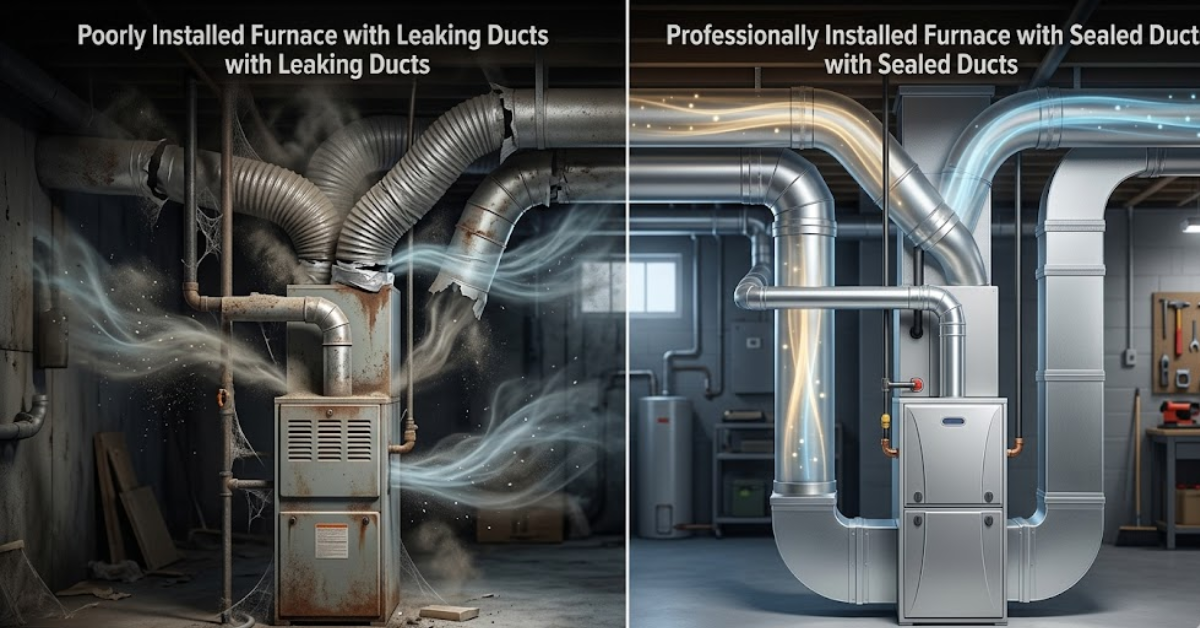
A properly installed furnace improves energy efficiency by ensuring correct sizing, sealed ductwork, and properly calibrated airflow so the system converts the maximum amount of fuel into usable heat. Without professional installation, even a top-rated furnace can waste 20% or more of the energy it consumes, driving up your monthly heating bills and reducing indoor comfort throughout your Auburn home.
Buying a high-efficiency furnace is only part of the equation. The way it gets installed determines how much of that rated efficiency you actually experience. Understanding what proper installation involves helps you ask better questions, make smarter decisions, and get the heating performance you paid for.
Key Takeaways:
- A properly installed furnace can reduce heating fuel use by 15-20% compared to an incorrectly installed unit of the same model
- Correct sizing, sealed ductwork, and professional commissioning are the three biggest installation factors affecting efficiency
- High-efficiency furnaces rated 95% AFUE or above convert nearly all fuel into usable heat
- Improper installation can void manufacturer warranties and increase repair frequency
- Auburn WA homeowners should always work with a licensed HVAC contractor who performs a Manual J load calculation before recommending any equipment
Why Installation Quality Matters as Much as the Furnace Itself
Many Auburn homeowners spend considerable time comparing furnace models and efficiency ratings before making a purchase. That research matters, but it tells only part of the story. The installation process is equally important to the outcome you experience in your home.
How Poor Installation Leads to Energy Waste
A correctly installed furnace operates efficiently, allowing it to use energy as intended and avoid wasting fuel. Improper installation leads to energy loss through gaps, leaks, or inefficient airflow. These are not minor inefficiencies. They compound over months and heating seasons, translating into measurably higher utility bills.
Even a top-of-the-line furnace can lose efficiency if not installed properly. Professional installation ensures that each component is aligned and connected correctly, minimizing energy waste and reducing your heating bills.
Expert Note: According to the U.S. Department of Energy’s Building Technologies Office, improper installation and poor maintenance are among the leading causes of energy waste in residential heating systems, often negating the performance gains that come with upgrading to newer, higher-rated equipment.
What Proper Installation Protects
A professional furnace installation protects your investment in several concrete ways. It preserves manufacturer warranty coverage, which typically requires licensed contractor installation. It ensures compliance with Auburn’s local building codes. It also sets a performance baseline that makes future maintenance and repairs more straightforward.
Improper installation may void your manufacturer warranty, leaving you responsible for any future repairs or replacements. That risk alone makes professional installation worth prioritizing from day one.
Does Furnace Sizing Really Affect Energy Bills?
Yes, and this is one of the most commonly misunderstood aspects of furnace installation. Bigger does not mean better when it comes to home heating systems. Correct sizing is one of the single most impactful factors in long-term energy efficiency.
The Short-Cycling Problem with Oversized Furnaces
A system that is too large will constantly cycle on and off, wasting energy and wearing out components. This pattern is called short-cycling, and it creates two problems at once. The furnace burns more fuel during the start-up phase, which is the least efficient part of any heating cycle. At the same time, components experience accelerated wear from repeated on-off stress.
Short-cycling also produces uneven temperatures throughout your home. Rooms near the furnace may overheat while others stay cool, which means the system runs again sooner than it should.
Undersized Systems and Constant Runtime
The opposite problem is equally wasteful. A system that is too small will run nonstop and still struggle to keep your house warm. On cold Washington winter nights, an undersized furnace will run continuously without ever reaching the target temperature, consuming fuel the entire time.
Proper sizing requires a Manual J load calculation, which factors in your home’s square footage, insulation levels, window placement, ceiling height, and local climate data. This calculation is a non-negotiable part of a professional installation.
Expert Note: The Air-Conditioning, Heating, and Refrigeration Institute (AHRI) recommends that all HVAC contractors perform a full Manual J load calculation before specifying equipment size for any residential installation. Skipping this step is one of the most common causes of performance and efficiency problems in new systems.
How Ductwork Connects to Furnace Efficiency
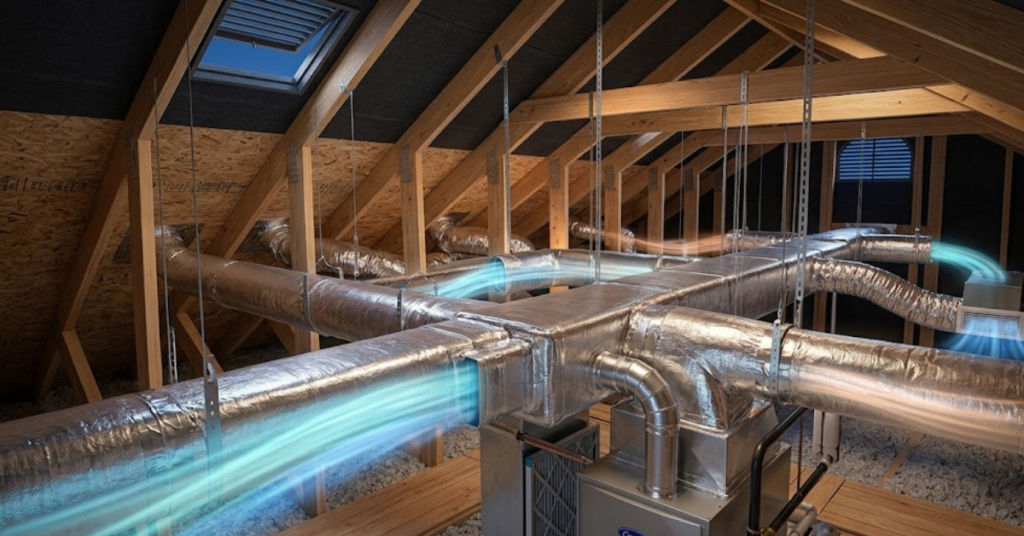
Your ductwork is the delivery system for all the heat your furnace produces. If that system leaks, is poorly routed, or is improperly sized, much of your furnace’s output never reaches the rooms you’re trying to heat.
Leaky and Improperly Sealed Ducts
Poorly installed ducts can cause airflow issues, higher utility bills, and unhealthy air. Leaky or misrouted ducts waste energy, and expert installation means your system works smarter, not harder.
Leaks and cracks reduce efficiency and increase energy waste. When conditioned air escapes into your attic, crawlspace, or wall cavities before reaching a living area, your furnace has to run longer to compensate. That extra runtime adds directly to your heating bill every month.
You can often identify duct leakage problems through rising energy costs, rooms that never reach a comfortable temperature, or excessive dust buildup near vents.
Duct Design and Balanced Airflow
Even ducts without leaks can underperform if they were not designed correctly. Improper duct sizing lowers performance and increases energy use. Ducts that are too small restrict airflow and force the blower motor to work harder. Ducts that are too large reduce the velocity of air delivery, meaning heat dissipates before reaching the room.
A professionally designed duct system follows Manual D calculation standards, accounting for the length of each duct run, the number of bends, and the required air delivery volume for each room. When ductwork and furnace installation are handled together by the same experienced team, the result is a balanced system where every room receives consistent, efficient heating.
What Does a High-Efficiency Furnace Installation Include?
Understanding what separates a standard installation from a high-efficiency one helps you evaluate proposals from contractors and know what to expect from the process.
AFUE Ratings and What They Mean for Your Bills
AFUE stands for Annual Fuel Utilization Efficiency. It measures the percentage of fuel your furnace converts into usable heat over a full heating season. A furnace with an 80% AFUE rating means 20 cents of every dollar you spend on fuel exits as exhaust.
High-efficiency furnace models operate at AFUE ratings of 90% or higher, meaning they utilize at least 90% of the energy from the fuel they burn for heating your home.
Upgrading to a high-efficiency furnace with a 95-98% AFUE rating can cut heating fuel use by about 15-20%, with another 5-10% savings from pairing the system with a smart thermostat.
As of 2022, residential gas furnaces account for approximately 19% of annual residential energy use in the United States. Improving the efficiency of your furnace is one of the highest-impact changes you can make to your home’s overall energy footprint.
AFUE Quick Reference:
| AFUE Rating | Fuel Used as Heat | Savings vs. 80% Unit |
| 80% | 80 cents per dollar | Baseline |
| 90% | 90 cents per dollar | Moderate |
| 95%+ | 95+ cents per dollar | Significant |
| 98% | 98 cents per dollar | Maximum |
Sealed Combustion and Venting Requirements
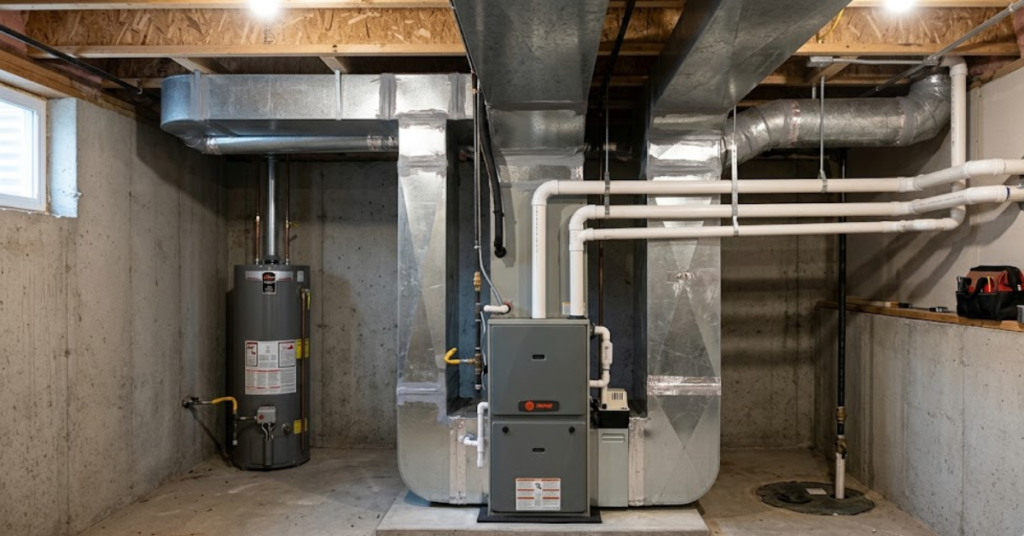
High-efficiency units work differently from standard furnaces. They bring in combustion air from the outdoors through a dedicated pipe that is sealed off from the space that houses the furnace. This design, called sealed combustion, eliminates the safety risk of carbon monoxide backdrafting and improves efficiency by using outdoor air for combustion rather than pulling from your conditioned living space.
Proper installation of a sealed combustion furnace requires a licensed contractor to run dedicated PVC intake and exhaust pipes to the exterior of your home. This is not a detail that can be skipped or improvised.
Variable-Speed Blowers and Comfort Control
Modulating gas valves adjust the flame in small increments, while variable-speed ECM blowers fine-tune airflow. Instead of the old full-blast-then-off cycle, the system runs longer at lower output to match your real-time heating needs.
This approach delivers more consistent temperatures, quieter operation, and better dehumidification because the system runs in longer, steadier cycles rather than short bursts. A high-efficiency gas furnace is generally much quieter than standard furnaces because it does not have to work as hard or burn as hot to heat your home.
Expert Note: The American Council for an Energy-Efficient Economy (ACEEE) notes that variable-speed blower motors, also called ECM motors, use up to 75% less electricity than standard single-speed motors during the same operating period. This efficiency gain compounds over a full heating season, particularly in climates like western Washington where furnaces run regularly from October through March.
How Smart Thermostat Integration Completes the System
A properly installed furnace paired with the wrong thermostat is a missed opportunity. Thermostat compatibility affects how well your furnace’s efficiency features actually perform in daily operation.
Pairing the Right Thermostat with Your New Furnace
Today’s high-efficiency furnaces pair well with smart thermostats for easier scheduling, geo-fencing, and remote control. If you travel or manage multiple properties, being able to check and adjust settings from your phone is a practical win.
Not every smart thermostat works with every furnace. Two-stage and modulating furnaces require thermostats that can communicate with those staging controls. A licensed installer will verify compatibility and configure the thermostat settings during the commissioning process so the system performs exactly as designed.
Scheduling, Zoning, and Remote Control
A properly programmed smart thermostat can add 5-10% to your overall efficiency gains by reducing runtime during hours when heating demands are lower. Setting back your temperature by even a few degrees overnight or during work hours reduces fuel consumption without sacrificing comfort when you’re home.
For homes with multiple zones, a zoned HVAC system takes this further by allowing individual temperature control in different areas of your home. When paired with a correctly installed furnace, zoning prevents the system from heating unused rooms while still keeping your main living areas comfortable.
What Should I Ask a Furnace Installer Before Hiring Them?
Not all furnace installations are created equal. Asking the right questions before the work begins helps you identify contractors who will do the job correctly.
Questions About Load Calculations and Sizing
Ask every contractor you speak with whether they perform a Manual J load calculation before recommending equipment. If the answer is no, or if they size the furnace based on your old unit’s capacity alone, that is a significant warning sign.
Ask to see the calculation results and what size unit they recommend. Compare answers across multiple quotes. A contractor who takes the time to size your system properly is showing you how they approach the rest of the job.
Also ask about the duct assessment. If your existing ductwork will stay in place, it should be inspected for leaks, proper sizing, and insulation before the new furnace is connected. If you’ve been noticing warning signs your furnace needs repair or have already researched furnace replacement vs repair, you likely have a good idea of where things stand.
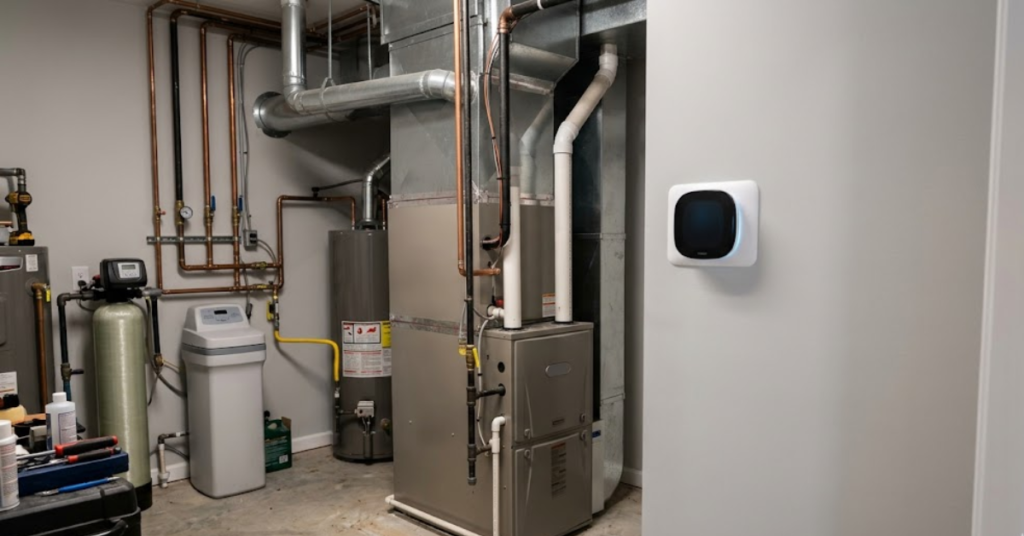
Verifying Licensing, Permits, and Commissioning
In Washington state, furnace installation requires a licensed contractor and a permit from your local building authority. A professional installation ensures your system is set up according to code, reducing the risk of breakdowns and optimizing energy efficiency.
Ask for proof of licensing and confirm that the contractor will pull the necessary permits. Unpermitted work can create complications when you sell your home and may affect your homeowner’s insurance coverage.
Commissioning is the final step where the installer tests the fully connected system, verifies airflow readings, checks combustion safety, and sets thermostat parameters. This step is what ensures the efficiency ratings on paper translate to actual performance in your home.
Expert Note: According to the Building Performance Institute (BPI), commissioning a newly installed furnace is one of the most overlooked steps in residential HVAC work. Properly commissioned systems consistently outperform identical units that were installed but never tested under actual operating conditions. Homeowners should always request a commissioning report before signing off on any new furnace installation.
Conclusion
A properly installed furnace improves energy efficiency at every level, from the fuel it burns to the air it delivers. Correct sizing eliminates short-cycling. Sealed ductwork eliminates delivery losses. Sealed combustion and variable-speed technology extract the maximum heat from every unit of fuel. Smart thermostat integration ties it all together.
The efficiency rating printed on a furnace is a ceiling, not a guarantee. Professional installation is what determines how close to that ceiling your system actually performs season after season.
If you’re thinking about how to prepare your furnace for winter in Auburn or you’re ready for a new system, the team at Air Pro Solutions is here to help. We serve Auburn and the surrounding Pacific Northwest area with honest assessments, proper sizing, and installations that are built to last. Reach out to our heating services team today to schedule a consultation.