Skip to content











To choose the best furnace tune-up company in Bonney Lake, WA, start with the basics that protect you: confirm the company is licensed in Washington, has a local business license, sends trained and certified technicians, gives transparent pricing, provides a written maintenance report, and has strong customer reviews plus a solid Better Business Bureau record.
If you own a home in Bonney Lake especially a two-story home where upstairs and downstairs never seem to match this matters for more than routine maintenance. Your upstairs bedrooms can feel like an attic in August, your downstairs living room can feel like a basement in January, and your energy bill keeps climbing while nobody in the house is actually comfortable.
You’re not alone, and your equipment is probably not broken. Two-story homes ask a single heating and cooling system to solve two very different problems at the same time, and many systems were never designed or set up for that. The right tune-up company can help you catch airflow, ductwork, and equipment-matching problems early, improve HVAC performance, lower operating costs, and help your furnace or heat pump last longer in Bonney Lake’s climate.
This guide focuses on the solutions that actually make a difference for local homeowners: uneven heating in two-story homes, HVAC setups such as zoning and mini splits, energy-saving options like variable-speed heat pumps, ductwork and airflow fixes, regular maintenance, Washington rebates, and what to look for when hiring a qualified furnace tune-up company in Bonney Lake and the wider Puget Sound area.
Why Two-Story Homes Waste More Energy Than Single-Story Homes
Before you pick a system, it helps to know what you’re fighting. Two forces work against you in every multi-level home, and neither one is your thermostat’s fault.
Warm Air Rises, and Your Thermostat Doesn’t Know It
The stack effect is simple physics. Warm air is lighter, so it drifts to the second floor and settles near the ceiling while cooler air sinks to the first floor.
Your thermostat usually sits downstairs. It reads that cooler air, decides the house is comfortable, and shuts the system off while the upstairs bedrooms sit several degrees warmer. To fix the bedroom, you drop the thermostat lower, and the whole first floor gets overcooled to serve one floor.
Long Duct Runs and Uneven Sun Exposure
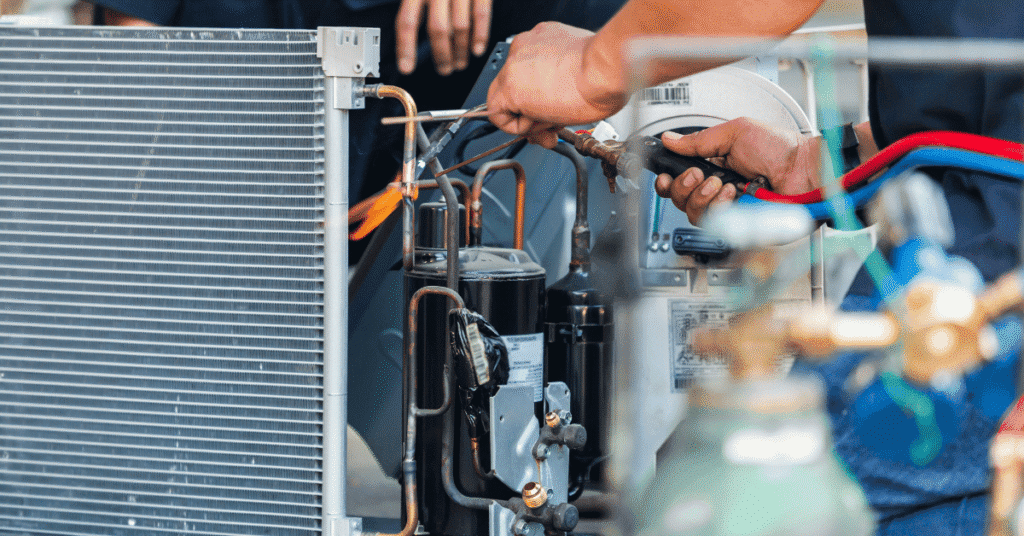
Ductwork in a two-story home travels farther, bends more often, and frequently passes through unconditioned attics or crawl spaces. Every extra foot is another chance for conditioned air to escape before it reaches a room.
Sun exposure adds a second layer. West-facing upstairs rooms absorb afternoon heat through the roof and windows, while a shaded first-floor room needs almost nothing. One thermostat cannot serve both.
What Does the Best HVAC System Setup for a Two-Story Home Look Like?
There are three configurations that solve the floor-to-floor imbalance. The right one depends on your ductwork, your budget, and how your family actually uses the house.
Option 1: One System With Zoning
Zoning keeps your single system but adds motorized dampers inside the ductwork and a separate thermostat for each floor. When the upstairs calls for cooling, air is directed there instead of flooding the entire house.
This is usually the most affordable path when your existing ductwork is in decent shape. If you want the full breakdown of how the parts work together, our guide on what a zoned HVAC system is covers it in plain language.
Option 2: Two Separate Systems
Some larger homes get better results with a dedicated system for each floor. Each unit is sized for the load of that floor alone, which means the upstairs system can handle the higher cooling demand without the downstairs system compensating.
The trade-off is honest: two systems mean two sets of maintenance visits and two eventual replacements. This setup makes the most sense in homes above roughly 3,000 square feet or where the existing ductwork is too leaky and poorly designed to zone reliably.
Option 3: Ductless Mini Splits and Heat Pump Installation
Ductless systems place an indoor unit in each room or zone, connected to one outdoor unit. Because there is no ductwork, the distribution losses that plague two-story homes simply don’t happen.
Mini splits work particularly well for finished attics, bonus rooms above garages, and older Auburn homes that never had ducts installed properly. Our overview of how ductless mini split systems work explains the layout options in more detail.
Which Setup Saves the Most Energy in Washington’s Climate?
Equipment type matters as much as the configuration. In the Pacific Northwest, one choice stands out clearly for both heating and cooling.
Heat Pumps Fit Our Maritime Climate
Western Washington rarely sees the extended deep freezes that challenge heat pumps in colder states. Our mild, damp winters sit comfortably inside the range where a modern heat pump runs efficiently.
A heat pump also handles both seasons with one piece of equipment. That matters more every year, since most older homes here were built with heating only and no central cooling at all. Our article on why a heat pump suits Auburn’s climate covers the seasonal performance in detail.
Variable-Speed Equipment Beats Single-Stage
A single-stage system runs at full output or not at all. In a two-story home, that means it blasts the whole house, satisfies the downstairs thermostat, and shuts off before the upstairs catches up.
Variable-speed equipment modulates its output instead, running at low capacity for longer stretches. Longer, gentler cycles move air more evenly between floors and reduce the temperature swing that drives most comfort complaints. If you’re comparing models, the SEER rating explained here will help you read the spec sheets with confidence.
Does Zoning Really Lower Your Energy Bills?
Yes, when it’s designed properly. Zoning stops you from conditioning space nobody is using, which is where most of the waste in a two-story home comes from.
Think about a typical weekday. Bedrooms sit empty from morning until evening, yet a single-zone system keeps cooling them at the same rate as the kitchen. Field results on multi-story homes consistently show meaningful reductions in energy use once each floor gets its own controls, and comfort complaints drop even further.
Where zoning disappoints is when it’s added to ductwork that was never sized for it. Dampers closing on undersized ducts create pressure problems that make the system louder and less efficient, not more. That’s why a proper load calculation comes before any damper gets installed.
Fixes That Save Energy Before You Replace Anything
New equipment is not always the first move. Several lower-cost repairs can recover a surprising share of what your current system is losing.
Seal and Insulate the Ductwork
According to ENERGY STAR, roughly 20 to 30 percent of the air moving through a typical duct system escapes through leaks, holes, and poor connections. In a two-story home with long runs through an attic, that number often sits at the higher end.
Sealing those leaks is one of the highest-return repairs available. Our ductwork and air quality services include leak testing so you know exactly where the losses are before anything is patched.
Correct the Sizing and Airflow
Oversized equipment is a common problem in retrofitted two-story homes. A system that’s too large cools quickly, shuts off, and never runs long enough to move air upstairs or pull humidity out; if major repairs begin stacking up, a full replacement is usually the better choice once costs exceed 50% of a new unit.
Proper sizing starts with a room-by-room load calculation rather than a rule of thumb based on square footage. Small airflow adjustments also help:
- Open and balance upstairs supply registers rather than closing downstairs ones
- Add or enlarge upstairs return air pathways so hot air has somewhere to go
- Stay on top of filter replacement, since restricted airflow hits the upper floor first
- Use ceiling fans upstairs to break up the layer of warm air near the ceiling
Keep the System Maintained for Better Indoor Air Quality
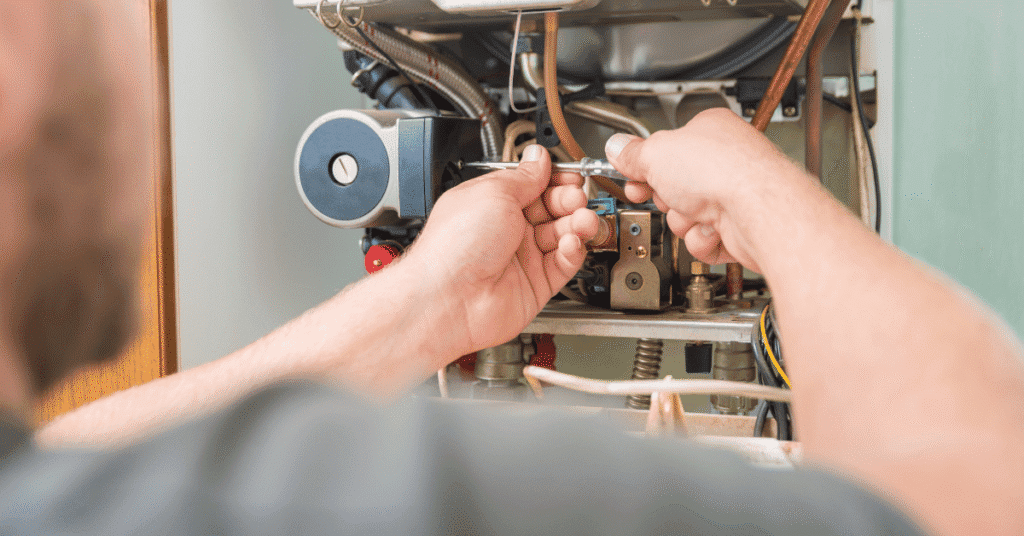
Dirty coils, low refrigerant, and worn blower parts like the blower motor all reduce output before they cause an obvious breakdown, which is why preventative maintenance matters for catching small issues early and preserving performance and energy efficiency. Early warning signs like short cycling can also signal something is wrong and may need hvac repair. Regular maintenance can reduce energy consumption by up to 15%. In a two-story home, the upstairs is the first place you’ll feel that decline, especially when outdoor temperatures drop and airflow weakens.
A seasonal inspection catches these issues while they’re still small, and a dependable team can also flag when broader heating services or indoor air quality solutions make sense for your home. Here’s what an HVAC tune-up in Auburn includes if you want to know what a visit actually covers; a comprehensive furnace tune-up typically takes 60 to 90 minutes and includes cleaning, filter replacement, and checks that help improve air quality and control pet dander. Carbon monoxide testing is also a standard part of a thorough visit for gas furnaces, along with checking safety controls on gas equipment. A well-maintained furnace can last 15 to 20 years, and annual care can extend its lifespan by up to 10 years for systems maintained through their normal service life. Consistent maintenance can also support lower utility bills. If repeated repair costs keep piling up on an aging unit, a full replacement may make more sense. In cold weather, prompt emergency support matters when a heating job cannot wait.
How Much Can You Save With Rebates in Washington?
The incentive picture changed recently, so it’s worth checking current programs before you budget. The federal 25C tax credit that covered heat pump installations ended on December 31, 2025, and no federal replacement applies to 2026 installations.
State and utility programs are still active, though. Washington’s state HEAR program offers rebates on high-efficiency electric equipment through local administrators for income-qualified households, and Puget Sound Energy runs its own heating rebates for customers in King, Pierce, and surrounding counties. Some of these can be combined, but PSE now requires an approved contractor for the rebate to apply, so confirm the company is licensed in Washington before you sign anything. HVAC systems should be inspected about twice a year to maintain energy efficiency and stable indoor temperatures. HVAC contractors in Washington must hold a specialty HVAC license, and Bonney Lake contractors also need a local business license. Verify the qualifications of the technicians, including training such as NATE certification or EPA Section 608 Technician Certification. Request estimates from at least three HVAC companies, and compare materials, labor, and warranty coverage in each quote. Ask what the technician team will inspect during the tune-up, whether they also service air conditioning, and whether they install replacement equipment for older bonney lake homes across pierce county and nearby communities. If maintenance uncovers filtration or airflow issues, broader heating companies may also recommend indoor air quality solutions. Customer reviews often mention punctuality and honest pricing, and the Better business bureau can help you review complaint history. Also confirm emergency repair support and ask for a written report after the maintenance service.
Making the Right Call for Bonney Lake Homeowners
The best HVAC setup for energy savings in your two-story home is the one matched to your actual layout, not a general recommendation. Zoning suits homes with sound ductwork. Dual systems suit large or poorly ducted homes. Mini splits solve rooms that ducts were never going to reach.
In every case, a variable-speed heat pump paired with independent floor controls delivers the most consistent savings in our climate. Start with a load calculation and a duct leakage test, because those two results decide everything that follows.
If your upstairs and downstairs have been fighting each other for years, we can help you sort out why. Reach out to Air Pro Solutions for an honest assessment of your home and a clear look at your options.