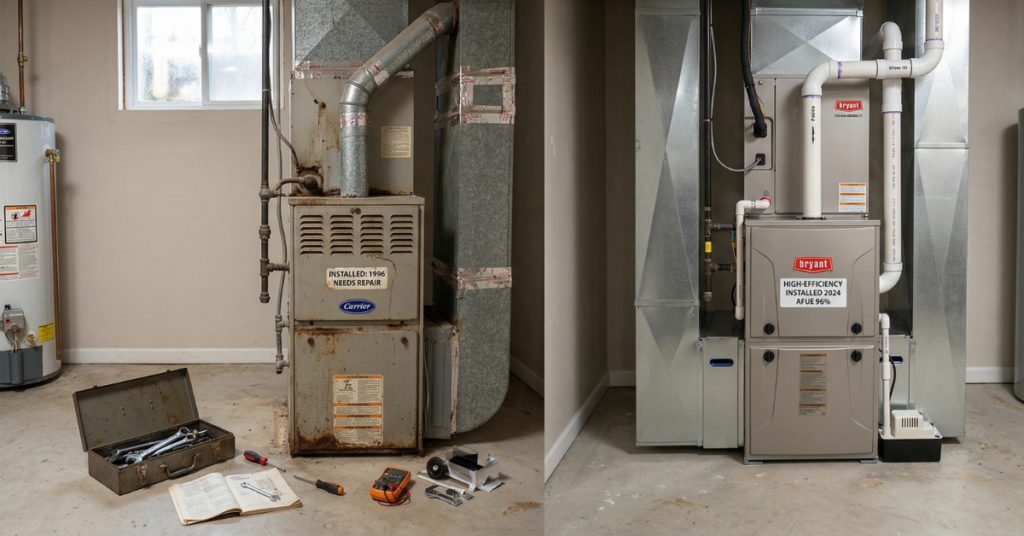








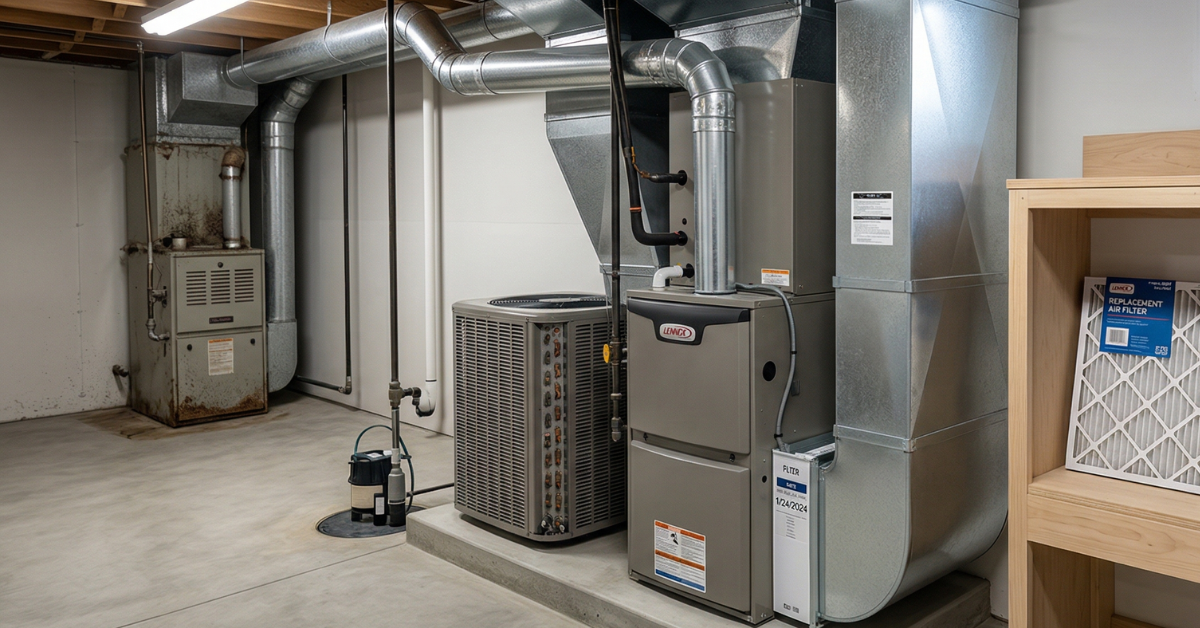
Yes, HVAC maintenance can prevent costly repairs. Research confirms that 85% of HVAC repairs are directly linked to a lack of routine maintenance. A professional tune-up catches worn parts, dirty coils, and failing components before they trigger an emergency breakdown.
Can HVAC Maintenance Prevent Costly Repairs?
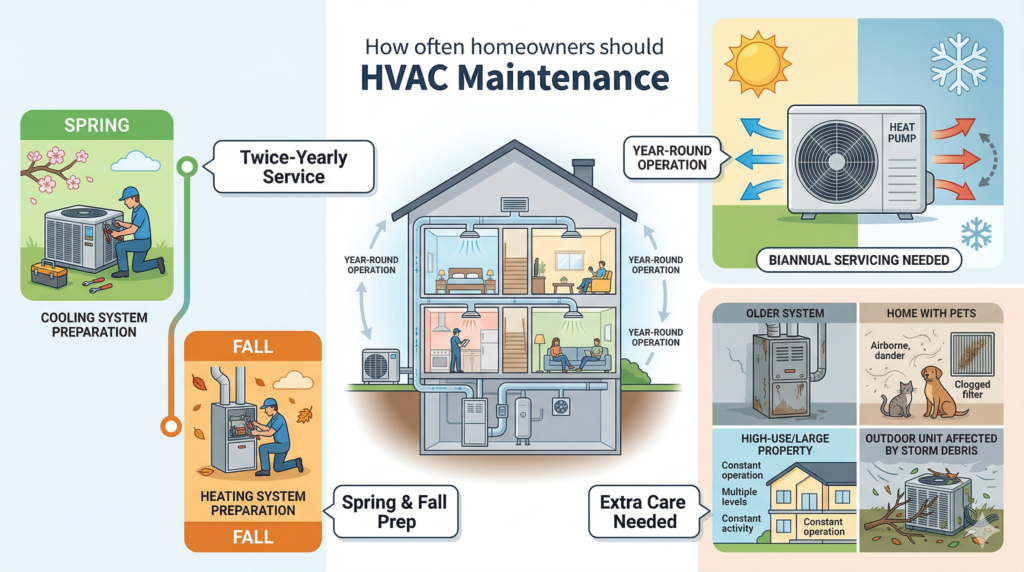
For Auburn homeowners, scheduling service twice a year, once in spring for cooling and once in fall for heating, is the most effective way to protect your system and your budget.
Key Takeaways
- Regular HVAC maintenance prevents up to 85% of system repairs
- A neglected system uses up to 25% more energy than a well-maintained one
- Emergency HVAC repairs cost 50-100% more than standard service calls
- Every $1 skipped on maintenance can become $4 in capital repair costs
- Twice-yearly service (spring and fall) is the professional standard for Auburn homeowners
- Maintenance protects your manufacturer warranty and extends system lifespan
Why HVAC Repairs Get So Expensive
Most homeowners only call an HVAC technician when something stops working. By that point, a minor issue has often become a major one, and the bill reflects it.
What Happens When You Skip Annual Service
An unmaintained HVAC system quietly degrades. Filters clog and restrict airflow. Coils collect debris and lose efficiency. Electrical connections loosen and stress motors. None of these problems announce themselves early. They just get worse until the system fails, usually during the hottest or coldest day of the year.
According to ASHRAE, the American Society of Heating, Refrigerating and Air-Conditioning Engineers, routine maintenance can reduce the risk of unexpected breakdowns by up to 95%. Skipping it creates the exact conditions that lead to emergency calls.
The Real Cost Difference Between Maintenance and Emergency Repairs
The average HVAC repair costs around $351, but depending on the problem, bills can reach $1,567 or more. Emergency calls, which happen on weekends, holidays, or after hours, typically cost 50 to 100% more than a scheduled service visit.
The financial gap is even wider when deferred maintenance leads to full replacement. Research from the Pacific Partners Consulting Group found that every $1 of deferred maintenance turns into $4 in capital renewal costs. A $200 annual tune-up looks very different when the alternative is a $10,000 system replacement.
“By having a technician perform regular maintenance, the system will run less, it will not run as hard, it will reduce some of your downtime, reduce energy consumption, and the technician will find problems before they happen, which would cost more to repair if they broke down unexpectedly.”
Kurt Hudson, Vice President of Service, L.C. Anderson HVAC (as quoted in Contracting Business)
How Does HVAC Maintenance Actually Prevent Repairs?
Preventive maintenance works because it creates a window to find small problems before they become large ones. A trained technician can identify components that are showing early wear, operating outside safe parameters, or on the verge of failure.
What a Technician Checks During a Tune-Up
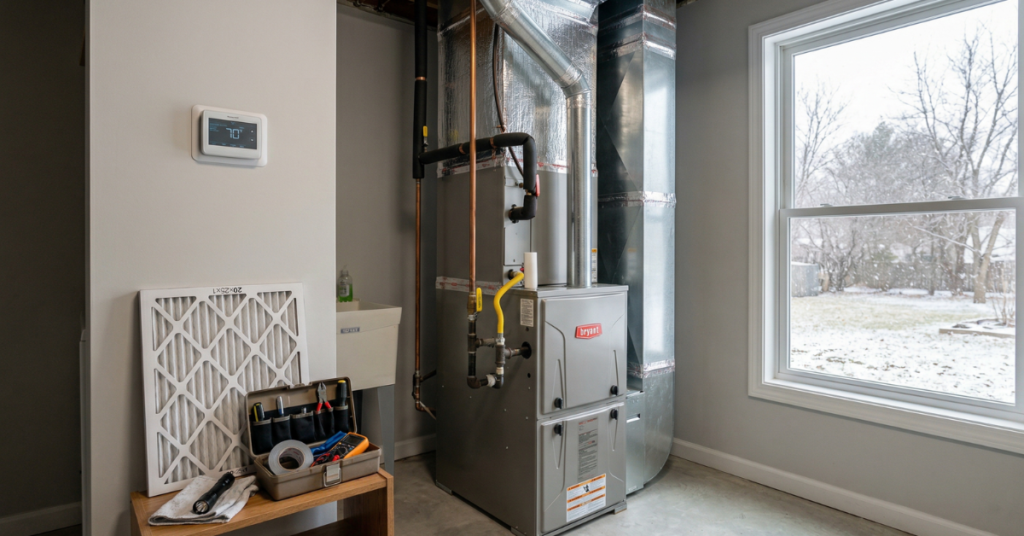
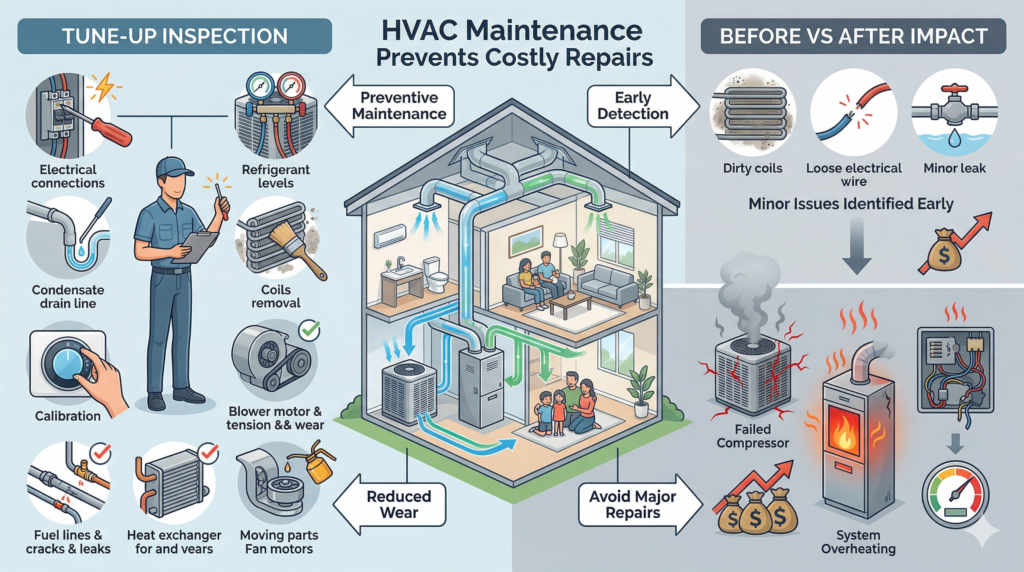
A professional HVAC tune-up covers far more than a filter swap. During a standard visit, a licensed technician will typically inspect and address:
- Electrical connections – Loose wiring causes unsafe operation and shortens motor life
- Refrigerant levels – Incorrect charge forces the compressor to work harder
- Condensate drain lines – Blockages cause water damage and mold growth
- Coil condition – Dirty evaporator and condenser coils reduce heat transfer efficiency
- Thermostat calibration – An inaccurate thermostat leads to system over-cycling
- Blower motor and belt condition – Worn components reduce airflow and strain the system
- Fuel lines and heat exchanger – Critical safety checks for gas-fired furnaces
- Moving parts lubrication – Reduces friction and prevents premature motor failure
According to the U.S. Energy Star program, faulty electrical connections alone can cause unsafe system operation and reduce the lifespan of major components.
Small Problems That Become Big Ones Without Service
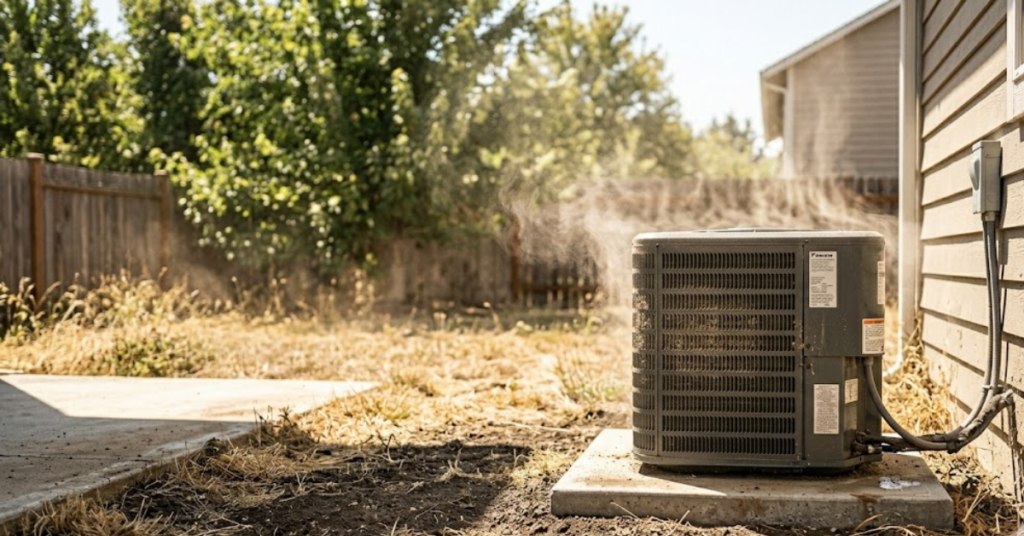
A dirty condenser coil does not trigger an alarm. It just causes the compressor to run hotter and longer. Over time, that extra stress causes compressor failure, one of the most expensive HVAC repairs a homeowner can face. The same pattern applies to refrigerant leaks, failing capacitors, and cracked heat exchangers. Each issue starts as a minor finding during a tune-up and becomes a four-figure repair if ignored.
Bob Blanchard, commercial services consultant at Busby’s Heating and Air Conditioning, notes that the first major symptom of deferred maintenance is usually premature equipment failure, such as a failed compressor, heat exchanger, or blower motor. These are exactly the failures a routine inspection is designed to catch early.
You can learn more about the top reasons HVAC systems fail and how to avoid them on the Air Pro Solutions blog.
Does HVAC Maintenance Save Money on Energy Bills Too?
Repair prevention is one benefit of regular maintenance. Lower monthly energy costs are another, and for Auburn homeowners, this second benefit often exceeds the cost of the tune-up itself.
How a Poorly Maintained System Wastes Energy
When an HVAC system is dirty or out of calibration, it has to work harder to move the same amount of air. That extra effort shows up directly on your utility bill. The U.S. Department of Energy reports that an HVAC system without regular maintenance can consume up to 25% more energy than a properly serviced one.
Filter replacements alone play a significant role. Research shows that a consistent filter maintenance schedule can reduce utility bills by 5 to 15% per month. For a home spending $200 a month on heating and cooling, that adds up to hundreds of dollars in annual savings.
Real Energy Savings Numbers Auburn Homeowners Can Expect
- 5 to 20% annual energy bill reduction through proper maintenance, per the U.S. Department of Energy
- 6 to 19% reduction in total energy expenditure from improved preventive maintenance, per research published in Energy Engineering
- 5 to 15% energy reduction specifically linked to well-maintained systems, per Energy Star (EPA)
Washington state homeowners running heat pumps, which are common in the Auburn area, benefit especially from regular maintenance. A well-maintained heat pump maintains its efficiency rating across the full heating and cooling season, while a neglected one loses efficiency incrementally every month.
What Does HVAC Maintenance Include in Auburn, WA?
Not all maintenance visits are the same. What Air Pro Solutions delivers during a seasonal tune-up in Auburn is a thorough, documented inspection that covers every major component of your system.
What Air Pro Solutions Covers During a Seasonal Tune-Up
Our licensed technicians follow a multi-point process that includes everything listed in the checklist above, plus:
- System performance testing – Measuring airflow, temperatures, and pressures against manufacturer specs
- Safety control testing – Verifying that limit switches, pressure switches, and shutoff controls work correctly
- Carbon monoxide screening – Critical for any home with a gas furnace in the Auburn WA area
- Filter inspection and replacement – Using the right filter for your system and home size
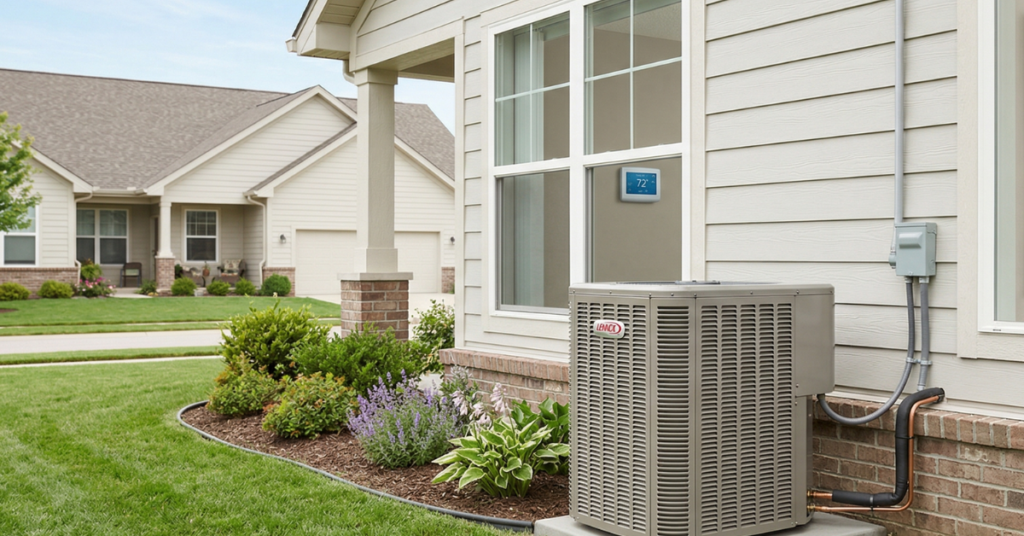
- Outdoor unit inspection – Clearing debris, checking coil condition, and verifying proper airflow
Want a full breakdown of what’s covered? See our detailed guide to what’s included in an HVAC tune-up in Auburn.
Spring vs. Fall Service: What’s Different?
Both visits follow the same safety and performance standards, but each focuses on a different side of your system.
Spring (cooling prep):
- AC evaporator and condenser coil cleaning
- Refrigerant level check
- Condensate drain flush
- Thermostat switch-over to cooling mode
- Outdoor unit inspection after winter weather
Fall (heating prep):
- Furnace or heat pump heating mode test
- Heat exchanger inspection for cracks or corrosion
- Burner and igniter inspection (gas systems)
- Carbon monoxide detector check
- Duct inspection for leaks or blockages
Industry guidance from Energy Star recommends scheduling the cooling system check in spring and the heating system check in fall, specifically to catch issues before the peak demand season begins.
How Often Should Auburn Homeowners Schedule HVAC Maintenance?
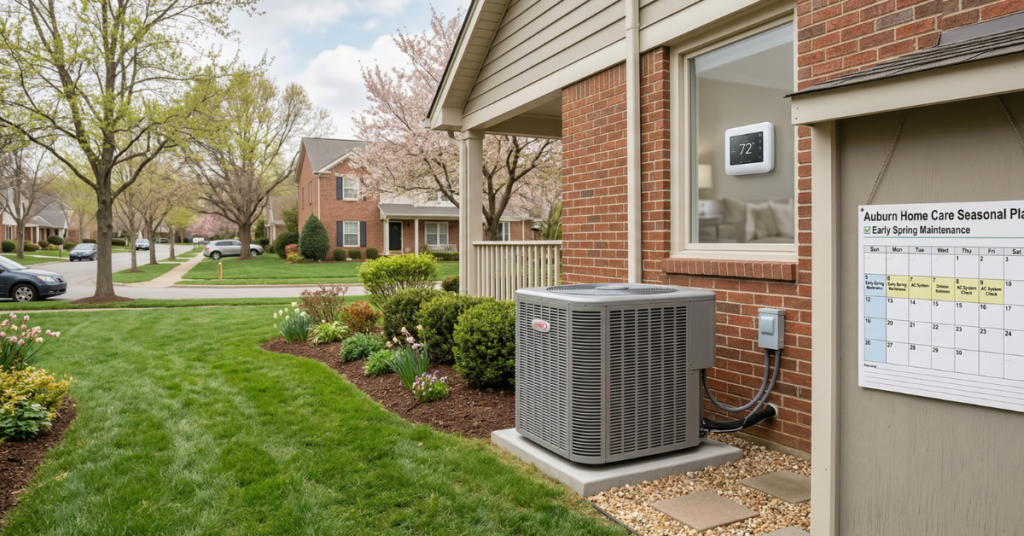
The professional standard is twice per year. One visit before summer and one before winter. This schedule gives your system the attention it needs at the moments it matters most.
The Twice-a-Year Rule Explained
Most HVAC systems should be professionally serviced twice per year, with spring cooling prep and fall heating prep as the two primary windows. Scheduling during the shoulder seasons also means better technician availability and shorter wait times before peak demand hits.
For heat pumps specifically, which run both heating and cooling functions and are common throughout the Pacific Northwest, twice-yearly service is particularly important. Each seasonal check protects the refrigerant circuit, reversing valve, and air handler from the wear that comes with year-round operation.
Signs You May Need Service More Frequently
Most systems do well on a twice-yearly schedule, but some situations call for additional attention:
- Older systems (15+ years) – Components wear faster and benefit from more frequent inspection
- Homes with pets – Pet hair clogs filters faster and builds up on coils
- High-use commercial spaces – Continuous operation accelerates wear on all components
- Post-storm inspections – Debris from Pacific Northwest wind and rain events can damage outdoor units
If you notice any warning signs your furnace needs repair, such as unusual noises, uneven heating, or rising utility bills, schedule a service call right away rather than waiting for your next seasonal visit.
Is HVAC Maintenance Worth the Cost?
The short answer is yes. Every data point on this topic points in the same direction: regular maintenance costs far less than the repairs it prevents.
Deferred Maintenance vs. Proactive Care: A Cost Comparison
| Scenario | Typical Cost |
| Annual HVAC maintenance (2 visits) | $150 – $300 per year |
| Common repair (capacitor, fan motor) | $300 – $600 |
| Major repair (compressor failure) | $1,200 – $2,500 |
| Full system replacement | $8,000 – $15,000 |
| Emergency after-hours service premium | 50 – 100% above standard rate |
A study from the National Association of Home Builders found that regular maintenance can extend the life of an HVAC system by up to 50%. On a system that typically lasts 15 years, that represents years of additional service before replacement is needed.
The WorkTrek maintenance research database confirms that preventive maintenance delivers an 8 to 12% average cost savings over reactive approaches, while reliability-centered maintenance programs achieve 30 to 40% total savings compared to run-to-failure strategies.
Understanding how maintenance extends HVAC system lifespan can help you make a confident long-term decision about your home comfort investment.
How Maintenance Protects Your System Warranty
Most HVAC manufacturers require documented annual maintenance as a condition of warranty coverage. Skipping a tune-up can void your warranty, leaving you fully responsible for repair costs that would otherwise be covered.
A maintenance record also matters when it comes time to sell your home. A well-documented service history signals to buyers that the system has been cared for, which supports your home’s value and reduces negotiation friction.
“A service agreement is very much a financial decision. If you need to know what your HVAC costs will be for the year, a full maintenance agreement gives you that predictability and protects you from unexpected repair bills.”
Kurt Hudson, VP of Service, L.C. Anderson HVAC
Conclusion
Regular HVAC maintenance prevents costly repairs, lowers energy bills, extends system life, and protects your warranty. For Auburn homeowners, the math is clear. A twice-yearly tune-up costs a fraction of what a single emergency repair bill can reach, and it dramatically reduces the odds of that call ever coming.
Air Pro Solutions serves Auburn and the surrounding Pacific Northwest communities with thorough, honest HVAC maintenance that keeps your system reliable year-round. Our licensed technicians follow a documented, multi-point process for both heating and cooling systems, so nothing gets missed.
Ready to schedule your HVAC tune-up in Auburn? Contact Air Pro Solutions today and protect your system before the next season begins.