Skip to content











If you’re an Auburn homeowner facing a heating system replacement, you’re probably asking yourself the same question thousands of your neighbors are wrestling with: Should I install a heat pump or stick with a gas furnace? It’s a decision that affects your comfort, your energy bills, and your home’s value for the next 15 to 20 years.
With energy costs rising and Washington state pushing toward cleaner energy solutions, the choice between a heat pump vs gas furnace has never been more significant. The good news is that Auburn’s climate makes this decision easier than you might think. Let’s break down everything you need to know to make the right choice for your home.
How Heat Pumps and Gas Furnaces Work Differently
Understanding how each system operates helps explain why one might be better suited for your Auburn home than the other.
What Makes a Heat Pump Unique
A heat pump doesn’t generate heat the way a furnace does. Instead, it moves heat from one place to another using electricity and refrigerant. During winter, it extracts warmth from the outdoor air and transfers it inside your home. In summer, the process reverses to cool your living spaces. Think of it like a refrigerator that can run in both directions.
This heat transfer process is remarkably efficient. According to the U.S. Department of Energy, heat pumps can reduce electricity use for heating by approximately 75% compared to electric resistance systems. Modern variable-speed heat pumps can operate up to five times more efficiently than traditional electric baseboard or forced-air heating. If you experience common heat pump issues, most are easy to troubleshoot with proper maintenance.
How Gas Furnaces Generate Heat
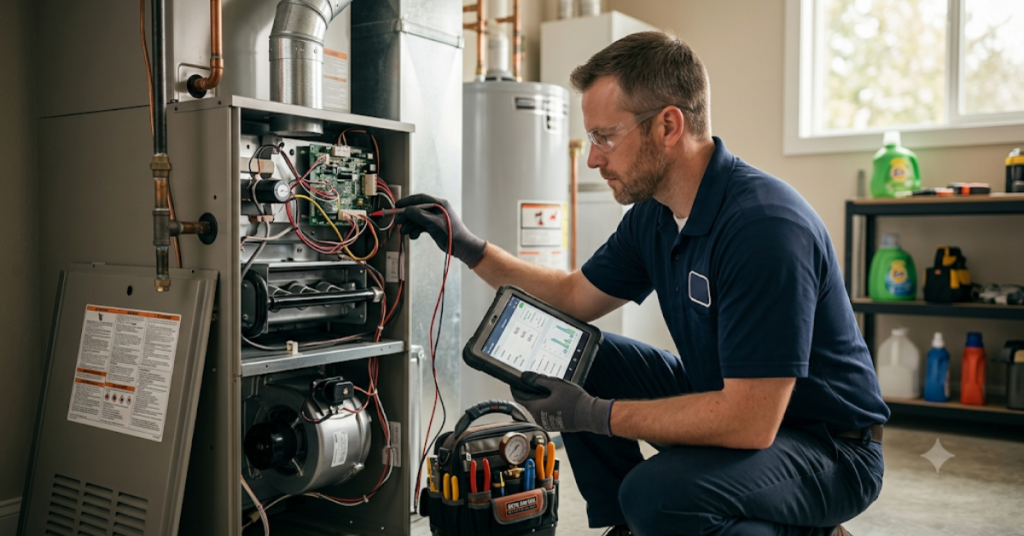
Gas furnaces create heat through combustion. Natural gas ignites inside a sealed chamber, producing hot combustion gases that transfer heat to surrounding air. A blower fan then distributes that heated air through your ductwork. This process produces high-temperature air quickly, which is why furnaces can warm a cold house faster than heat pumps.
However, combustion comes with tradeoffs. Gas furnaces produce carbon monoxide as a byproduct, requiring proper venting and annual safety inspections. They also only provide heating, meaning you’ll need a separate air conditioning system for summer comfort.
Heat Pump vs Gas Furnace: Quick Comparison
Here’s a side-by-side look at how these two heating systems compare for Auburn homeowners:
| Factor | Heat Pump | Gas Furnace |
| Installation Cost | $10,000 – $25,000 | $3,500 – $7,500 |
| Energy Efficiency | 250% – 350% | 80% – 98% AFUE |
| Annual Heating Cost | ~$500 average | ~$850 average |
| Average Lifespan | 15 – 20 years | 15 – 20 years |
| Cooling Included | Yes | No (requires separate AC) |
| Carbon Emissions | None on-site | Produces CO2 |
| Best Climate | Mild to moderate (Auburn ideal) | Extreme cold climates |
Why Auburn’s Climate Favors Heat Pumps
Western Washington’s Mild Winters Are Ideal
Auburn sits in one of the most favorable climates for heat pump performance in the entire country. Western Washington winters typically see temperatures ranging from 36 to 42 degrees from November through April. Heat pumps thrive in these moderate conditions because there’s plenty of heat in the ambient air to extract.
In the Pacific Northwest, heat pumps are already installed in more than a quarter of all homes. Washington’s new building codes now require heat pump installations in all new residential construction, reflecting the technology’s proven performance in our climate.
Modern Cold-Climate Heat Pump Performance
If you’re concerned about those occasional cold snaps, modern cold-climate heat pumps have eliminated that worry. Today’s variable-speed units can produce heat effectively even when outdoor temperatures drop below zero. In Auburn, where temperatures rarely dip below freezing for extended periods, these advanced systems maintain consistent efficiency throughout winter.
Cost Comparison: Upfront vs Long-Term Savings
Installation Costs in Washington State
Here’s where the numbers get interesting. Gas furnaces typically cost between $3,500 and $7,500 for materials and installation. Heat pumps range from $10,000 to $25,000 depending on the type and capacity. However, these numbers tell only part of the story.
Remember that a heat pump replaces both your furnace and air conditioner with a single system. When you factor in the cost of installing separate heating and cooling equipment, heat pumps often become the more economical choice. Reviewing a heat pump installation checklist can help you prepare for the process and avoid unexpected expenses.
Monthly Operating Expenses
Heat pumps typically cost less to operate than gas furnaces over time. Research indicates that homeowners switching from gas furnaces to heat pumps save an average of $650 per year on heating costs in homes with modern insulation. Heat pumps run on electricity, which tends to have more stable pricing than natural gas, protecting you from volatile fuel costs.
Available Rebates and Tax Credits
Washington state offers substantial incentives that can dramatically reduce your heat pump investment:
- Federal tax credit of up to $2,000 for qualifying heat pump installations
- Puget Sound Energy rebates up to $4,000 for converting from electric resistance heating
- Washington State HEAR program rebates for income-qualified households
- Additional local utility incentives that vary by provider
These combined incentives can reduce your net investment by 30% to 50% when properly coordinated.
Which System Is More Energy Efficient?
Heat Pump Efficiency Ratings Explained
Heat pumps measure efficiency using HSPF (Heating Seasonal Performance Factor) for heating and SEER (Seasonal Energy Efficiency Ratio) for cooling. In Auburn’s moderate climate, heat pumps operate at 250% to 350% efficiency. This means for every unit of electricity consumed, they deliver two to three and a half units of heating energy.
Gas Furnace Efficiency Limitations
Gas furnaces use AFUE (Annual Fuel Utilization Efficiency) ratings. High-efficiency models reach 95% to 98% AFUE, meaning they convert nearly all fuel into usable heat. While impressive, this still can’t match a heat pump’s ability to move more heat energy than the electrical energy it consumes. Heat pumps are up to three times more efficient than gas furnaces in most scenarios. Gas furnaces only become more efficient when outdoor temperatures drop below zero, which rarely occurs in Auburn.
What About Cooling Your Home?
Heat Pumps Provide Year-Round Comfort
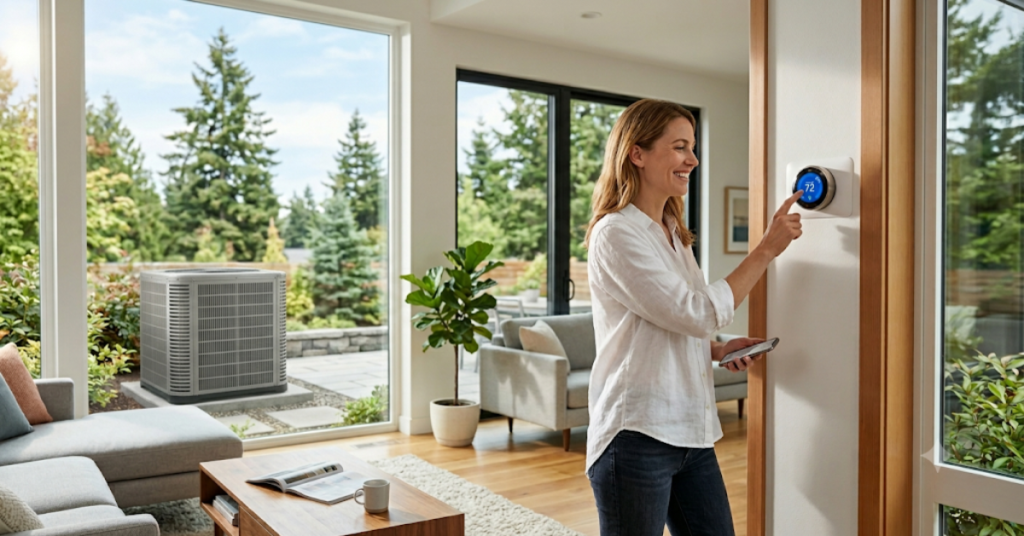
One of the most significant advantages of heat pumps is their dual functionality. The same system that heats your home in winter cools it during summer. You get heating and air conditioning from a single unit, simplifying maintenance and eliminating the need for separate equipment.
Why Auburn Summers Are Getting Hotter
Pacific Northwest summers are becoming increasingly warm, with more days reaching the 90s and even triple digits. Many Auburn homes were built without central air conditioning. If you’re considering adding cooling to your home, a heat pump makes far more financial sense than installing a furnace and separate AC unit.
How to Decide Which System Is Right for Your Auburn Home
Choose a Heat Pump If…
- You want both heating and cooling from one system
- Long-term energy savings matter more than upfront costs
- You’re replacing both a furnace and air conditioner
- Reducing your carbon footprint is a priority
- You want to take advantage of available rebates and tax credits
Choose a Gas Furnace If…
- Your home already has natural gas lines and a working AC system
- Upfront cost is your primary concern
- You prefer the feeling of high-temperature air from vents
- You’re only replacing the furnace and your AC is still functional
If you’re weighing furnace replacement vs repair, consider whether this is the right time to switch to a heat pump instead.
Making the Right Choice for Your Home
For most Auburn homeowners, heat pumps offer the best combination of efficiency, comfort, and long-term value. Our mild climate allows heat pumps to operate at peak efficiency, current rebates make them more affordable than ever, and they provide cooling during our increasingly hot summers. When you’re ready to explore the best heating system for your specific situation, getting a professional assessment is the smartest first step.
Every home is different, and factors like your existing ductwork, electrical panel capacity, and insulation levels all influence which system will perform best. Contact Air Pro Solutions to schedule a consultation and get personalized recommendations for your Auburn home.