Skip to content
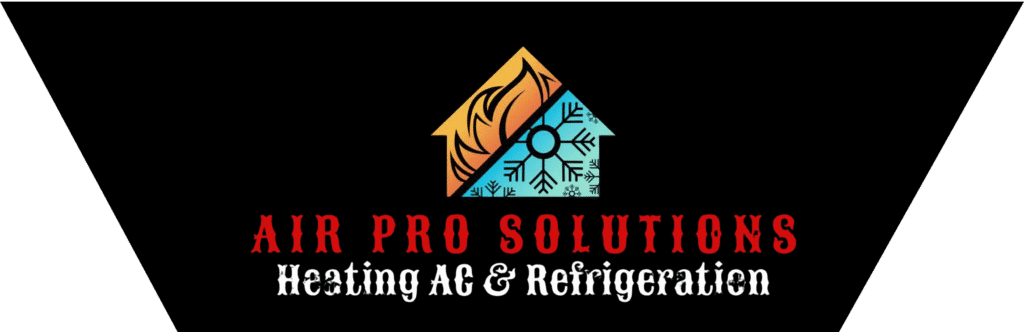






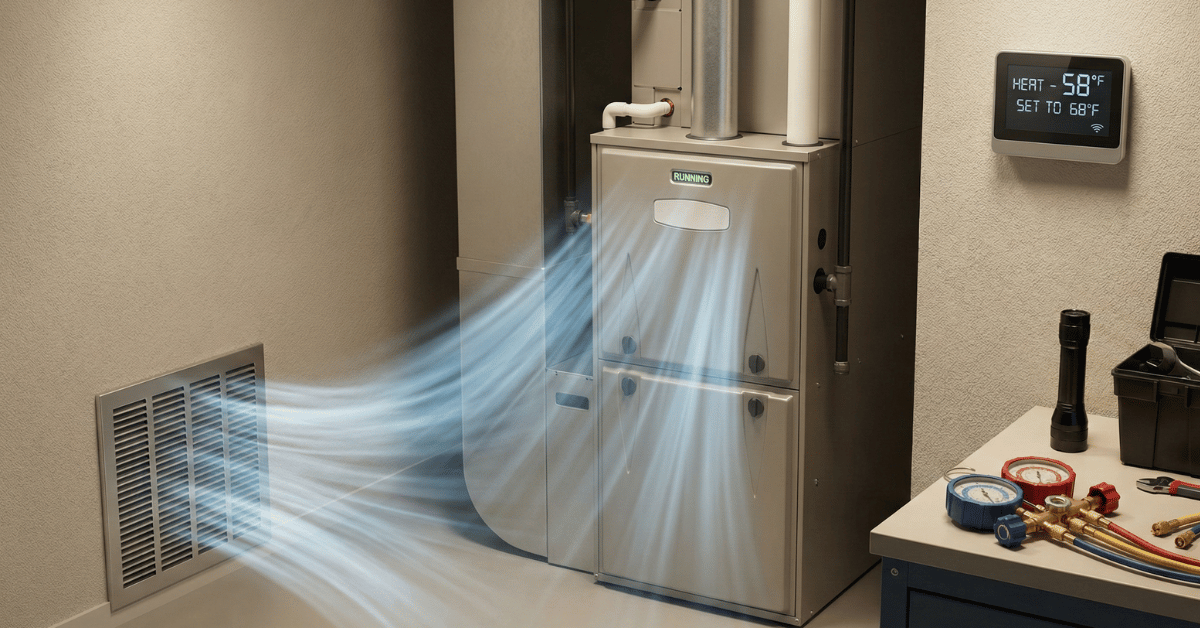
Few things are more frustrating than turning on your furnace during a cold Washington morning only to feel cold air blowing from your vents. If your furnace is blowing cold air instead of warming your home, you’re not alone. This is one of the most common heating complaints homeowners face, especially as temperatures drop across the Auburn and Seattle areas. The good news is that many causes have simple solutions you can handle yourself.
Others require professional attention to keep your home safe and comfortable. This guide will walk you through the most common reasons your furnace blowing cold air and help you determine when it’s time to call an expert.
Is Cold Air at Startup Normal?
Before you panic, it helps to understand how your furnace works. When your furnace first kicks on after sitting idle, cold air blowing from the vents for a minute or two is completely normal. The ductwork throughout your home holds cool air that needs to be pushed out before warm air can reach your living spaces. Your furnace also needs a brief warm-up period before the blower fan activates.
If the air turns warm within three to five minutes, your system is working as designed. However, if cold air continues beyond this point, something is preventing your furnace from heating properly. The causes range from simple thermostat settings to more serious mechanical failures that need professional diagnosis.
Common Causes You Can Fix Yourself
Many furnace problems that cause cold air have straightforward solutions. Before calling for repair service, check these three areas first.
Thermostat Set to “ON” Instead of “AUTO”
Your thermostat’s fan setting plays a major role in how your furnace operates. When the fan is set to “ON,” the blower runs continuously, even when the furnace isn’t actively heating. This circulates unheated air between heating cycles, making it feel like your furnace is blowing cold air.
Switch the fan setting to “AUTO” so the blower only runs when the furnace is producing heat. Also verify that your thermostat is set to “Heat” mode and that the temperature setting is higher than the current room temperature. These simple adjustments resolve the issue for many homeowners.
Dirty or Clogged Air Filter
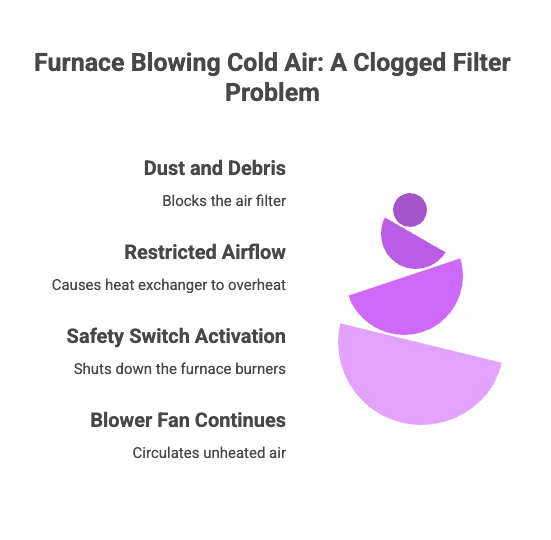
A clogged air filter is one of the leading causes of a furnace blowing cold air. When dust and debris block the filter, airflow becomes restricted. This causes the heat exchanger to overheat, which triggers the high-limit safety switch to shut down the burners. The blower fan continues running to cool down the system, but it circulates unheated air through your home.
Check your filter and replace it if it looks dirty or clogged. Understanding how often you should change your furnace filter can help prevent this problem. Most filters need replacement every one to three months, depending on your household and filter type.
Closed or Blocked Vents
Take a walk through your home and check all supply vents and return air grilles. Furniture, curtains, or rugs blocking vents can restrict airflow throughout your system. Some homeowners close vents in unused rooms, but closing too many can cause pressure imbalances that force your furnace to cycle on and off more frequently. Open all vents and ensure nothing is obstructing airflow.
Need a hand with this at home? Air Pro Solutions provides furnace repair in Auburn for homeowners across Auburn and South King County.
Why Is My Furnace Blowing Cold Air? Technical Causes
When simple fixes don’t solve the problem, the issue likely involves internal furnace components. These common furnace problems often require more technical knowledge to diagnose and repair.
Pilot Light or Ignition Failure
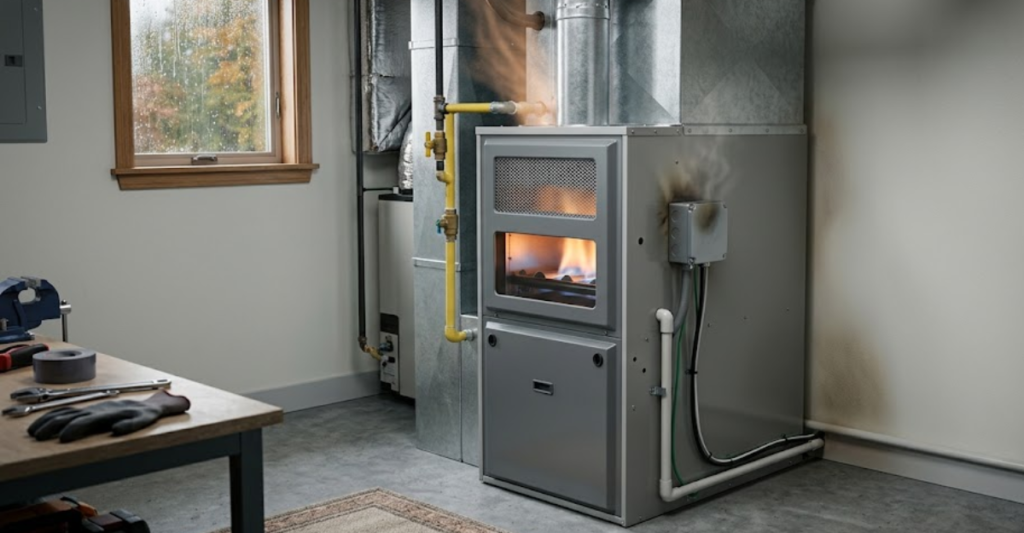
Older furnaces use a pilot light to ignite the burners. If the pilot light goes out, your furnace cannot produce heat, but the blower may still push cold air through the ducts. Check whether the pilot light is lit. If it’s out, follow your manufacturer’s instructions to relight it safely. A pilot light that won’t stay lit often indicates a faulty thermocouple that needs professional replacement.
Modern furnaces use electronic ignition systems instead of pilot lights. If the igniter fails, the burners won’t light, and you’ll experience cold air until the system shuts down. Igniter problems typically require a technician to diagnose and repair.
Dirty Flame Sensor
The flame sensor is a safety device that detects whether the burners are lit. When covered in dust, dirt, or grime, the sensor may fail to detect the flame and shut off the gas valve as a precaution. Your furnace will blow cold air because the burners aren’t staying lit long enough to heat the air. A technician can clean or replace the flame sensor to restore proper operation.
Overheated Heat Exchanger
When airflow becomes restricted due to a dirty filter or blocked vents, the heat exchanger can overheat. The limit switch will shut off the burners to prevent damage, but the blower keeps running. If your furnace repeatedly starts heating and then blows cold air, overheating is a likely cause. Replace your filter first, then call a professional if the problem continues.
What Causes a Furnace to Blow Cold Air and Then Shut Off?
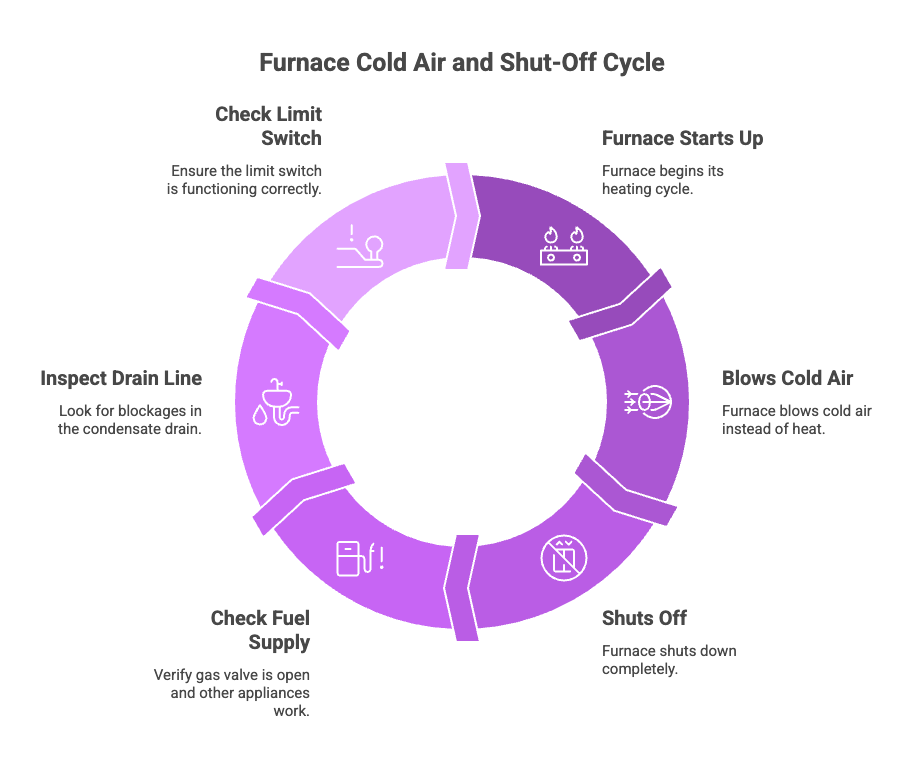
If your furnace starts up, blows cold air briefly, and then shuts off completely, the problem may involve fuel supply or drainage issues.
A disrupted gas supply prevents the burners from igniting properly. Your furnace is designed to shut off if it isn’t receiving enough gas. Check that your gas valve is open and that other gas appliances in your home are working. If you suspect a gas supply problem, contact your gas company or an HVAC professional immediately.
High-efficiency furnaces produce condensation that drains through PVC pipes. A blockage in the condensate drain line can trigger a safety switch that deactivates the burners. Inspect the drain line for clogs and clear any blockages you find.
A malfunctioning limit switch can also cause this cycling behavior. The switch may get stuck in the open position, requiring a technician to replace the part.
When Should You Call a Professional?
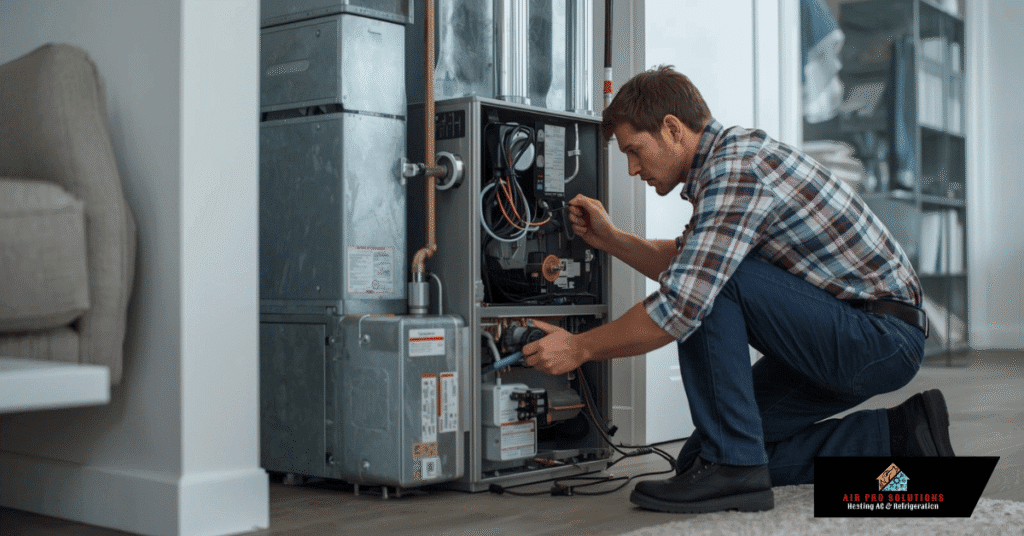
While some furnace issues have DIY solutions, others require expert attention. Recognizing the warning signs your furnace needs repair helps you know when to call for help.
Contact an HVAC professional if you experience:
- Gas smell or rotten egg odor near your furnace
- Carbon monoxide detector alerts
- Furnace repeatedly cycling on and off
- Yellow or flickering pilot light instead of steady blue
- Unusual smells like burning or formaldehyde
- Visible cracks or corrosion on the heat exchanger
- Error codes flashing on your furnace control board
- Cold air that persists after checking thermostat, filter, and vents
Attempting complex repairs yourself can void manufacturer warranties and create safety hazards. Gas furnaces especially require trained technicians who can identify issues with gas valves, heat exchangers, and electrical components. A cracked heat exchanger can leak carbon monoxide into your home, making professional inspection essential when you suspect serious problems.
How to Prevent Your Furnace From Blowing Cold Air
Regular maintenance is the best way to avoid unexpected heating failures during furnace problems during Washington winters. Industry professionals recommend scheduling annual furnace tune-ups before the heating season begins.
Preventive maintenance should include:
- Inspecting and cleaning the flame sensor
- Checking the heat exchanger for cracks
- Testing safety controls and limit switches
- Lubricating moving parts
- Verifying proper gas pressure and ignition
- Cleaning the blower assembly
- Inspecting ductwork for leaks
Between professional visits, change your air filter regularly and keep vents clear of obstructions. Preparing your furnace for winter with a pre-season inspection catches small issues before they become major breakdowns during the coldest months.
Keep Your Auburn Home Warm All Winter
A furnace blowing cold air doesn’t always mean expensive repairs. Start with the basics: check your thermostat settings, replace dirty filters, and make sure vents are open. If those steps don’t restore warm air, the problem likely involves ignition, sensors, or safety switches that require professional diagnosis.
Don’t wait until a minor issue becomes a complete heating failure. If your furnace continues blowing cold air or you notice any warning signs, the team at Air Pro Solutions is here to help. Our experienced technicians serve Auburn, Seattle, and surrounding Washington communities with reliable furnace repair and maintenance. Contact us today to schedule an inspection and keep your home comfortable all winter long.
Need furnace repair in Auburn?
Air Pro Solutions handles furnace repair in Auburn for homes across Auburn, Federal Way, Kent and the surrounding area. Our licensed technicians give honest recommendations and clear pricing before any work starts.
Call 253-397-7220 or request service online.
Air Pro Solutions, 1245 Auburn Way N #296, Auburn, WA 98092