Skip to content











If you’ve ever wondered how those metal units along your walls actually warm up your home, you’re not alone. Understanding how do radiators heat a room can help you get better performance from your heating system. Whether you have an older home with traditional radiators or you’re considering your heating options, knowing the science behind radiator heat makes a real difference.
The Basic Science Behind Radiator Heating
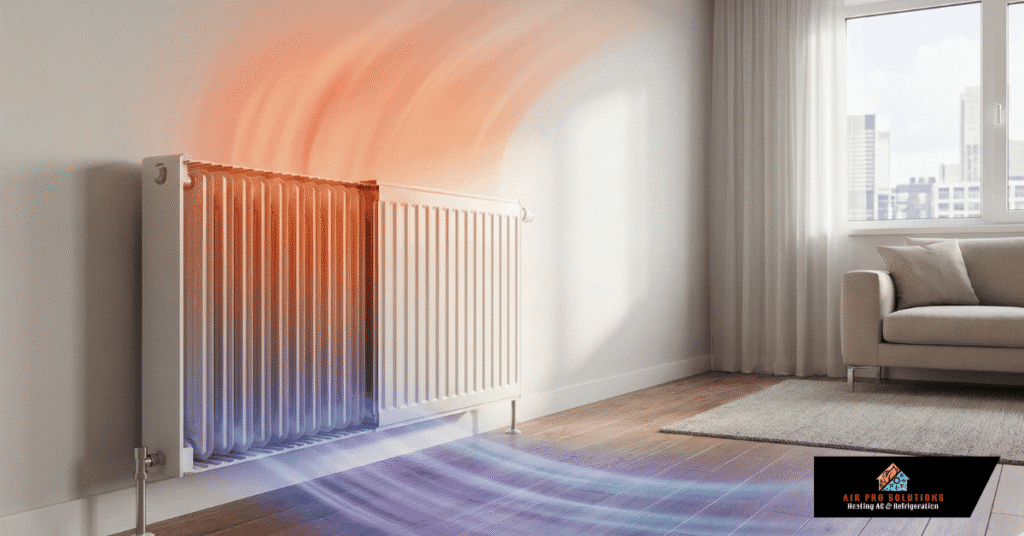
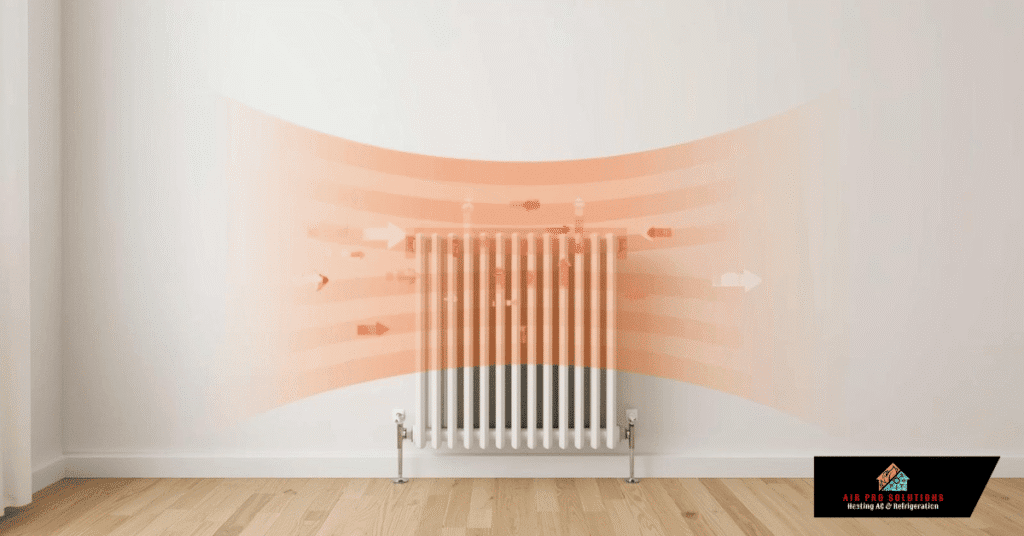
A radiator is a device that uses two fundamental heat transfer methods: convection and radiation. When hot water or steam flows through the radiator, the metal heats up and warms the surrounding air. This creates a natural circulation pattern where warm air rises toward the ceiling while cooler air moves in to replace it near the floor.
The process continues as long as the radiator stays hot, creating steady heat distribution throughout the room. Most radiators operate between 120-180 degrees Fahrenheit, depending on the type of radiator and thermostat settings. The metal fins you see increase surface area, allowing the air around the radiator to absorb more heat for faster, more efficient heat transfer.
How Your Boiler Powers the Radiator Heating System
Every radiator connects back to a central heating boiler that produces heat by warming water or creating steam. The boiler burns fuel (natural gas, oil, or electricity) to heat the water, then pumps it through radiator pipes to each unit in your home. This flow of hot water keeps everything moving smoothly, with controls that regulate temperature based on your settings.
Once the hot water from a boiler circulates through the radiator and releases heat, it returns through a separate set of pipes. This closed-loop central heating system continuously recycles the same water, making it fairly efficient for whole-home heating.
Step-by-Step Process: How Do Radiators Heat a Room
Understanding the complete heating cycle helps you spot problems and maintain your system properly. Here’s exactly what happens from the moment your thermostat calls for heat:
The Heating Cycle:
- Your thermostat signals the boiler to produce heat
- Hot water or steam flows into the radiators through supply pipes
- Components of a radiator absorb heat from the water
- The surface of the radiator warms and begins transferring heat to the air in the room
- Hot air naturally air rises while cooler air moves toward the heater
- This circulation pattern gradually distributes heat around the room
- Cooled water returns to the boiler to heat the water again
The placement of radiators matters more than most people realize. You’ll typically find them under windows or along exterior walls because these are the coldest spots. Positioning radiators here prevents cold air from entering and creates better heat distribution throughout living spaces.
Most rooms need about 20-30 minutes to reach comfortable temperatures after the system starts. Larger spaces or poorly insulated rooms take longer because the radiator heater has more air to warm and more heat loss to overcome.
Type of Radiator Systems
Not all radiators work the same way. The type you have affects heating speed, energy costs, and maintenance needs.
Steam Radiator: Classic radiators that use pressurized steam instead of hot water. Steam radiators work by having steam flows through the radiator quickly but can be noisy. You’ll recognize them by their characteristic hissing sound and single large pipe connection. These older steam or hot water units were common in historic buildings.
Hot Water Radiator: These circulate the heat using heated water through the system at lower temperatures than steam models. Hot water systems offer better temperature control and work well with modern thermostats and thermostatic radiator valves. Many newer installations prefer this method because it provides efficient heat more quietly.
Electric Radiators: These don’t connect to a central heating system at all. They use internal heating elements to produce heat without water flow. These work great for single rooms or additions where extending the main heating system isn’t practical. Panel radiators often use this design for energy-efficient radiators.
Cast iron radiators and aluminium radiators represent different material choices, each with unique heat retention properties. Cast iron radiators retain heat longer after the system shuts off, while aluminium radiators heat up faster but cool down more quickly.
Factors That Affect Radiator Performance
Several variables determine how well radiators are essential components for heating your space. Room size matters most because heaters work based on their BTU heat output rating. A small bedroom unit won’t adequately heat the room if it’s a large living area.
Insulation quality directly impacts how much heat your space retains. Rooms with poor insulation lose the amount of heat faster than the radiator can replace it, leading to cold spots and higher energy bills.
Common Performance Issues:
- Trapped air inside the radiator prevents hot water from filling the entire unit
- Sediment buildup reduces the heat exchange efficiency
- Incorrectly sized radiators for the room dimensions
- Furniture or curtains blocking airflow around the radiator
- Thermostat placement in unsuitable locations
Regular cleaning, repair, and maintenance keep radiators working at peak efficiency. Bleed your radiators once or twice a year to remove trapped air and check for leaks. For homeowners in Auburn WA dealing with heating issues, Air Pro Solutions provides expert radiator repair and can evaluate whether your installed radiator meets your needs.
Radiator Heating System vs Modern HVAC Systems
Radiator heaters provide gentle, even heat that many people prefer over forced air systems. There’s no blowing air to spread dust or allergens, and the radiant heat feels more natural. However, radiators respond more slowly to temperature changes than modern furnaces or heat pumps.
If you’re considering alternatives, ductless mini split systems offer room-by-room control without extensive ductwork installation. Heat pump installation provides both heating and cooling with impressive energy efficiency. Air Pro Solutions specializes in energy efficient HVAC solutions throughout Auburn WA, helping homeowners find the right balance between comfort and operating costs.
Maximizing Radiator Efficiency
Getting the most from your radiator in your home doesn’t require expensive upgrades. Understanding how they work and taking simple steps make a noticeable difference.
Quick Efficiency Improvements:
- Keep units clean and dust-free for better heat transfer
- Install reflective panels behind the radiator on exterior walls
- Bleed air from the system at the start of each heating season
- Avoid placing furniture directly against radiator units to allow proper convection and radiation
- Use window treatments to reduce heat even loss through glass
- Set thermostats to consistent temperatures rather than constant adjustments
Professional maintenance and installation every few years ensures your boiler and radiator network stay in good condition. Small leaks, corroded pipes, or failing controls can waste significant energy before you notice obvious problems.

Final Thoughts on How Radiators Work
Radiators heat rooms by circulating hot water or steam that releases heat to the air around them, creating comfortable warmth without noisy fans or ductwork. The process starts in your boiler, travels through pipes to each radiator, and creates circulation patterns that gradually warm your living spaces. Look at how a radiator functions to maintain the system properly and recognize when professional help is needed.
For Auburn WA residents experiencing uneven heating, cold radiators, or high energy bills, Air Pro Solutions offers comprehensive heating repair, cleaning, installation services, and modern alternatives like ductless mini splits. Whether you live in an older home with classic radiators or want to explore energy efficient HVAC solutions, our certified techs provide honest service without unnecessary upsells.