Skip to content












How long does a heat pump last? Most air source heat pumps last 15 to 20 years, and manufacturers commonly quote 10 to 15 as the average. In this region the number is shaped less by cold and more by running hours and damp air. Getting to the top of that range comes down to sizing, installation and regular heat pump service.
Key Takeaways
- Expect 15 to 20 years from a well installed, well maintained system. Published manufacturer averages range from 10 to 20.
- Mild climate helps, running hours do not. A heat pump here works most of the year, unlike a cooling only air conditioner.
- Installation quality decides more than brand. Wrong size or poor airflow shortens life from day one.
- ENERGY STAR flags 10 years as the point to start evaluating a heat pump or air conditioner for replacement.
- Damp and coastal air mean the outdoor coil needs attention that drier climates never think about.
How Long Does a Heat Pump Last in Real Numbers?
How long does a heat pump last according to the makers? Figures vary by manufacturer, which is worth knowing before you take any single number as gospel.
| System | Typical lifespan | Source of the figure |
|---|---|---|
| Air source heat pump | 15 to 20 years | Carrier published guidance |
| Air source heat pump | 10 to 15 years | Trane published guidance |
| Air source heat pump, maintained | 15 years, up to 20 | American Standard published guidance |
| Ductless mini split | 10 to 30 years | Trane published guidance |
| Gas furnace | 15 to 30 years | Carrier published guidance |
For current efficiency ratings on specific models, ENERGY STAR lists certified air source heat pumps with verified performance data.

The honest read is that a heat pump that was correctly sized, properly installed and serviced twice a year should give you 15 to 20 years. One that was oversized, installed onto leaking ductwork and never touched can be struggling at 10.
ENERGY STAR replacement guidance puts the evaluation point at 10 years for a heat pump or air conditioner, compared with 15 years for a furnace or boiler. That is not a death sentence at 10. It is the age at which it becomes worth running the numbers.
Why Western Washington Is Different
More running hours, not more stress
How long does a heat pump last here specifically? This is the part national guides miss. In most of the country, a heat pump is essentially an air conditioner that also heats during a short winter. Here it is the other way round. The heating season is long and the cooling season is short, so the system spends far more hours running each year than a cooling only unit in the same house would.
Compressors wear by run time and by starts, not by calendar years. The upside is that our climate is gentle. There are no 110 degree afternoons and few deep freezes, so the equipment rarely works at the edge of its capacity. The trade off is simply that it is on more.
The practical conclusion is that maintenance intervals matter more here than the manufacturer’s generic schedule implies, and that a system sized for the heating load rather than the cooling load will last longer because it is not fighting itself.
Damp air and coastal corrosion
Outdoor coils here live in wet air for much of the year, and homes nearer Puget Sound get salt in that air too. Salt accelerates corrosion on coil fins and cabinet fasteners. It is not dramatic and it does not happen in a season, but over fifteen years it is the difference between a coil that still transfers heat properly and one that does not.
Rinsing the outdoor coil with plain water a couple of times a year, keeping vegetation clear of it, and making sure it is not sitting in standing water are small habits that pay off. For homes very close to the water, coil coatings are worth asking about at installation time.
What Shortens a Heat Pump’s Life
- Incorrect sizing. Department of Energy DOE sizing research links oversizing to short cycling, higher humidity and lower efficiency. Short cycling means more compressor starts, and starts are where wear happens.
- Skipped maintenance. Dirty coils and clogged filters make the system work harder for the same result.
- Leaking or undersized ductwork, which starves airflow and raises head pressure.
- Low refrigerant left unaddressed. A leak that is topped up rather than repaired damages the compressor over time.
- Heavy thermostat setbacks, which force the backup electric heat to run on recovery and add strain.
- A mismatched replacement, where a new outdoor unit is paired with an old indoor coil.

What Extends It
- A load calculation before installation, so the equipment fits the house
- Twice yearly professional service, once before heating season and once before cooling
- Filter changes every one to three months, more often with pets
- Sealed, correctly sized ductwork
- A steady thermostat setting rather than deep setbacks
- Keeping the outdoor unit clear of leaves, blackberry and standing water
Signs Yours Is Near the End
- Repairs are becoming frequent, or one repair is quoted at a significant share of replacement cost
- Electricity bills climbing with no change in how you use the house
- The backup or auxiliary heat is running far more than it used to
- Rooms that were comfortable are no longer keeping up
- The unit is noticeably louder, or cycling on and off more often
- It still uses R-22 refrigerant, which is no longer produced and expensive to source
If you are seeing several of those, it is worth having someone diagnose the fault first before assuming replacement. Plenty of systems that feel finished need a refrigerant leak repaired or a duct run reconnected.
How to Get More Years Out of Yours
- Book service twice a year, not once. Given how many hours the system runs here, an annual visit is thin.
- Change the filter on a schedule you actually keep. Set a reminder rather than waiting until you notice.
- Rinse the outdoor coil with a garden hose in spring and again after leaf fall. No pressure washer.
- Keep two feet of clearance around the outdoor unit on all sides.
- Watch your auxiliary heat. If it is running in mild weather, something is wrong and it is costing you money now and life later.
- Fix duct problems when you find them, rather than asking the equipment to compensate.
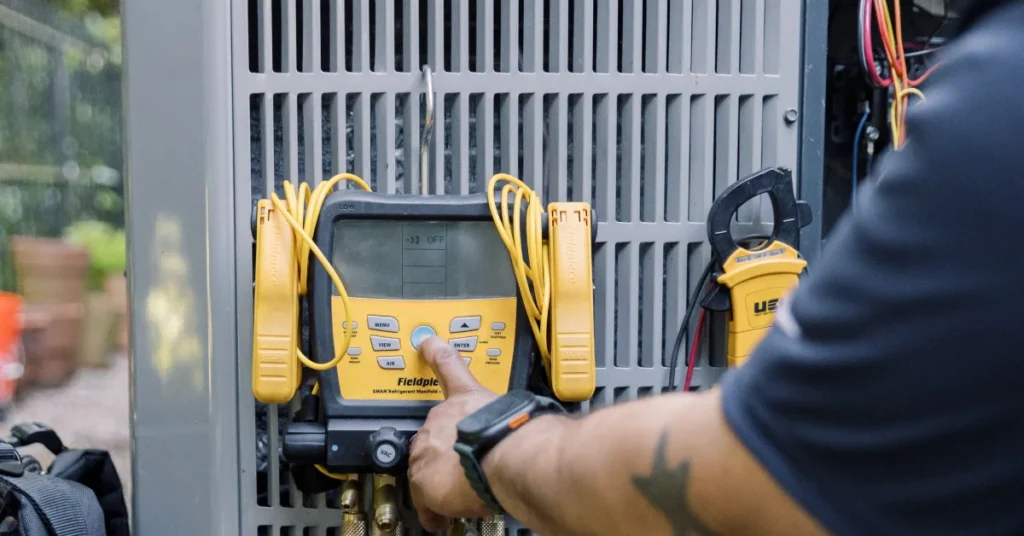
Not sure when yours was last properly serviced? Call Air Pro Solutions at (253) 397-7220 and we will check refrigerant charge, airflow and coil condition, and tell you honestly how much life is left in it. Our seasonal maintenance visits cover both sides of the year.
Heat Pump Lifespan Questions We Get Asked
What is the $5000 rule for HVAC?
Multiply the repair quote by the age of the system in years. If the result is more than $5,000, replacement is usually the better decision. A $400 repair on a 15 year old unit comes to $6,000, which says replace. The same repair on a 5 year old unit says fix it.
How expensive is it to replace a heat pump?
It depends on capacity, efficiency and whether ductwork needs work. The variables that move the price most are system size, the efficiency tier you choose, and the condition of the existing ducts and electrical supply. Ask for an itemised quote so you can see which of those is driving your number.
What is the major disadvantage of a heat pump?
Capacity falls as outdoor temperature drops, so backup heat engages in a cold snap and that backup is usually expensive electric resistance heat. In a mild maritime climate this matters far less than it does inland, which is why heat pumps suit this region well.
Why is my electric bill so high with a heat pump?
Nearly always because the auxiliary heat strips are running more than they should. Common causes are a large thermostat setback, a dirty filter restricting airflow, low refrigerant, or a system that was undersized. All four are worth checking before blaming the heat pump itself.
Is it cheaper to run an AC or heat pump?
For cooling they are essentially the same machine and cost much the same to run. The saving comes in heating. A heat pump moves heat rather than generating it, which makes it far cheaper to run than electric resistance heating over a season.
Deciding Whether Yours Has Years Left
How long does a heat pump last in your house? Age on its own is a poor way to decide. A 12 year old system that was sized correctly and serviced properly can have years left. A 9 year old one that has been fighting bad ductwork since installation may not. The only way to know is to have it measured.
Call Air Pro Solutions Heating, Cooling & Electrical at (253) 397-7220 for an honest assessment of your system’s remaining life before you spend on another repair. You can book a maintenance visit online, and if it does turn out to be time, we can quote a new heat pump installation alongside the repair so you can compare.