Skip to content
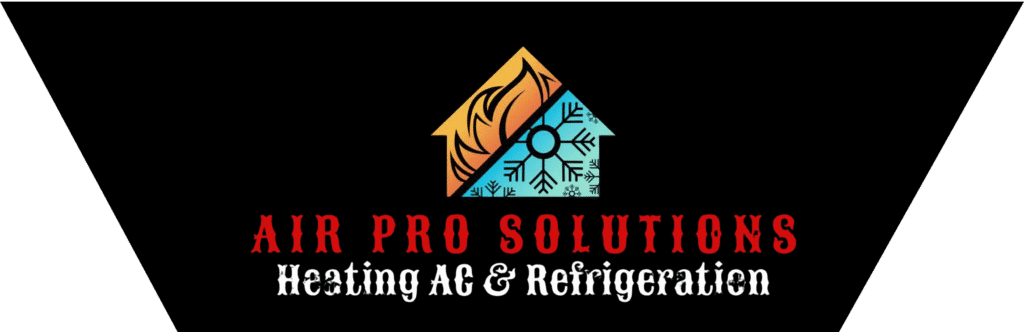











Regular heat pump maintenance keeps your system running at peak efficiency year-round, reduces energy consumption by up to 25%, and extends equipment life by 5 to 10 years. The most important tasks homeowners can perform are cleaning or replacing filters every 1 to 3 months, keeping the outdoor unit clear of debris, and scheduling professional tune-ups twice a year (spring and fall).
Key Takeaways
- Clean or replace filters every 1 to 3 months to maintain proper airflow and efficiency
- Keep the outdoor unit clear of leaves, grass, snow, and debris with at least 2 feet of clearance on all sides
- Schedule two professional tune-ups per year: one before cooling season and one before heating season
- A neglected heat pump uses up to 25% more energy than a properly maintained one, according to the U.S. Department of Energy
- Clean the outdoor coils at least once per season to prevent efficiency loss
- Check the condensate drain regularly to prevent clogs that can cause water damage or system shutdowns
- With proper maintenance, heat pumps last 15 to 20 years or longer

What Maintenance Can Homeowners Do Themselves?
Several routine maintenance tasks are simple enough for homeowners to handle without professional help. Staying consistent with these tasks prevents the most common efficiency-killing problems.
Clean or Replace Air Filters
This is the single most impactful maintenance task you can perform. Dirty filters restrict airflow, forcing the system to work harder and consume more energy. According to the U.S. Department of Energy, replacing a clogged filter can lower your system’s energy consumption by 5% to 15%.
Check your filter monthly and replace it every 1 to 3 months, depending on usage, whether you have pets, and your indoor air quality needs. If you’re not sure which filter to use, learn more about how often you should replace your air filter and what type works best for your system.
Keep the Outdoor Unit Clear
Your heat pump’s outdoor unit needs open space to draw in and expel air efficiently. Trim vegetation back at least 2 feet on all sides. Remove fallen leaves, grass clippings, and any debris that accumulates around or on top of the unit.
In winter, check for snow and ice buildup after storms. While heat pumps have a built-in defrost cycle, heavy snow accumulation can block airflow and reduce performance. Gently clear snow away from the unit without using sharp tools that could damage the coils or fins.
Inspect the Condensate Drain
Heat pumps produce condensate (water) during both heating and cooling cycles. A clogged condensate drain can cause water to back up, leading to water damage, mold growth, or a system shutdown. Check the drain line periodically and clear any visible blockages. Pouring a small amount of diluted vinegar through the line can help prevent algae buildup.
Check Thermostat Settings
Make sure your thermostat is programmed for your actual schedule. Avoid setting it to “emergency heat” mode unless absolutely necessary, as emergency heat strips use significantly more electricity than the heat pump’s normal operation. If your thermostat is outdated, upgrading to a programmable or smart model can improve efficiency and comfort.

What Should Professional Maintenance Cover?
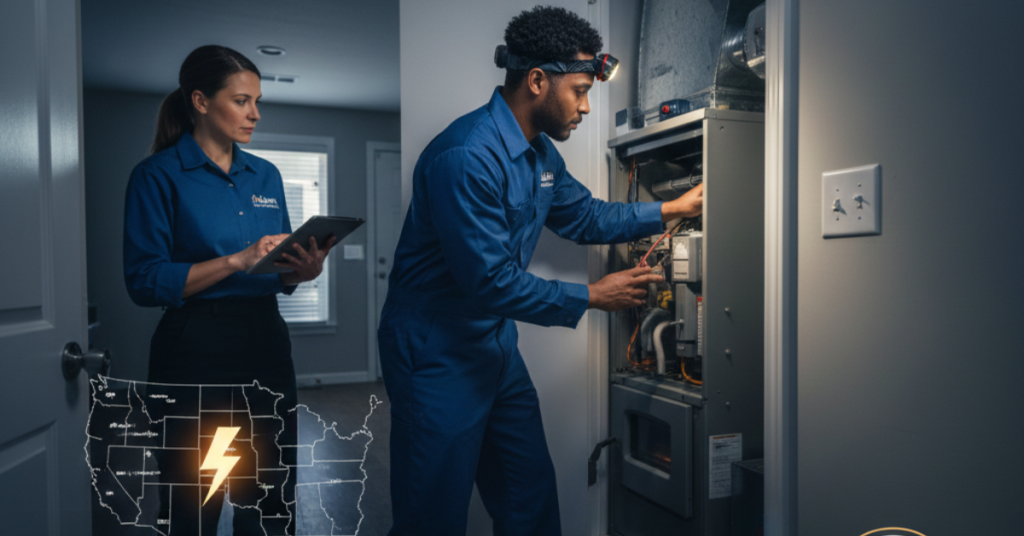
While homeowner tasks handle the basics, professional tune-ups address the components that require specialized tools and training.
Spring Tune-Up (Before Cooling Season)
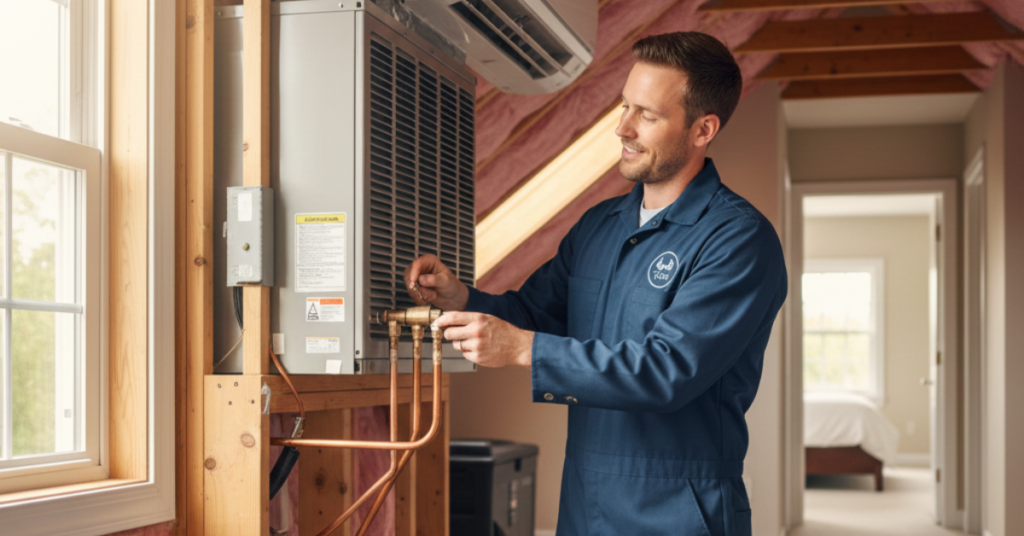
A spring maintenance visit prepares your heat pump for summer cooling demand. A qualified technician should cover the following areas.
- Cleaning evaporator and condenser coils. Dirty coils reduce heat transfer efficiency significantly. According to WorkTrek’s maintenance statistics, post-cleaning systems deliver 10% to 46% more airflow than uncleaned ones.
- Checking refrigerant levels. Low refrigerant reduces cooling capacity and forces the compressor to work harder. The technician will check for leaks and ensure levels meet manufacturer specifications.
- Inspecting electrical connections. Loose wires and corroded connections increase resistance, waste energy, and create fire hazards.
- Testing the reversing valve. This valve switches the heat pump between heating and cooling modes. A malfunctioning valve can lock the system in one mode.
- Cleaning the condensate drain. Professional cleaning ensures the drain path is completely clear.
Fall Tune-Up (Before Heating Season)
The fall visit shifts focus to heating performance and safety.
- Testing the defrost cycle. The defrost cycle prevents ice from building up on the outdoor coils during cold weather. A malfunctioning defrost cycle can severely reduce heating efficiency.
- Inspecting the backup heat strips. If your system uses electric resistance backup heat, the technician should test these strips to ensure they activate properly when needed.
- Checking the heat exchanger (for dual-fuel systems). Cracks in the heat exchanger can allow carbon monoxide to enter your home. Learn more about how to tell if carbon monoxide is leaking.
- Lubricating moving parts. Fan motors, bearings, and other moving components need lubrication to reduce friction and prevent premature wear.
- Calibrating the thermostat. Ensuring accurate temperature readings prevents the system from over- or under-cycling.
Learn more about what’s included in an HVAC tune-up in Auburn.
Seasonal Maintenance Checklist
Use this quick-reference checklist to stay on track throughout the year.
| Task | Frequency | DIY or Pro? |
|---|---|---|
| Check/replace air filter | Every 1-3 months | DIY |
| Clear debris from outdoor unit | Monthly | DIY |
| Inspect condensate drain | Monthly | DIY |
| Check thermostat settings | Seasonally | DIY |
| Clean evaporator and condenser coils | Twice yearly | Professional |
| Check refrigerant levels | Twice yearly | Professional |
| Test electrical connections | Twice yearly | Professional |
| Inspect defrost cycle (fall) | Annually | Professional |
| Lubricate motors and bearings | Twice yearly | Professional |
| Test safety controls | Twice yearly | Professional |
What Happens If You Skip Maintenance?
Neglecting heat pump maintenance doesn’t just reduce comfort. It costs you real money and can lead to premature system failure.
According to the U.S. Department of Energy, a neglected system can use 25% more energy than one that receives regular service. Over a year, that can add hundreds of dollars to your utility bills.
Research compiled by WorkTrek shows that every $1 of deferred maintenance becomes $4 in capital renewal costs. Emergency repairs cost 50% to 100% more than standard service calls. And a system that fails prematurely can cost you $5,000 to $15,000 or more for full replacement.
Regular maintenance extends your HVAC system’s lifespan and protects your investment for the long term.
Keep Your Heat Pump Running Strong
A heat pump is a significant investment in your home’s comfort and efficiency. Protecting that investment requires consistent maintenance: monthly filter checks, seasonal outdoor unit cleaning, and two professional tune-ups per year. These simple steps keep your system efficient, extend its lifespan, and prevent the kind of breakdowns that lead to expensive emergency repairs.
Need professional heat pump maintenance in Auburn, WA? Contact Air Pro Solutions to schedule a tune-up and keep your system performing at its best year-round.