Skip to content









Energy-efficient air conditioning systems can reduce cooling costs by 20% to 50% compared to older, standard-efficiency models. According to the U.S. Department of Energy, upgrading to an energy-efficient system can save the average homeowner $500 or more annually on energy bills while providing quieter operation, better humidity control, and a smaller environmental footprint.
Key Takeaways
- High-efficiency AC systems with SEER2 ratings of 16 or higher can cut cooling energy use by 20% to 50% compared to older units
- ENERGY STAR-certified systems save homeowners an average of $500 per year on energy bills
- Energy-efficient upgrades can add up to 8% to your home’s resale value, according to ENERGY STAR data
- Modern systems offer quieter operation, with noise levels as low as 20 to 25 decibels for premium ductless units
- Variable-speed and inverter-driven compressors provide more consistent temperatures and better humidity control
- Federal tax credits of up to $2,000 and Washington state rebates can significantly reduce upfront costs
What Makes an Air Conditioning System Energy-Efficient?
Energy efficiency in air conditioning is measured primarily by the SEER2 rating (Seasonal Energy Efficiency Ratio 2). This metric represents how much cooling output a system delivers relative to the energy it consumes over an entire season. A higher SEER2 rating means less electricity is used to produce the same amount of cooling.
The current federal minimum SEER2 rating for new residential air conditioners varies by region but sits around 13.4 to 14.3. Mid-range efficient systems fall in the 16 to 18 SEER2 range, while premium variable-speed systems can reach 20 SEER2 and above. Learn more about what AC SEER rating is and why it matters.
The technology behind these efficiency gains includes inverter-driven compressors that adjust speed based on demand, variable-speed blower motors that optimize airflow, advanced refrigerant management, and improved coil designs that transfer heat more effectively.
How Much Can You Save on Energy Bills?
The financial savings from an energy-efficient air conditioner are substantial and compound over time.
According to ServiceTitan’s HVAC statistics report, homes using energy-efficient HVAC systems save an average of $500 annually on energy bills. ENERGY STAR-certified systems can save between 10% and 30% on heating and cooling costs compared to standard models.
Here’s how the savings break down by efficiency level for a home spending $200 per month on cooling:
| System SEER2 Rating | Monthly Cooling Cost | Annual Savings vs. SEER2 14 |
|---|---|---|
| 14 (baseline) | $200 | $0 |
| 16 | $175 | $300 |
| 18 | $155 | $540 |
| 20 | $140 | $720 |
| 22+ | $127 | $876 |
Estimates based on proportional efficiency gains. Actual savings vary by climate, usage, and home insulation.
Over a 15-year system lifespan, even a modest efficiency upgrade from SEER2 14 to SEER2 18 can save you $8,100 or more in reduced energy costs.

What Are the Comfort Benefits?
Energy-efficient air conditioning systems don’t just save money. They also deliver noticeably better comfort.
More Consistent Temperatures
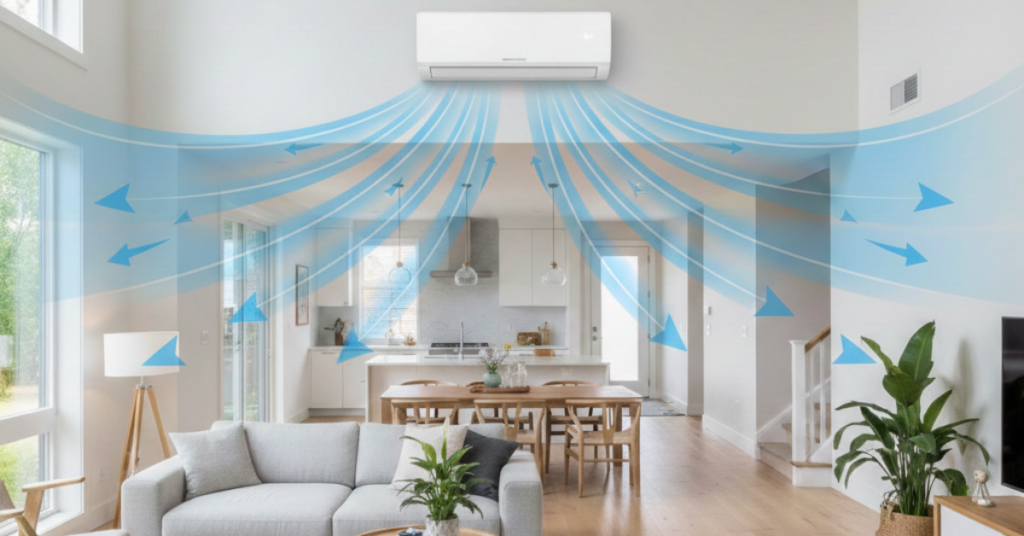
Traditional single-speed compressors cycle on at full power and then shut off completely. This creates temperature swings of 3 to 5 degrees between cycles. Variable-speed and inverter-driven compressors in high-efficiency systems ramp up and down based on demand, maintaining your set temperature within 1 degree. This eliminates the hot and cold fluctuations that make standard systems uncomfortable.
Better Humidity Control
In the Pacific Northwest, humidity control matters, especially during summer months. Variable-speed systems run for longer periods at lower speeds, which gives them more time to remove moisture from the air. The result is a drier, more comfortable indoor environment without overcooling.
Quieter Operation
High-efficiency systems operate at significantly lower noise levels than standard units. Premium ductless mini splits run as quietly as 20 to 25 decibels (comparable to a whisper), while even high-efficiency central systems are noticeably quieter than older models. This makes a real difference in bedrooms, home offices, and living spaces.
How Does Efficiency Affect System Lifespan?
Energy-efficient systems are designed with advanced components that experience less stress during operation. Inverter-driven compressors ramp gradually rather than slamming on and off, which reduces mechanical wear and extends the compressor’s life.
According to ServiceTitan, the average HVAC system lasts 15 to 20 years with proper maintenance. High-efficiency systems often land at the upper end of that range because their components endure less strain during daily operation.
Regular maintenance extends your HVAC system’s lifespan further, ensuring your efficient system delivers peak performance for as long as possible.

Does an Energy-Efficient System Increase Home Value?
Yes. According to ENERGY STAR data compiled by ServiceTitan, energy-efficient upgrades (including HVAC systems) can add up to 8% to a home’s resale value. Buyers increasingly prioritize homes with lower operating costs and modern, efficient systems.
In the competitive Pacific Northwest housing market, a high-efficiency air conditioning system is a tangible selling point that sets your home apart.
What Rebates and Incentives Are Available?
The upfront cost of an energy-efficient system is higher than a baseline model, but federal and state incentives can close the gap significantly.
Federal Tax Credits
The Energy Efficient Home Improvement Credit (Section 25C) offers up to $2,000 for qualifying heat pump installations and up to $600 for qualifying central air conditioners. Systems must be ENERGY STAR certified and meet the Consortium for Energy Efficiency’s highest tier.
Washington State Programs
Washington state offers additional rebates through the Home Electrification and Appliance Rebates (HEAR) program. Income-qualified households may receive rebates of up to $8,000 for heat pump systems. Puget Sound Energy customers may also qualify for efficiency rebates when upgrading from older equipment.
Learn more about available incentives and financing options to make your upgrade affordable.

How to Choose the Right Efficient System
Selecting the right energy-efficient air conditioner involves matching the system to your home’s specific needs.
Sizing Matters
An oversized system cycles on and off too frequently, wasting energy and reducing comfort. An undersized system runs constantly without reaching your desired temperature. A professional load calculation ensures the system is properly sized for your home’s square footage, insulation, window orientation, and climate zone.
Ductless vs. Central Systems
If your home has existing ductwork in good condition, a high-efficiency central air conditioner may be the most cost-effective upgrade. For homes without ducts, or for room-by-room control, a ductless mini split system provides excellent efficiency with the added benefit of zoned comfort.
Professional Installation Is Essential
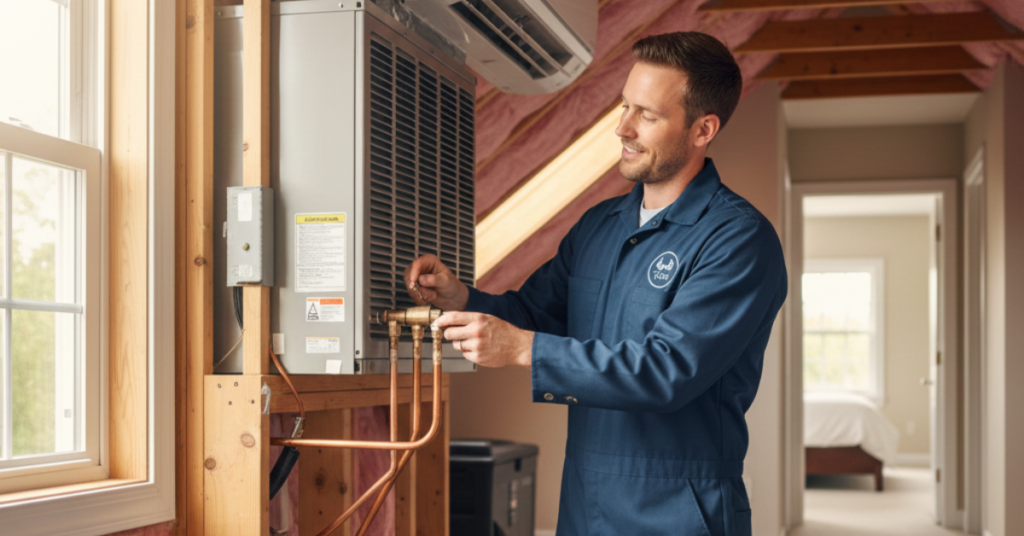
Even the most efficient system underperforms when improperly installed. According to the U.S. Department of Energy, improper installation can increase energy use by 30% or more. Always work with a licensed HVAC contractor who can ensure correct sizing, proper refrigerant charge, and code-compliant installation.
Start Saving With an Efficient System
Energy-efficient air conditioning systems deliver lower utility bills, better comfort, quieter operation, longer equipment life, and increased home value. Federal tax credits and Washington state rebates make upgrading more affordable than ever.
Ready to explore your options? Contact Air Pro Solutions to schedule a consultation and find the right energy-efficient system for your Auburn, WA home.